Romania aids Moldova in Dniester River ecological emergency
Romania reacted promply after the neighboring Moldova was affected by a major environmental incident.
Bogdan Matei, 19.03.2026, 13:50
In the last four years, both military and political analysts have stated that, of all of Ukraine’s neighbors, the Republic of Moldova is the most affected by the consequences of the Russian invasion, launched on February 24, 2022. Waves of refugees, Russian drones violating Moldova’s airspace, economic difficulties, energy crises, disinformation campaigns and Moscow’s interference in election processes – nothing seems to be missing from the range of problems that the pro-Western authorities in Chisinau have had to manage all this time.
This month, a major ecological incident also appeared on the menu. Dniester River, a natural border between the Republic of Moldova and Ukraine, has been severely polluted with petroleum products and other toxic substances, after an attack attributed to the Russian invasion army on the Ukrainian Hydropower Complex “Novodnestrovsk”. The Dniester is the main source of water for approximately 80% of Moldova’s population and for 98% of the Chisinau residents. “Such actions, with a major cross-border impact, endanger the environment, the security of water supply and the health of the citizens of the Republic of Moldova and cannot be accepted,” representatives of the Chisinau diplomacy told the Russian ambassador, Oleg Ozerov. “We have declared an environmental alert and are acting to protect our people. Russia bears full responsibility,” the head of state, Maia Sandu, said.
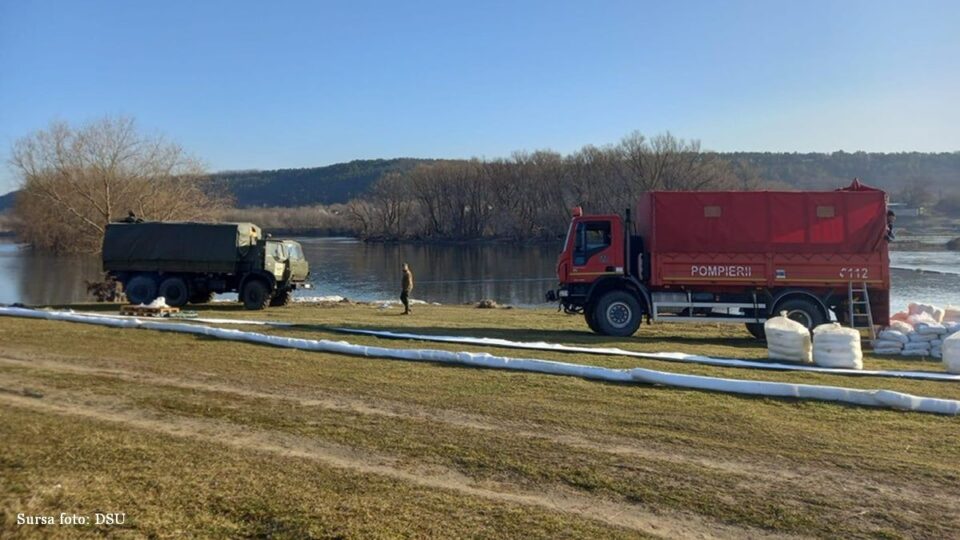
The European Commissioner for Enlargement, Marta Kos, stated in turn that such an incident reminds us that Russia’s war does not stop at the borders of Ukraine and reiterated the European Union’s solidarity with the Republic of Moldova. Among the members of the community bloc, Romania was the first to react. The National Administration of Romanian Waters provided specialized equipment and materials and set up a specialized intervention team that travelled to the Republic of Moldova to support actions to limit and collect pollutants from the water surface. The General Inspectorate for Emergencies also provided personnel to coordinate the mission, as well as the transport of equipment and materials needed for the intervention. These are tons of various absorbent materials, used to limit the spread of pollution and to protect the water supply infrastructure in the localities along Dniester River.
A humanitarian convoy of tankers with drinking water for the approximately one hundred thousand inhabitants, sent by the municipality of Iași (eastern Romania), arrived in Bălți, Moldova’s second largest city. “In these difficult days for Bălți, marked by the exceptional situation regarding water supply, our city is not alone”, mayor Alexandr Petkov, a man with a political roots in the communist party, a vocal Moscow supporter and a virulent anti-Romanian, had to admit. (EE)