The Transylvanian Cat, close to international recognition
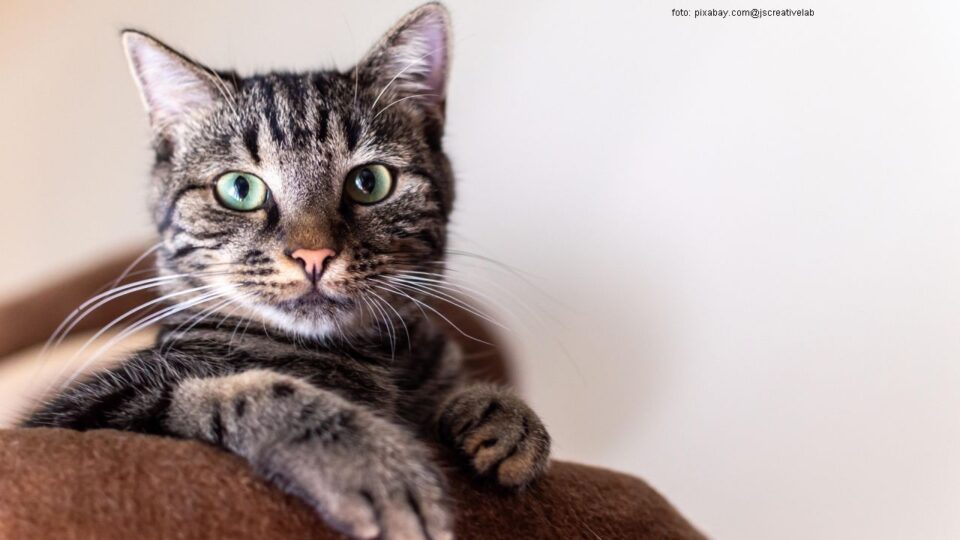
Originating from the mountainous regions of the Carpathians, it stands out through its subtly gray shaded fur, expressive eyes, and a temperament described as both gentle and playful.
Ana-Maria Cononovici, 19.05.2026, 14:00
For purebred cats competing in exhibitions, beauty is far more than a matter of taste. It is about attitude, pedigree, and standardized traits. This year, the Transylvanian Cat has taken its first official steps toward international recognition. Originating from the mountainous regions of the Carpathians, it stands out through its subtly gray shaded fur, expressive eyes, and a temperament described as both gentle and playful, qualities that make it ideal for families and for cat lovers who enjoy interactive pets.
Adrian Dragotă, President of the Romanian Feline Federation, explains the stage this new breed has reached: “This is a preliminary phase of recognition, meaning it is not recognized by any organization. There are procedures: the preliminary step involves presenting the breed proposed for homologation at an initial exhibition. If accepted after evaluation by the judges, a period follows during which breeders must bring several specimens to demonstrate how the defining characteristics of the new breed are transmitted.”
We also asked Adrian Dragotă to describe the distinctive features of the Transylvanian Cat: “This Transylvanian Cat has a pattern also called Carpathian, because it was first observed as a natural genetic mutation in the Carpathian region, especially in Poland and Hungary. In Hungary, several breeders have tried to stabilize this pattern. To put it simply, it resembles a reversed Siamese. If the Siamese has a light body with darker extremities—legs, ears, tail—this Carpathian Transylvanian cat is the opposite: a predominantly dark, almost black body, with white extremities, tail, legs, and facial mask. Like a ‘negative image’ of the Siamese. But unlike the Siamese, it does not have blue eyes. Its eyes can be any pigmented color, consistent with the breed’s predominantly dark coat.”
The road ahead is still long, but the Transylvanian Cat has already captured attention—both for its striking appearance and for the story it carries from the heart of the Carpathians. Adrian Dragotă also highlighted the remarkable adaptability of cats, noting that even domestic breeds retain a strong wild instinct: “All cats that live freely in nature can support themselves, unlike dogs, which require a much more consistent food intake. A cat can eat anything from worms to small birds or rodents. It is a much more skillful hunter and has lost none of its natural characteristics despite living alongside humans for thousands of years. Any cat can feed itself, and its fur structure helps it survive winter. There are no cases of cats freezing, even at –10 or –20 degrees Celsius. Their normal body temperature is around 38 degrees, which makes them far better adapted to low winter temperatures.”
According to Dragotă, the Transylvanian Cat also stands out for its pleasant temperament. He then detailed the current stage of the international recognition process: “There are two recognition phases underway—one with the World Cat Federation and one in England. A preliminary phase with the International Feline Federation must also be completed. All of this may take another two to three years. Romania, for example, contributed in 2014 to the homologation of a new breed, the Singapura cat—the smallest cat in the world, weighing only 2 to 2.5 kilograms as an adult. Romania completed all the steps for homologation. The process took nearly three years, and since then the breed has been fully recognized by all breeder organizations worldwide.”
There is reason for optimism that the Transylvanian Cat will progress smoothly through the remaining stages. Romania has built a strong reputation in the field, as Dragotă emphasized: “Romanian felinology has gained significant prestige in recent years, especially around 2023. Although we are a relatively young federation—20 years old—we have achieved excellent results with cats bred in Romania. In 2023 we had a world champion in Strasbourg, at the World Championship. In 2025 we added three more world champions, all cats born and bred in Romania. Even at the Baltic Championship, 20 Romanian cats participated, 15 reached the final, and 4 won. Romania is doing increasingly well in this field; we have enthusiasts everywhere.”
The Transylvanian Cat has already begun appearing at international competitions, where it has received provisional recognition. Once the approval process is completed, the breed will be officially included in international registries. This will allow breeders to evaluate specimens according to global standards and continue the genetic development of a breed that carries both scientific interest and a touch of Carpathian heritage. (EE)