Petrache Lupu
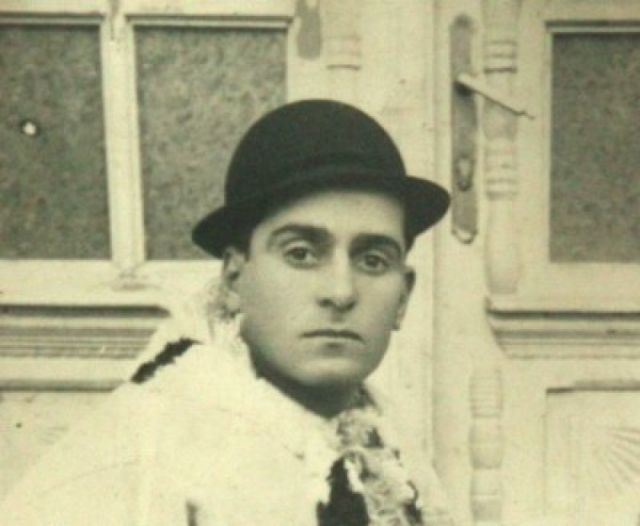
Back in the 1930s, a shepherd from Maglavit, a village on the bank of the River Danube, claimed he had a vision in which God had spoken to him. Terrified at first, but getting more confident by the day, the shepherd started telling villagers about the miracle he had witnessed, and spreading the word of God. This is how the Petrache Lupu phenomenon emerged. Seen as a mystic and a visionary, he grabbed the newspapers’ and illustrated magazines’ headlines for a long time. In a very short period of time, he became one of the most popular characters in Romania, not so much due to his personality or activities, but rather because of people’s appetite for the sensational.
Steliu Lambru, 24.03.2021, 18:14
Back in the 1930s, a shepherd from Maglavit, a village on the bank of the River Danube, claimed he had a vision in which God had spoken to him. Terrified at first, but getting more confident by the day, the shepherd started telling villagers about the miracle he had witnessed, and spreading the word of God. This is how the Petrache Lupu phenomenon emerged. Seen as a mystic and a visionary, he grabbed the newspapers’ and illustrated magazines’ headlines for a long time. In a very short period of time, he became one of the most popular characters in Romania, not so much due to his personality or activities, but rather because of people’s appetite for the sensational.
Lupu was a peasant like any other peasants of the early 20th century. He was born in 1907, the year when the last peasant uprising in Europe had just ended, an uprising that would bring many legislative changes, improving living standards in the rural areas. The modern values that Romanians had adopted starting with 1820 had taken a long time to reach the rural area and people there were very reluctant to embracing them as a way of life. Rural areas were known as places where superstitions were still extremely powerful, despite a consistent church presence. Therefore, against this background, Petrache Lupu emerging as a saviour should not be a surprise.
An orphan since the age of 5, Lupu was raised by several families in the village. He had no formal education and was actually illiterate, with a very underdeveloped vocabulary. The weekly magazine ‘Realitatea ilustrata’ (The Illustrated Reality) covered widely in its July 1935 issue the so called ‘Miracle of Maglavit’. One of the facts mentioned in the article was that the shepherd had suffered from measles as a child, which left him with hearing and speech impairments. He was described as being lonely but not withdrawn. He was married and had two children. On the days of May 31, June 7 and June 14, 1935, while he was walking to the stables, Lupu allegedly saw an old man hovering above the land. Historian Roland Clark, who studies the religious phenomenon in interwar Romania, currently works on a book that also includes the famous Petrache Lupu case, the hero of the Maglavit story.
Roland Clark: Petrache Lupu was a shepherd who saw God in 1935. He saw Him 3 times and the first time he said God came down on Earth as an old man. That old man smelled in a certain way. So Petrache went to the village’s priest and told him about the smell, and they decided together that the scent was that of chrism. The old man was covered in hair and told Petrache Lupu he was God and he wanted him to start preaching humility to people, to have them go to church, stop cursing, stop having abortions, ring the church bells and not work on holidays.
Petrache went to the village, where he told the priest about the formidable apparition. The priest believed him and, together with the community, turned their village into a star, known all over the country.
Roland Clark: Lupu was supported by the village priest and the bishop, and they both made a lot of money. People were sending money to Maglavit from all over the country, and nobody knows how much actually got there and how much was lost on the way. People discovered Petrache Lupu could heal some diseases, curing especially those who were paralized, deaf or could not speak. They say he himself had a speech impairment, while some say he couldn’t speak at all. Thousands of people organized pilgrimages to that small village and that raised a lot of concern among physicians. Having so many people gathered in a small space like that raised the danger of a serious health crisis. Moreover, if somebody said they got cured through faith, that could influence people and prevent them from seeing a doctor. Not many people would see a doctor back then anyway. They’d rather trust all sorts of healers rather than doctors proper.
Waves of suffering people sieged Maglavit in search for hope. They say that approximately 2 million people went to see the ‘Saint of Maglavit’ hoping for a cure. Roland Clark says that many benefited from the mystic shepherd and that the case is illustrative of the level of education some of the segments of the population in those times had.
Roland Clark: This case brings to the forefront many of people’s convictions about religion, superstition, science, medicine and politics. The Iron Guard too tried to infiltrate and get close to Petrache Lupu, everybody was somehow involved and had something to say about that man. By looking at him we can see what Romanian rural culture looked like back in the 1930s. the ‘Army of the Lord’ movement supported Petrache Lupu too. The neo-Protestants said he was just a con man and a fool that could not be trusted, but the Orthodox Church supported him.
Petrache Lupu died in 1994 in his native village, aged 87. He left behind a legend and a monastery built in 2019. (MI)