The Cucuteni Culture
One of the most impressive Neolithic cultures is the Cucuteni- Ariușd- Tripoli
Marius Tiţa, 13.10.2018, 13:49
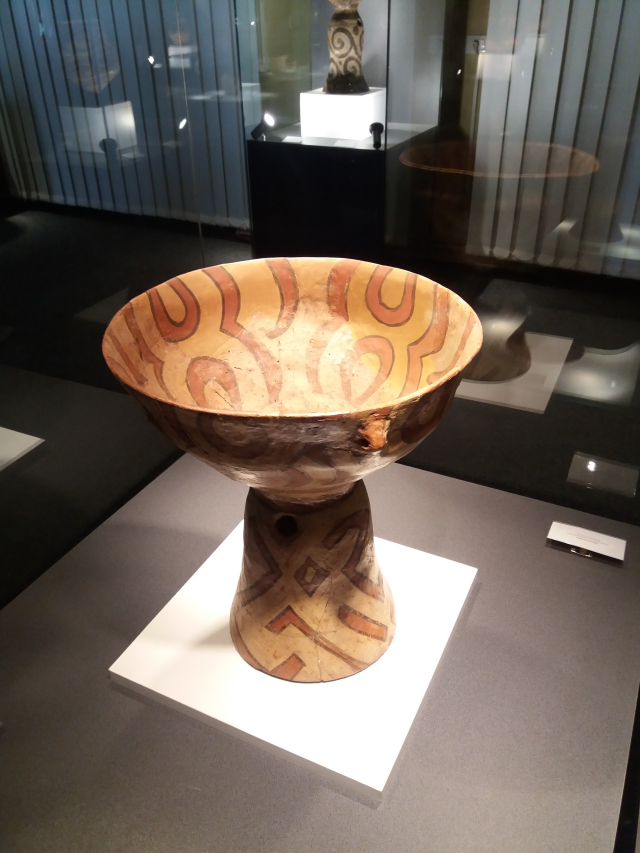
One of the most impressive Neolithic cultures is the Cucuteni- Ariușd- Tripolia culture, which used to occupy a large area between the northeast of Romania, the Republic of Moldova, and southwestern Ukraine. It got its name from the village of Cucuteni, where the first vestiges of this culture were dug up in 1884. It is characterized by its superb painted pottery, and has been dated to between 4800 to 4600 BC. It was a sedentary culture whose people farmed, hunted and fished. They also mined salt and traded it.
Lacramioara Stratulat is the director of the Iasi Museum Complex of Moldavia, based in Iasi, which has an extensive collection of artifacts created by the Cucuteni culture. She provided us with a brief introduction into it: “The splendid and amazing Cucuteni culture is a Neo-Eneolithic culture, the most valuable culture in Europe. It precedes the Great Pyramids, and precedes the Mycenaean culture. The oldest of its artifacts date back to 6,500- 7,000 years ago. These are remarkable figures, considering the splendid painting they did, with colors that have been preserved to these days almost intact. There are still many questions to be answered about this culture.”
Thousands of years ago people perceived geography differently, and Lacramioara Stratulat commented on that: “As any ancient culture, it had an area where it emerged, a maximum area of expansion, and an ending. The area of emergence is Moldavia, and here it also reached its peak, on both sides of River Prut. The latter stage of this culture is on the Ukrainian side. 7,000 years ago there were no borders and no countries.”
One of the most important dwellings in the Cucuteni culture is near the village of Poduri in the county of Bacau, in the east of Romania. In 1979, a rich archeological site was uncovered there, with homes, tools, storage buildings, painted pottery, statuettes, as well as a mill. Archeologists uncovered there large stores of grain, with as many as 16 found in a single homestead. They also uncovered adobe buildings in the shape of boxes of one square meter, with walls 45 cm tall. The mill is a building that houses 4 conical silos, slightly over a meter tall, with a cover and a breathing hole. At the time they were dug up, they were about one third full with fossilized grain. The silos were specialized, with two of them containing mostly barley, and the other two mostly wheat. Close to the two silos lies a square construction with 5 mills, 3 larger and 2 smaller. They are seated on plinths painted in white. At the corner of the construction there was a sluice for the meal to be collected. It is one of the oldest mills in Southeast Europe.
Lacramioara Stratulat told us that one of the greatest achievements of the Cucuteni culture was its exceptional ceramics: “This is a huge culture, which occupied 360,000 square km, an immense territory for those times. It has several stages and sub-stages of development, but the common thread throughout has been the splendid painting they did, with either meandering and spiral motifs, or geometric shapes, depending on the stage of development. Experts have tried to provide explanations for these patterns, trying to gain an insight into the mentality of the Cucuteni people, which is exceedingly difficult, given the distance in time. We can only say that they were great artists, loving everything beautiful, and found exceptional mineral dies to paint with in their area. Their pottery is worked almost to perfection, considering they were not using a potters wheel, but made it only by hand. Looking at a Cucuteni vessel, you could swear it was made with a wheel. They painted everything, down to the ladles they used for their food.”
The Cucuteni people had a complex life and culture, as reflected in the wonderful artifacts that have been preserved for people to admire to this day.