The Museum of Flutes from around the World
The Museum of Flutes from around World is a cultural project initiated by the ISVOR Cultural Association, dedicated to the preservation and promotion of the flute, one of humanity's oldest musical instruments
Ion Puican, 27.12.2025, 12:09
Ion Puican
The Museum of Flutes from around the World is a cultural project initiated by the ISVOR Cultural Association, dedicated to the preservation and promotion of the flute, one of humanity’s oldest musical instruments. The museum aims to bring together traditional Romanian flutes with similar instruments from other cultures, highlighting sound heritage as a form of living memory and cultural identity. We spoke with the initiator of this special museum, musician Oana Ivașcu, co-founder of the early and traditional music ensemble “Imago Mundi,” about the establishment of the museum, how it came to be, and the effort to create this cultural center:
“The Museum of Flutes is a project organized by the Isvor Cultural Association, with the support of the Malaia Townhall and co-financed by the National Cultural Fund Administration, through which we aim to transform the flute into a symbol of the connection between communities, generations, and cultures. Let’s build and maintain a living space where heritage becomes accessible and relevant to all ages. The Museum was born out of a passion for wind instruments and almost 25 years of concerts and tours with Imago Mundi. This musical journey has shown us that instruments are carriers of stories and build bridges between cultures. In 2016, we founded the Isvor Cultural Association to support the ensemble and develop collaborative artistic projects. Starting in 2020, we got closer to the rural communities in Vâlcea, building educational programs and creative workshops in schools, which we equipped with various musical instruments and where we met many children. It was also around that time that we learned about the old school in Săliștea, Malaia commune, built between 1956 and 1960 by villagers out of care and love for children. Together with Mr. Puiu Dinculescu, the mayor of the commune, we came to the conclusion that a museum to preserve the local heritage and create the conditions for a multicultural dialogue was not only welcome but necessary. Thanks to Mr. Dinculescu’s care and effort, the building was completely renovated and refurbished this year, managing to attract support from the extended community of the area. In this way, the old school has turned into a space for education, but also one that celebrates memories”.
The museum’s collection will include an exhibition of international wind instruments, interactive shows and multimedia installations, which will allow visitors to listen to the authentic sounds of the flutes. The museum experience will be complemented by a digital platform. Oana Ivașcu told us about the museum’s content and collection:
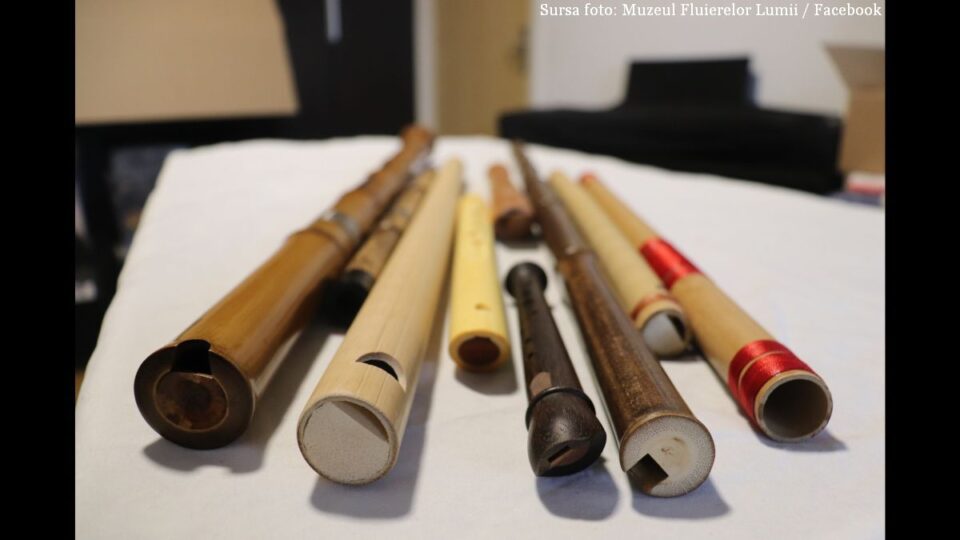
“The museum is imagined as an art installation structured into distinct rooms. We have windows to the world, the workshop, the community, a multimedia room. We don’t have display cases. The instruments are exhibited with all their qualities and imperfections on display. We are talking here about functional as well as decorative instruments. Over time, the museum will be transformed into a space for international artistic residencies and will become a laboratory of traditional sounds for world music enthusiasts. We complement the physical museum with an interactive web platform, created by Daniel Ivașcu, and the podcast “Povestea Fluierului” (The Story of the Flute), created in collaboration with the Astra Museum and the Moștenitorii din Vaideeni Cultural Association. We are joined in this project by incredible people who are attentive to intangible heritage. The website will contain an atlas of the world’s flutes… My passion for wind instruments led to the creation of a personal collection that initially numbered over 30 flutes, and thanks to campaigns launched in 2025 by the Isvor Cultural Association, the collection has grown to more than 80 instruments. We have African rhythm flutes, we have pentatonic flutes, Asian instruments. Some of them are instruments donated by the museum’s ambassadors or brought in through international contributions.
The Museum of Flutes also has a strong community and educational dimension, through music workshops, exhibitions, and concerts. The project is carried out in partnership with cultural and educational institutions in Romania and abroad, contributing to the development of a sustainable cultural infrastructure and the transmission of sound heritage to future generations. Finally, the museum’s founder, musician Oana Ivașcu, told us:
“Because we are not stopping here, next year the museum will host the Summer Music School, part of the “Dream Blower” project, a project recently selected for funding in the AFCN session for 2026. This time we will focus on the ocarina. We will have music workshops, reading, clay modelling, as well as a tour of culturally disadvantaged rural areas.”