Iași, an exquisite cultural experience
Iași County is one of the most compelling cultural and historical destinations in Romania, where architectural heritage blends naturally with the dynamic energy of a modern university hub.

Daniel Onea, 12.11.2026, 16:56
For a first-time visitor to this corner of the country, the former capital of Moldavia promises a genuine journey back in time. Iași is not only a city of poetry but also the cradle of Romania’s higher education, being home to the country’s first university. Actually, in 2026, efforts to promote this heritage received international recognition when Iași was awarded the “Golden Apple”, the highest honour bestowed by the International Federation of Travel Journalists and Writers, often referred to as the “Oscar of tourism.”
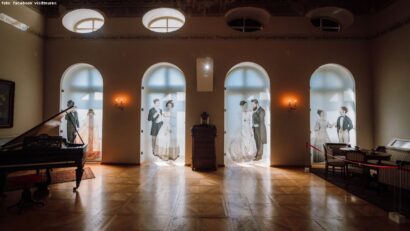
A tour of this city in north-eastern Romania can begin in the Copou area, as recommended by Anca Zota, coordinator of the Iași Tourist Information Centre: “The visit could start at the University Museum. It is a small yet substantial museum housing an important collection related to the Cucuteni civilization, a 5,000 year old civilization which offers valuable insights into the region’s history. A museum dedicated to the University of Iași is housed by the same building on Copou Boulevard. It serves as an excellent introduction to the origins of the city’s academic life. Heading down toward the city centre, we reach the main building of the University of Iași. Within the historic 1896 wing, on Carol I Boulevard, one can visit the ‘Hall of Lost Steps’, adorned with paintings by Sabin Bălașa, as well as the ‘Gheorghe Asachi’ Technical University Library, which experts consider one of the most beautiful in the world.”
The journey continues in the city centre, where a pedestrian area links buildings that are significant to the history of the modern Romanian state.
Anca Zota: “We arrive at Union Square, a site of great historical significance, as it was here that the Union of the Romanian Principalities was celebrated for the first time, back in 1859. You can find, within walking distance, the so-called ‘House of Museums’. Housed in a building with a tragic history, the former police headquarters during the Iași pogrom of June 1941, it now contains five institutions creatively designed by artist Ion Barbu: the Pogrom Museum, the Museum of the Jewish Theatre in Romania, the Poetry Museum, the Museum of Childhood under Communism, and the Museum of Romanian Literature. From here, one can walk along Stephen the Great Boulevard across what is known as the ‘Golden Plateau’. Within a very compact area, visitors will find Romania’s first National Theatre, the Metropolitan Cathedral of Moldova and Bukovina, and the Iași City Hall. One can also visit the Three Holy Hierarchs Monastery, where the first Romanian higher education institution was established in 1640, and the city’s landmark, the Palace of Culture, which houses four museums.”
A major historical landmark of the city, the Three Holy Hierarchs Monastery compound, is a monument with a unique exterior decoration, which was of particular political significance during the medieval period.
Florea Ioncioaia, a cultural historian and professor at the Faculty of Letters of the University of Iași, provides further insight into the importance of the building: “This is arguably the most significant medieval historical monument preserved in Iași, and the whole of Romania. It is architecturally spectacular while also being of great cultural and ideological importance. The Three Hierarchs Church was designed as part of a larger compound, through which ruler Vasile Lupu, in the mid-17th century, sought to materialise a grand imperial project. Although not ethnically Romanian and not of royal lineage, Vasile Lupu viewed himself as a successor to the Byzantine emperors. His ambition was to transform Iași into a ‘new Byzantium.’ He succeeded in establishing the first school in the Romanian lands east of the Carpathians, as well as a printing press. He attracted prominent figures and, in 1642, hosted the first Pan-Orthodox Synod to take place in the territory which is now known as Romania. Furthermore, he came very close to securing the appointment of Dosoftei as Patriarch of Jerusalem.”
The rich tourist offer also includes outdoor activities available in the city’s various leisure areas and the surroundings.
Here is Anca Zota again, with some recommendations: “Tourists can start with the city’s green areas: Copou Park, which is home to tha national poet Eminescu’s linden tree, the Botanical Garden, or the Ciric recreation area, where they can go cycling, rent pedal boats, walk or enjoy other outdoor activities. Not far away from Iași, one can visit the Repedea paleontological reserve, a unique site containing remnants of the Sarmatian Sea. A trip to Cetățuia Monastery is also worth making. Venturing 30 kilometers from Iași, one reaches Dobrovăț, the site of the last religious foundation established by Stephen the Great, in 1504. There, visitors can discover local traditions and stay in traditional houses. The Palace of Ruginoasa, which belonged to Alexandru Ioan Cuza and Miclăușeni castle are also worth visiting in the county. In Miclăușeni, guests can dine or attend parties and events organized in an interwar style.”
Apart from its urban landmarks, Iași county actively promotes traditional crafts. At the end of the year, the city centre hosts a Christmas Market, that brings together local artisans and producers.
Anca Zota: “In the Cucuteni area, there are traditional workshops which host pottery-making and painting camps. A museum dedicated to the Cucuteni culture is also located there. Also, Hârlău is home to the Museum of Vine and Wine, which features many authentic exhibits related to winemaking. We also recommend visiting Iași during the winter holidays. A beautifully decorated Christmas Market is organized here, stretching across nearly the entire Stephan the Great Boulevard and the Union Square, where visitors can stroll, admire the winter lights, and sample traditional products.”
Accessibility is another key advantage of this destination. Iași boasts an international airport with direct flights to major European cities. Moreover, the local infrastructure is well-developed, offering a diverse range of accommodation options, from modern hotels in the city centre, to traditional guesthouses and restored mansions across the county. All these transport and accommodation facilities make discovering the local heritage even easier. Thus, whether you are exploring historical and academic landmarks or attending winter events, Iași county offers an exceptional cultural experience.