Multicultural Constanta
Constanta is a destination worth discovering on foot
Călin Coțoiu and Ștefan Baciu, 10.07.2026, 17:52
A landmark of a holiday on the Romanian Black Sea coast, Constanta is a destination worth discovering on foot. A walk along the cliffs, along the contour of the peninsula, located between the tourist port of Tomis and the seaport of Constanta, is an experience not to be missed. Equally interesting is a walk in the peninsula, where visitors have the opportunity to discover multicultural and multi-confessional Constanta. From historian Cristian Cealera we learned what the “confessional octagon” is:
“We have what is called the confessional octagon, in the sense that currently there are eight places of worship in the old city, belonging to different religions and different Christian denominations. Of course, when we talk about the peninsula, we are talking about the Greek Church, Metamorphosis, which is a place of worship that was built during the Ottoman rule. It was inaugurated in 1868, so before Dobrogea came under Romanian administration. This would happen 10 years later. The Metamorphosis Church was built with funding from the Greek community in Constanța, which was a big community, and is still a very strong community. And the only thing that was imposed on the Greeks here was to not build a church larger than the Hunchiar Mosque, which existed already, because this was the law in the Ottoman Empire. Christian places of worship were not allowed to be taller than Muslim places of worship.”
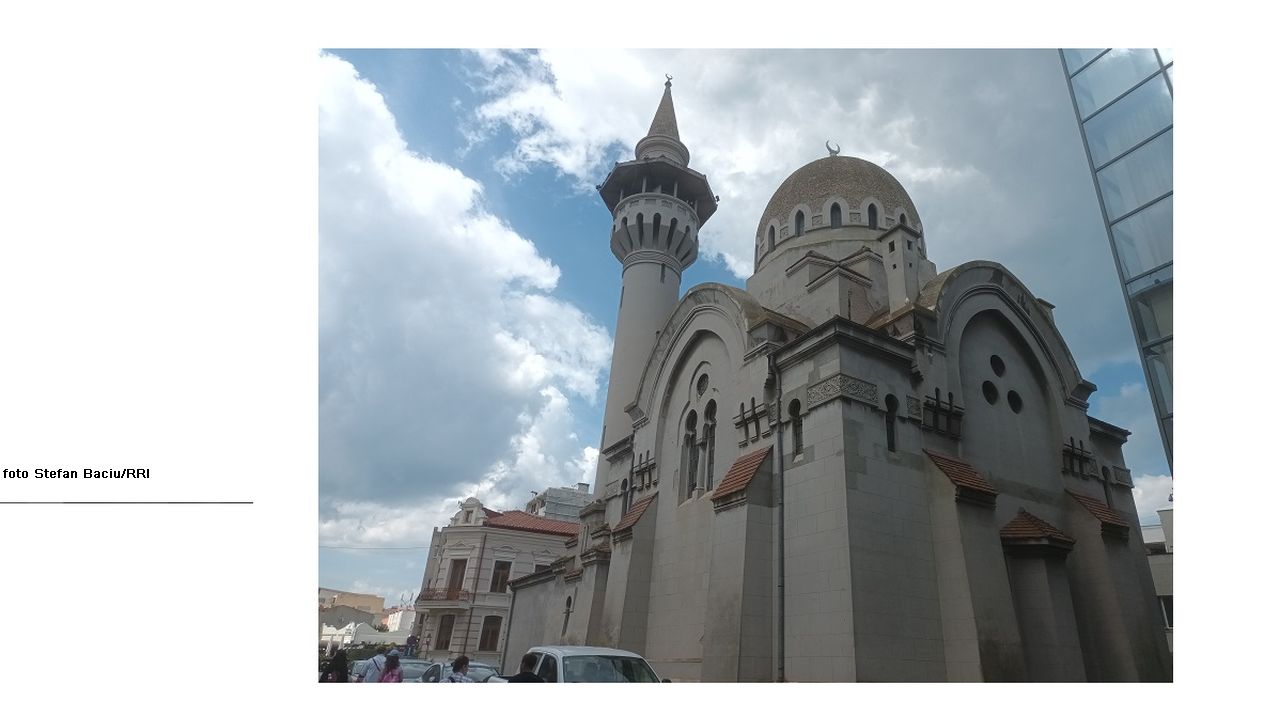
Located a few steps from the Museum of Popular Art, the Hunchiar Mosque is important for the history and multiculturalism of Constanta, being the oldest Muslim building of worship in the city. It was founded by Sultan Abdulaziz and was inaugurated in 1869. With a specific Moorish-style architecture, the Hunchiar Mosque is a simple building, consisting of a main square body, where the prayer hall and a 24-meter tall minaret are located.
“We also have the Armenian Church on the peninsula, built in 1880 and rebuilt several times over the following decades. After that, we have the Ashkenazi synagogue on the peninsula, which was restored, which can be visited by tourists, and which is an architectural gem. Once we reach Nicolae Titulescu Street, not far from Ovidiu Square, we have the Roman Catholic Cathedral of Saint Anthony of Padua. We also have the Carol I Mosque, which was inaugurated in 1913, and which is the only Muslim place built by a Christian king, which is why it is called the King’s Mosque. I would also like to mention the Orthodox Cathedral of Saints Peter and Paul.”
Built in neo-Byzantine style, between 1893 and 1895, the cathedral is imposing due to its facade and 35-meter tower. It was a parish church in 1925, then became the episcopal church of the former bishopric of Tomis. It was damaged in the summer of 1941 by a Soviet bombing raid, as did the Hunchiar mosque. Let’s keep on walking with historian Cristian Cealera:
“We also have a Bulgarian church, the new St. Nicholas Church, a church that served the Bulgarian community until the beginning of the 20th century, after which the community became increasingly smaller in number. Obviously, we are talking about many places of worship of various confessions and religions when you talk about a multiethnic and multicultural Constanta, because, as you well know, at one point in Dobrogea there were 19 ethnic groups, 19 minorities, today there are only about 14, but Constanta was, is, and will certainly be a cosmopolitan city, because on the shores of the Black Sea, here, in the city of Ovid, people have always come to do business, but they fell in love with these places and they stayed for good. This is the story of Constanta, this is the story of this wonderful place called Dobrogea, a place where ethnic groups are practically in brotherhood, and there is tolerance between us, and a friendship that will last.”
Even if you will walk through the “confessional octagon” of Constanța, do not forget the main attraction in the peninsular area, the Casino! An emblematic building, built in Art Nouveau style, between 1904 and 1910, at the initiative of King Carol I, the Casino was reopened last year after an extensive restoration process, being now an exclusively cultural destination.