Picturesque villages in Alba County
Alba County and, in particular, the Apuseni Mountains area, attract thousands of Romanian and foreign tourists every year, all searching for authenticity.
Daniel Onea, 23.07.2026, 13:00
Rural tourism has evolved considerably in recent years, offering not only a nostalgic return to the past but also a complex experience that harmoniously integrates nature, craftsmanship, and modern comfort. A telling example is the village of Glod, where old traditional houses have been saved, carefully restored, and reintroduced into the tourist circuit, forming small autonomous holiday communities. To meet the high standards of international and urban tourists, the archaic architecture hides state‑of‑the‑art facilities inside. For example, in one of the houses, visitors have access to an outdoor pool for relaxation, a sauna, and an artificial salt room equipped with a halogenerator, known for its therapeutic benefits. Even so, the essence of the place remains deeply rooted in the past.
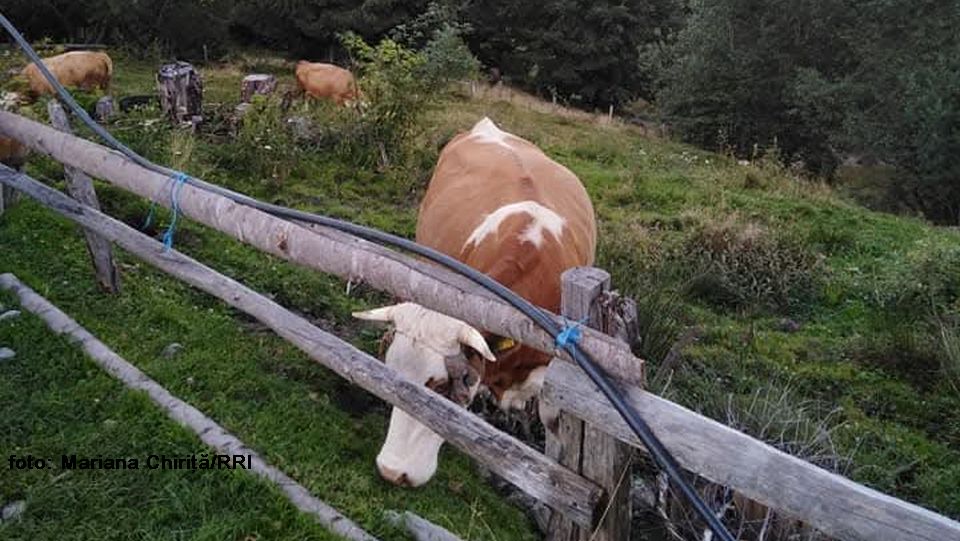
Alin Mușat, a promoter of rural tourism in Alba County and the owner of a traditional house, explains how he managed to achieve this balance: “We enjoy the specific charm of the Apuseni, but we also benefit from modern amenities. Of course, we use modern spring mattresses and all kinds of improvements, but our guests also find the ‘strujac’. The strujac is a traditional mattress made from hemp woven on a loom and filled with oat straw. In addition, we place lavender flowers on the bed, whose scent, combined with the peace and fresh air of the Apuseni, helps ensure a restful sleep. Then, our guests want to take part in household activities. Even if some guesthouses or traditional houses no longer have animals, visitors can go into the village to milk cows, ride in a cart, or visit a sheepfold. These are activities tourists prefer, have heard about, and want to experience. We organize such programs for those who visit us. Usually, families with children want to see the chickens, play with the dogs, or the cats. They have these requests, and the experience brings them great joy, especially since children today no longer know where milk comes from or what a shepherd dog looks like.”
Beyond architecture and natural surroundings, gastronomy is a central pillar of the tourist offer. Alin Mușat highlights the major difference felt by foreign visitors, who are mostly used to products from large supermarket chains: “Local gastronomy plays a very important role, and the local gastronomic points, of which there are around 30 in Alba County, help us greatly. They use products from their own household or from the village, obtained very close to the consumer. People are often amazed and ask us: ‘Is this butter or cheese? Is it butter? I haven’t seen such yellow butter in a long time.’ The meat, eggs, tomatoes – everything has the taste people are looking for. We are glad that tourists come to Alba and the Apuseni to eat exactly as we do, seeking the traditional flavor, different from the supermarket products they are used to. I recommend to all tourists, Romanian or foreign, who visit traditional households and guesthouses in Alba, to try food cooked at home on the same day, prepared with local products. Nothing compares to the taste that comes from spring water, a chicken from the yard, and a carrot freshly pulled from the soil by the housewife. We had guests from Belgium who brought their own food for several days. When their supplies ran out and they ate with us, they deeply regretted not doing so from the first day, not knowing what to expect. We were delighted to see that the traditional taste of the Romanian household was so appreciated.”
The experience is completed by the direct involvement of tourists in the production process and by direct contact with the local history. Alin Mușat points out that the use of ancient techniques and the effort to preserve craftsmanship represent the main competitive advantage of the Apuseni on the international tourism market: “We knead bread together, especially since in the Apuseni we grow einkorn, a primordial wheat used as early as 6,500 BC. Guests are curious to learn how einkorn bread is made, how a traditional soup is cooked, how the Easter sweet bread is prepared, or how the Christmas meal is arranged. We had guests who put on their work clothes and, on their own initiative, came to help us with chores in the yard without even asking. The fact that people feel the warmth of the place and integrate into our family is very important. In the villages of Alba County, there are many talented craftsmen: some make wooden horns, others carve stone or wood, or craft traditional leather shoes. We are glad that we still have people who carry on the tradition. Manual work, done with care and soul, is something artificial intelligence will never be able to replace. This is our victory over technology and what sets us apart.”
A distinct category of visitors is young families seeking refuge from urban hustle and technological stress. Through creative workshops and hands‑on activities, rural tourism offers an essential alternative to digital overexposure, a phenomenon that is growing rapidly. Alin Mușat emphasizes the impact this so‑called digital detox has on children: “We have workshops where tourists, especially children, can make various objects, learn to prepare homemade noodles or sweet bread. We give children pieces of wood to paint or materials to braid bracelets. Children love these activities, and parents appreciate that the little ones forget about their phones and focus on what they are doing with their hands. In a world where children are drawn only to screens and forget about nature, these experiences are essential. For example, we had a group of children whose phones we took on the first day. We went hiking, did practical activities, and taught them new things; in the evening, of course, we let them talk to their parents. They rode in a cart, painted, put their hands in dough, and wove on a loom. At the end of the vacation, the parents were extremely pleased, and the children shouted: ‘This is the most beautiful vacation I’ve ever had in my life!’.”
By keeping a balance between historical identity, respect for nature, and modern comfort requirements, local communities in Alba County manage to transform a simple vacation into a true lesson about returning to roots and simplicity. Prices for one night of accommodation start at approximately 350–450 lei per night for a room (70–90 euros), varying depending on the season and the type of lodging chosen. (EE)