Regenerative tourism: a fresh perspective on Transylvania
Together with Cristian Cismaru from the My Transylvania Association, a leading voice for regenerative tourism, we explore remarkable local initiatives that are breathing new life into rural communities.
Daniel Onea, 02.07.2026, 14:00
The “Transylvanian Brunch” is a concept where local gastronomy and forgotten recipes serve as the perfect bridge connecting travelers and villagers. Meanwhile, “The Land of the Huts” (Țara Colibelor) is an initiative focused on restoring old pastoral shelters in the subalpine region with the help of volunteers and tourists. We also discover oases of tranquility, such as the picturesque village of Șomartin, and see how local culture is being sustained through culinary education.
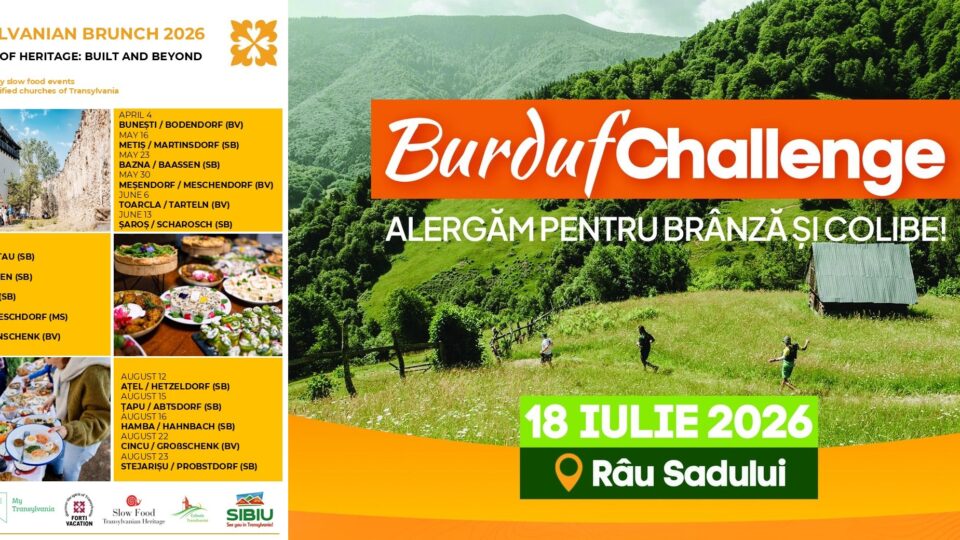
“The ‘Transylvanian Brunch’ began 19 years ago and has truly come into its own. It is an event built around the appeal of local, seasonal cuisine, designed specifically to draw visitors to rural areas. Our primary goal is to support local communities and give them an opportunity to thrive through ecotourism. Essentially, it’s a community meal where guests sample dishes cooked by the villagers. Preparations start a few days in advance, with the goal of letting tourists immerse themselves in local stories while they eat. The event itself has three parts: the first two hours are dedicated to gastronomy, during which visitors discover centuries-old wedding recipes and regional specialties. This is followed by a tour of the village monuments and the surrounding landscape. The final segment features a hands-on workshop where participants learn a traditional craft, allowing them to take home an authentic piece of local heritage. Food is what initially draws people to these villages, but once they are here, we share the stories of the natural and historical landmarks that desperately need protection or restoration. In this way, what starts as a purely culinary gathering transforms into a charitable cause.”
Beyond the rolling hills and valley villages, this model of community engagement is climbing to even higher altitudes. A prime example is a project that blends community effort with niche tourism and mountain sports.
“’The Land of the Huts’ is set in the subalpine and alpine zones of Sibiu County, where the Lotru and Cindrel Mountains meet. Unlike the events down in the hills, this project was designed first and foremost for the community. Every year, as part of a summer school program, architecture students restore the roof of a traditional hut. Corrugated sheet metal, which overheats and ruins the landscape, is replaced with traditional wooden shingles. The attic is then converted into a loft where tourists can sleep on mattresses restuffed every year with fresh hay, offering a rustic yet comfortable experience. To fund these restorations, we host a mountain trail race called the “Burduf Challenge”. The event celebrates the iconic product of the Râu Sadului region: brânză de burduf (bellows-aged sheep cheese). Around the Feast of Saint Elijah, horses come down from the mountains carrying the season’s first batch of cheese, which is then served to the participants in the village. A portion of the race registration fees goes directly toward restoring the huts. This creates a beautiful ecosystem where hikers and runners directly fund the preservation of mountain heritage.”
Revitalizing mountain heritage goes hand in hand with protecting ancient recipes. Gastronomy remains a cornerstone of local identity, and as we learn from Cristian Cismaru—a passionate advocate for slow tourism—preserving it requires a careful, documented approach to traditional techniques.
“We have documented two essential themes: “The Story of Bread” and “The Story of Cheese.” The goal was to show that while nature provides the raw ingredients, it is human dedication and local culture that create the real value. We focused on a small, specific area and documented every single type of bread made there—from everyday loaves to those baked using ancient recipes and unique sourdough cultures, resulting in a dense, dark, rich bread. We shared these stories online to shine a spotlight on the hard work of locals who still respect and honor natural ingredients.”
This approach, where the visitor is not just a passive spectator but an active participant in the community, defines a new way of traveling that is increasingly popular with international tourists, notes Cristian Cismaru.
“We are actively championing this concept under the name “regenerative tourism.” Whether visitors are taking part in a charity event to restore a fortified church or joining a race that funds the repair of a mountain hut, they are physically contributing to the preservation of the region. Heritage crafts—whether woodworking, shingle-making, cheesemaking, or other manual arts—are presented as an integral part of the travel experience. Visitors easily adapt to the local rhythm: if they arrive in the evening, they can try their hand at milking the sheep; if they arrive during the day, they can help harvest hay. It is a complete paradigm shift. Foreign tourists are often incredibly receptive to these activities, which locals still view as daily chores rather than a form of recreation.”
Alongside working with locals, Transylvania offers the ultimate retreat for anyone looking to unplug completely in places still untouched by commercial tourism.
“I deeply appreciate the places that have managed to hold onto their quiet charm, where there is no heavy traffic and mass tourism hasn’t arrived. I highly recommend a trio of villages nestled in the Hârtibaciu Plateau: Șomartin, Săsăuș, and Veseud. Getting there requires real intent. But once you arrive, you are treated to a constant backdrop of the Făgăraș Mountains and surrounded by historic fortified churches. There is a deep, profound stillness that makes you want to just stop, listen to the birds, and take in the scent of the meadows. It’s a getaway I would recommend to anyone. We warmly welcome you to our villages, where people still make things with their own hands, with genuine pride and skill. Our job is simply to help them open up to the world. We hope our hidden gems make the journey worthwhile. Once you are here, you will experience what we like to call the “slowing down of time.” Here, time moves differently. We look forward to welcoming you!”
Ultimately, tourism takes on a whole new meaning when respect for nature, heritage, and human labor comes first. A journey through the villages of Transylvania is more than just a quick escape from the city; it is a return to fundamental values and a tangible way to make a difference in the future of these communities. (VP)