Pădurea Craiului – “The capital of mountain adventure in Romania”
Pădurea Craiului area is increasingly emerging as a top destination for ecotourism in Romania

Daniel Onea, 12.02.2026, 12:00
Located relatively close to the city of Oradea, in north-western Romania, Pădurea Craiului area is increasingly emerging as a top destination for ecotourism in Romania. This mountainous region, part of the Western Carpathians, offers a perfect balance between accessibility and wilderness, appealing to both families looking for relaxation and adrenaline junkies. Paul Iacobaș, manager of the Pădurea Craiului ecotourism destination, explains a very interesting aspect. The connection between the urban and natural environments.
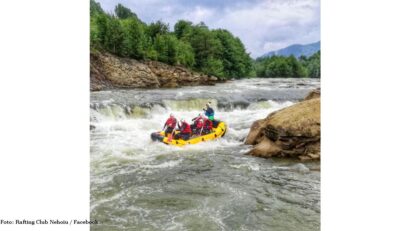
“Pădurea Craiului is closely linked to Oradea. One thing that our listeners may not know is that the thermal waters in Oradea actually come from Pădurea Craiului. It is only an hour’s drive or train ride from the city, in the north-west of the Apuseni Mountains. It is a hilly area, with peaks up to 1,000 meters high, so it is not very mountainous compared to what we know from the Southern Carpathians, for example, but it has a lot to offer in all seasons for a wide range of visitors. Many families with children choose to spend a day or more here. Many seniors also come for relaxation or easy walks in nature, as well as numerous adventure seekers. We are proud that, if Oradea is the capital of Art Nouveau, we can say that we are the capital of nature adventure in Romania. Here, in Pădurea Craiului, you can enjoy almost any outdoor experience you can think of, benefiting from a dedicated infrastructure and specialized guides or animators to help you.”
The development of tourism in the area is not a recent phenomenon, but is based on a long history of exploration, facilitated by the railway infrastructure built more than a century ago. Over the last decade, the focus has been on safety and the creation of smart routes adapted to modern needs, such as hiking circuits and via ferrata routes. These have transformed the region into a benchmark for mountain sports.
“Oradea was connected to Pădurea Craiului by the Oradea-Cluj railway, which is over a century old. Basically, when Oradea residents wanted to get out of the peri-urban area, the first option was almost always Pădurea Craiului. For me, as a young man who discovered the mountains, the first destination was the Vadu Crișului and Șuncuiuș areas – or the gorge, as we call it. I went by train, because it was very easy that way. The idea of developing an adequate infrastructure for various categories of visitors came naturally, about 10-15 years ago. As part of development plans made together with the communities in the area and local entrepreneurs, we thought about how to make the experiences as safe and enjoyable as possible. While in many areas of Romania hiking trails are linear, the specificity of Pădurea Craiului is the circuit trail: you leave and return to the same point. This facilitates logistical organization, access, transportation, but also exiting the route in case of emergency or bad weather. From this perspective, Pădurea Craiului is very attractive.”
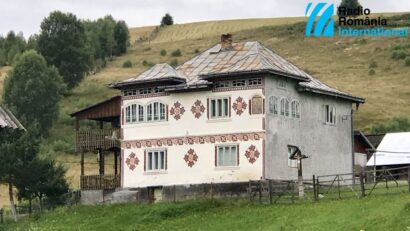
There are also marked mountain running trails and numerous climbing routes. In fact, in Pădurea Craiului, mountaineering has been practiced for more than a century. And, beyond the natural landscape and adventure opportunities, the area preserves a valuable intangible cultural heritage, as we learnt from Paul Iacobaș, the manager of this ecotourism destination. Local communities have preserved unique crafts in the country, such as the specific pottery from Vadu Crișului and unique musical instruments, which define the ethnocultural identity of the Crișana area.
“There are some extremely interesting cultural heritage elements. For example, Pădurea Craiului is home to the only locality, Vadu Crișului, where white pottery is still made. It is a ceramic without iron oxide that, once fired in the oven, takes on the appearance of kaolin. It is something unique in the Romanian cultural landscape. Also, in the village of Drăgoteni, near Remetea, there is an old tradition of painting Easter eggs, completely different from what we expect to find in Bucovina. Another unique and well-represented cultural element is the violin with a horn. This is a hybrid instrument that highlights both classical music and traditional local accents. The violin with a horn is present at all important community events: funerals, baptisms and weddings.”
The richness of the area is complemented by a remarkable biodiversity. The karst relief has favored the development of a diverse flora, but also the formation of a vast cave system, which constitutes one of the main attractions of the destination. Paul Iacobas once more:
“Another important aspect is that the soil develops mainly on limestone, which favors a specific, rich vegetation. Related to limestone, I must mention one of the most important attractions of the area: the caves, both those developed and those not developed. Thus, visitors can explore the underground world. We go back to the time of the development of the railways, a century ago. The railway that crossed the Crișul Repede gorge brought to attention the Vadu Crișului Cave, which was developed in the 1900s by a local count. Another important mention is the Meziad Cave, also open to visitors since a century ago. Czárán Gyula, one of the pioneers of tourism in Bihor and the Apuseni Mountains, was the one who developed the first visitable route here. More recently, in 2001, the Unguru Mare Cave in the Crișul Repede gorge was developed. Also, the Crystals Cave in the Farcu Mine is unique in Romania, being the only one open to the general public where you can admire absolutely fascinating calcite crystals up close.”
The modern infrastructure, coupled with the preservation of local traditions such as the pottery of Vadu Crișului, transforms this corner of the Apuseni Mountains into a model of sustainable ecotourism. The Padurea Craiului therefore remains an open invitation to discover authentic nature and living traditions, just a step away from the comfort of the city. (MI)