Rural tourism in Romania
The Romanian village has become a major tourist destination, capable of offering complex experiences, from connecting with nature and traditions, to accommodation facilities at the highest standards.
Daniel Onea, 05.03.2026, 14:00
The first point of attraction for any visitor is, indisputably, the landscape. Romania benefits from a remarkable geographical diversity, from mountainous and hilly areas to the Danube Delta. However, the landscape is today doubled by a well-established tourist infrastructure. We spoke about the potential and evolution of this sector with Associate Professor Dr. Maria Stoian, founder of ANTREC Romania (National Association of Rural, Ecological and Cultural Tourism): “In the last ten years, the infrastructure has evolved remarkably. Tourists have access to various types of accommodation, from simple guesthouses, to villas, bungalows, glamping and small family hotels. These vary in style – from rustic or medieval to modern – and offer a degree of comfort adapted to all requirements. The gastronomic offer has also been revitalized, highlighting old recipes and regional specialties. If in the 1990s, wherever you went, you usually found barbecue with fried potatoes, specialties from each area have also appeared: soups, dishes, bulz, various specialties.”
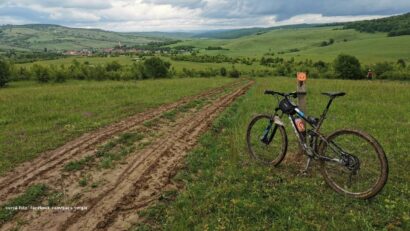
Although the concept of a country holiday is often associated with simplicity, Romanian rural tourism has also successfully integrated the luxury segment. According to Maria Stoian, founder of ANTREC, luxury in the countryside does not cancel authenticity, but complements it: “Luxury offers mean, first of all, a high degree of comfort. We are talking about spacious, well equipped rooms, with comfortable mattresses and high-quality cosmetics. There is nothing wrong with that. We are in the 21st century, and the facilities must keep up with current requirements. In addition, many guesthouses now include SPA centers or offer attractive alternatives for spending free time, such as cycling.”
Beyond accommodation and scenery, tourists are looking for experiences. The Romanian village is a living organism, animated by a series of events that transform the life of the community into an authentic spectacle: “The calendar of rural events starts from the traditions related to pastoral life and village activities. For example, in spring, in Mărginimea Sibiului, the ‘Milk Weighing’ takes place – an old custom transformed today into a festival, where locals wear traditional clothing and present specific dishes. In the Bran area, we witness the ‘Sheep Rampage’ in autumn, and, in Bukovina, the Trout Festival on Bistrița is organized in Ciocănești. Rafts descend on Bistrița. It is extraordinary. There is also a fishing contest, which represents only a small segment. Adding to these is the tradition of painting eggs or unique festivals, such as the Fig Festival at Danube Gorges, organized by the Romanians there together with the Slovak and Czech minorities in the area.”
An essential component of this universe is direct interaction with folk craftsmen. Foreign and Romanian visitors have the opportunity to discover how traditional objects come to life, directly in the creators’ workshops. Maria Stoian, founder of ANTREC Romania, says that crafts are quite varied, and artisans often await guests with interactive creative workshops: “In the Neamț area, for example, there are programs where tourists can witness wood carving and sculpting. In Horezu, the capital of Romanian ceramics, guests cross the threshold of potters to see how clay is kneaded and how objects take shape on the wheel. And the art of egg painting, although emblematic of Bukovina, is just as beautifully preserved in Maramureș, Oltenia or the Danube Delta.”
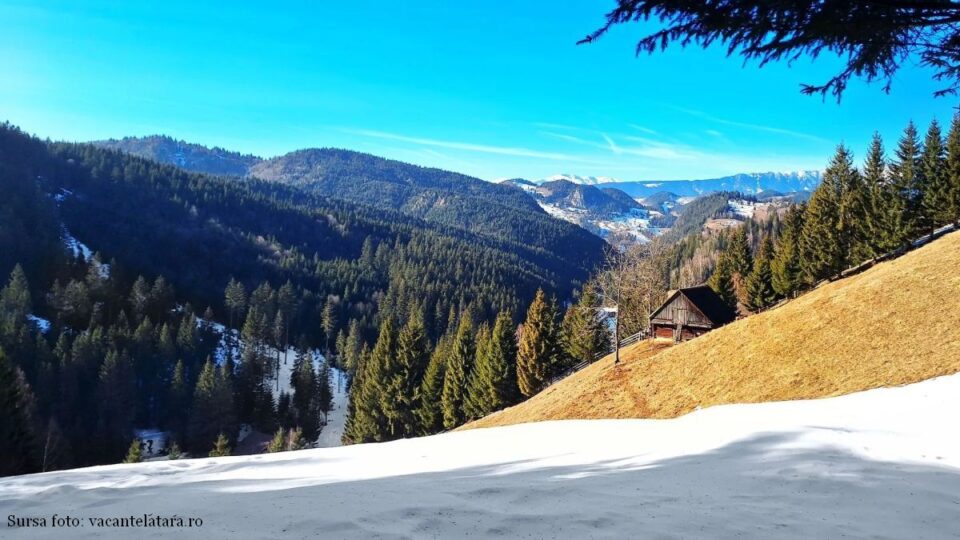
We asked Maria Stoian, our guest, if there is an area that she feels closer to and that she would recommend to tourists who want to plan a vacation in the countryside. The proposed destination is located in the center of the country, at the heart of the mountains: “I fell in love years ago with an area in Bran-Moieciu: it is Peștera-Măgura. They are two villages next to each other, so I see them as a whole, at the foot of Piatra Craiului Mountains, with a view of Bucegi Mountains; it’s the area where I feel best. I was born in Craiova, Oltenia region, raised in Bucharest, but that area seems extraordinary to me. It’s also in the center of the country, and as a starting point, you can go north, south, east, and west. So I invite you to Bran-Moieciu, Peștera-Măgura.”
Rural tourism is also an invitation to gastronomic exploration. The culinary richness of rural Romania often surprises with the variety of ingredients and preparation techniques: “Rural cuisine is unexpectedly diverse. Although ‘sarmale’, stuffed cabbage rolls, is a traditional dish, even celebrated with a festival in Praid, they differ enormously from one region to another: they are prepared with or without rice, in cabbage leaves or stevia. Beyond these, each area has its own specifics: in the mountains, mutton dishes predominate, in the Buzău area we find Pleșcoi sausages, babicul and ghiudemul, and, in the Danube Delta, the main attraction is fish borscht. Even in the same locality, recipes take on the unique imprint of each housewife.”
Today, Romanian rural tourism demonstrates that it can preserve its identity and unmistakable charm, while adapting, at the same time, to the demands of the modern tourist. The Romanian village has emerged as a vacation destination where nature, comfort and hospitality come together to offer a memorable experience. (EE)