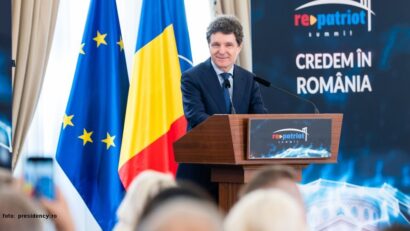
The fourth designated prime minister
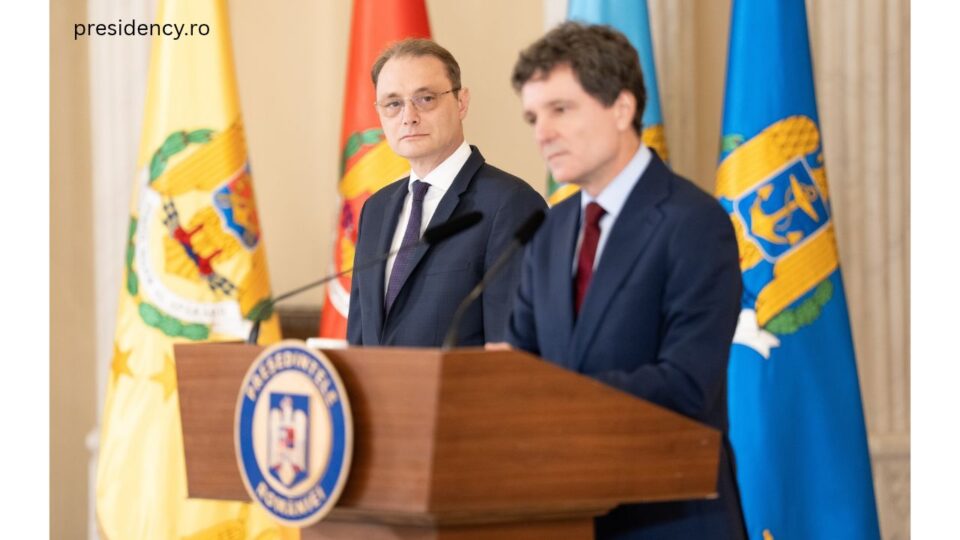
The President of Romania, Nicușor Dan, has designated a new prime minister following the now-traditional consultations with the parliamentary political parties.
Florentin Căpitănescu and Radio România Internațional, 06.10.2026, 14:00
Five months after Romania’s stable government was brougth down following a no-confidence vote in Parliament, the Romanian President Nicușor Dan is still attempting to resolve the domestic political crisis by nominating a new prime minister.
The fourth name on the list is the independent Luca Niculescu, a respected journalist whose career shifted toward diplomacy in 2016 with his appointment as Romania’s ambassador to France. In recent years, he has coordinated the complex process of Romania’s accession to the OECD. President Nicușor Dan said he made this choice following consultations with the parliamentary parties and emphasized the urgent need for a government, noting that prolonged uncertainty would only yield negative consequences.
Nicușor Dan: “I’ve chosen the person with the best chance of securing a majority, and Mr. Niculescu is free to decide, following in-depth discussions with the parties, whether to form a political or a technocratic government. What matters is the parliamentary majority. I am confident a government led by Luca Niculescu will maintain Romania’s pro-Western course and will also honor its financial targets and all other commitments Romania has undertaken.”
In turn, the Prime Minister-designate Luca Niculescu said his first task would be to build a majority capable of voting in a government firmly committed to Romania’s European and Euro-Atlantic path. The Prime Minister-designate has further details, outlining the guiding principles of his mandate, should Parliament approve the executive team he proposes:
Luca Niculescu: “I cannot promise miracles, but I can promise a serious approach to the use of public funds, economic predictability, compliance with Romania’s commitments, accelerated investments and reforms, and a state that functions as effectively as possible for its citizens, that is, for all Romanians.”
The next procedural steps for the newly designated Prime Minister include discussions with the parliamentary parties, the presentation of the governing program, the formation of the cabinet, hearings for the proposed ministers in parliamentary committees, and the vote in the plenary sesison of Parliament.
However, the investiture of his cabinet promises to be a difficult process from the outset. The Social Democratic Party (PSD, left-wing), holding the largest number of parliamentary seats, has made no secret of its dissatisfaction with the President’s choice; The Alliance for the Union of Romanians( AUR, the populist-nationalist opposition) has announced it will not vote for an executive led by Luca Niculescu; the National Liberal Party (PNL, center right) and the Save Romania Union (USR, center-right) are waiting to see the governing program and refuse to accept the presence of the Social Democrats in a future executive team; and the Democratic Union of Ethnic Hungarians in Romania (UDMR), having confirmed it will not participate in any government coalition, is taking a wait-and-see approach. Under such conditions, the designated prime minister is compelled to navigate the clashing interests and sharp disagreements among the parliamentary parties.