RRI Live!

Listen to Radio Romania International Live

Photographer Iosif Berman

After the Great War Iosif Berman was Romanias first professional reporter.
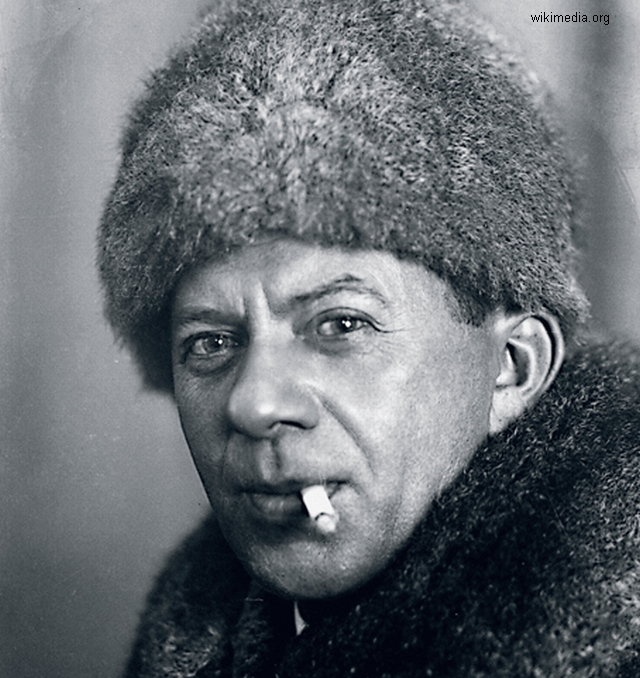
Photographer Iosif Berman

, 01.02.2014, 12:00

Born on January 17, 1892 into a Jewish family in the town of Burdujeni, northern Romania, Iosif’s love affair with photography started very early. Back in the time of WWI, he accompanied Romanian troops right up to the frontline as a war correspondent. After the war he settled in Bucharest where he began the most fruitful cooperation of his career, with journalist Filip Brunea-Fox, a man his peers dubbed the ‘Prince of the Reporting’. Between 1924 and 1938 the two worked for two newspapers, ‘Adevarul’ (the Truth in Romanian) and ‘Dimineata’ (The Morning Post). Researcher Anca Aurelia Ciuciu with the Centre for the Studies of the Jewish People in Romania, has more on Bergman’s career.


Anca Aurelia Ciuciu: “On the one hand, Berman presented the upper class, including the royal family, as he was the latter’s official photographer, but also wrote about the life of the needy, covering aspects of life in the slums of Bucharest. He was a photographer whose stories could be easily understood without descriptive texts, because his photos were extremely descriptive and for a good reason. He used to spend weeks doing research before taking a snapshot and talked to people beforehand. A photo of someone you know and understand is worth a thousand words. Even the way he approached his subjects is different. Most of the time, the people in his photos are smiling, and that actually gave a headache to the communist propaganda machine, which was trying to use some snapshots he took while doing monographic campaigns around the country together with sociologist Dimitrie Gusti. They were pictures of happy people and were completely useless to the communists striving hard to prove how unhappy people were before coming to power”.


The glee, humanity and tenderness of poor neighborhoods were the highlights of photos taken by Iosif Berman as illustration to articles written by Brunea-Fox. He worked his photos as any artist would.


Anca-Aurelia Ciuciu: “He did not just carry out an analysis of the protagonist, a lot of aesthetic prep work was also involved. He was keen on shadows and shapes, he was known as ‘the cloud chaser’. He was passionate about photography and the latest trends in photographic depiction. He was a perfectionist, he spent a lot of time in the dark room to perfect details to the last. From his family we found out his work days were very long.”


His talent and perfectionism earned him collaborations with foreign publications. Berman was a New York Times correspondent, he worked with the Associated Press, and contributed photos to National Geographic. They were recently discovered and reprinted by the Romanian edition of National Geographic. In the early 1940s he sent abroad photos covering domestic politics, at that time chiefly the rise of the fascist Iron Guard.


Anca Ciuciu: “In the 1940s he tried to work for foreign press agencies and sent them photos which were not published in Romania. This was before the ban slapped on him because he was Jewish. He was not very successful, because he could not work after 1940. He was barred from owning a camera, because it was considered a propaganda tool, and this is why he fell ill. Berman died shortly after this ban.”


A victim of the racist legislation of the era, the photographer fell ill. His kidney ailment killed him in 1941, in September. Right now Iosif Berman’s photography archive is spread all over the world, and his works are hosted by a large number of museums and private collections. His archive of negatives is no longer in mint condition. Many of them shattered during the great earthquake of 1977, and some of them are owned by the Romanian Peasant Museum, namely those photos taken during campaigns undertaken alongside Dimitrie Gusti.
Sergiu Celibidache (1912-1996)
RRI Encyclopaedia Saturday, 28 November 2026

Public parks and gardens in Bucharest

In the new urban landscape of Bucharest, woodlands, green spaces, public gardens and parks came to play an increasingly important role. Their purpose …

Public parks and gardens in Bucharest
RRI Encyclopedia
RRI Encyclopaedia Sunday, 22 November 2026

Joan Miró’s  “The Flood”

  In 1970, following the floods that struck Romania, an image by Joan Miró was featured on a Romanian postage stamp. The Catalan artist created a…

Joan Miró’s  “The Flood”
The 1906 Romanian General Exhibition
RRI Encyclopaedia Sunday, 15 November 2026

The Romanian General Exhibition of 1906

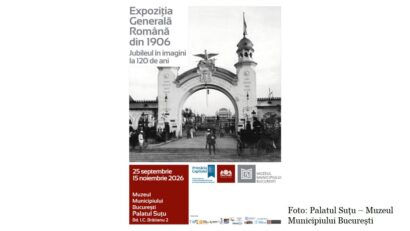
  120 years ago, on June 6, 1906, a major exhibition opened in the Romanian capital city to mark a triple celebration: the 40-year reign of King …

The Romanian General Exhibition of 1906
Photo: eteatru.ro
RRI Encyclopaedia Sunday, 08 November 2026

Theatre at the Microphone

The National Radio Theatre (TNR) also referred to as the National Radio Drama Department is the institution that produces drama for Radio Romania; its…

Theatre at the Microphone
RRI Encyclopaedia Sunday, 01 November 2026

The Ciotori Collection: A Remarkable Legacy of European Cartography

Born in 1885, Ciotori was an English speaker and the author of texts about Romania through which he sought to introduce his country to the English-spe…

The Ciotori Collection: A Remarkable Legacy of European Cartography
RRI Encyclopaedia Sunday, 25 October 2026

The Coțofenești Helmet

The Coțofenești helmet is one of the most valuable gold artifacts ever discovered on the territory of Romania, belonging to the Thraco-Getic civilizat…

The Coțofenești Helmet
RRI Encyclopaedia Sunday, 18 October 2026

The Institute of Forensic Medicine, or Bucharest’s lost heritage

  On the left bank of the Dâmbovița, after the river leaves the central area around Unirii Square, stood until 1985 the building of the Institute…

The Institute of Forensic Medicine, or Bucharest’s lost heritage
RRI Encyclopaedia Sunday, 11 October 2026

Alburnus Maior, Roșia Montană

Alburnus Maior is the ancient Roman name for the town of Roșia Montană, located in central Romania, in the historical region of Transylvania, in the A…

Alburnus Maior, Roșia Montană

Partners

Muzeul Național al Țăranului Român Muzeul Național al Țăranului Român
Liga Studentilor Romani din Strainatate - LSRS Liga Studentilor Romani din Strainatate - LSRS
Modernism | The Leading Romanian Art Magazine Online Modernism | The Leading Romanian Art Magazine Online
Institului European din România Institului European din România
Institutul Francez din România – Bucureşti Institutul Francez din România – Bucureşti
Muzeul Național de Artă al României Muzeul Național de Artă al României
Le petit Journal Le petit Journal
Radio Prague International Radio Prague International
Muzeul Național de Istorie a României Muzeul Național de Istorie a României
ARCUB ARCUB
Radio Canada International Radio Canada International
Muzeul Național al Satului „Dimitrie Gusti” Muzeul Național al Satului „Dimitrie Gusti”
SWI swissinfo.ch SWI swissinfo.ch
UBB Radio ONLINE UBB Radio ONLINE
Strona główna - English Section - polskieradio.pl Strona główna - English Section - polskieradio.pl
creart - Centrul de Creație Artă și Tradiție al Municipiului Bucuresti creart - Centrul de Creație Artă și Tradiție al Municipiului Bucuresti
italradio italradio
Institutul Confucius Institutul Confucius
BUCPRESS - știri din Cernăuți BUCPRESS - știri din Cernăuți

Affiliates

Euranet Plus Euranet Plus
AIB | the trade association for international broadcasters AIB | the trade association for international broadcasters
Digital Radio Mondiale Digital Radio Mondiale
News and current affairs from Germany and around the world News and current affairs from Germany and around the world
Comunità radiotelevisiva italofona Comunità radiotelevisiva italofona

Providers

RADIOCOM RADIOCOM
Zeno Media - The Everything Audio Company Zeno Media - The Everything Audio Company