RRI Live!

Listen to Radio Romania International Live

The Roma Holocaust

The Elie Wiesel International Commission for the Study of the Holocaust in Romania has included in its latest report the deportation of the Romania to Transdniestr, as part of the Antonescu regime's ethnic cleansing plan.

The Roma Holocaust
The Roma Holocaust

, 01.03.2014, 14:22

The ‘Elie Wiesel’ International Commission for the Study of the Holocaust in Romania has included in its latest report the deportation of the Roma or “Gypsies” to Transdniester, as part of the Antonescu regime’s ethnic cleansing plan. Until 1942, when the deportation of the Roma started, there hadn’t been a so-called ‘Roma issue’ in the Romanian society. Marginalized, living on the outskirts of towns and villages, the gypsies were not among the national minorities recognized by the Romanian state in the inter-war period. In 1942, the then Central Statistics Institute reported that there were over 208.700 gypsies in Romania, 41 thousand of which were recorded in a census that certain year. The census was aimed at establishing how many of them were nomads and how many had criminal records or were jobless. After the results were made public, it was decided that 12% of them be deported to Transdniester. Here is Adrian Nicolae Furtuna, the author of a book entitled ‘Why Don’t They Cry? The Roma Holocaust and Their True Story’ – has more details about those deported.


“Figures show that about 25 thousand Roma had been deported to Transdniester. This is, however, only a number estimated by the Holocaust Commission and published in the report. According to some Roma organizations and researchers, the real number seems to be much bigger. In the case of traditional Roma, the lack of Ids continues to be a problem, even at present. Imagine how things stood 70 years ago. Deportations began in June. The first group of traditional Roma was sent to the camps on June the 1st, 1942. They were considered carriers of disease and in some cases were even suspected of being spies, because of their nomadic way of life. The second group, this time of sedentary Roma, was deported in September, the same year. The most frequent reasons for deportation were their criminal records and the fact that they were jobless. We cannot accurately say when deportations ended. 1942 is a possible date.”


Following the two deportation waves that year, more than 11 thousand nomadic and over 13 thousand sedentary gypsies from all over Romania were sent to Transdniester. Here is Adrian Nicolae Furtuna again:


“They were practically deceived. The gendarmes told them they would be given houses there and animals to cultivate the land, but once in Transdniester some of them were sent to labor camps, where they had to work to get food. They slept in underground clay huts and sometimes in houses that had once belonged to the local Ukrainians. 1942 was a cold year and many Gypsies died during the harsh winter. Another major aspect is that out of the total 11 thousand dead that year, 6000 were children. Cold, hunger and epidemics took their toll on the gypsies who lived in squalid camps on the sandy banks of river Bug. Sometimes, they would get some supplies from the army units stationed near their camps in Bogdanovca, Domanovka, which were close to the frontline. According to official documents they did get some food, but much less than it was mentioned in the papers.”


Out of the 25 thousand Roma deported to Transdniester, about 11 thousand died in the camps and only 14 thousand survived. While doing research for his book, between 2008 and 2010, Adrian Nicolae Furtuna interviewed 28 survivors. Their memories make up the backbone of his book “Why Don’t They Cry? The Roma Holocaust and Their True Story”.







RRI Encyclopedia
RRI Encyclopaedia Sunday, 22 November 2026

Joan Miró’s  “The Flood”

  In 1970, following the floods that struck Romania, an image by Joan Miró was featured on a Romanian postage stamp. The Catalan artist created a…

Joan Miró’s  “The Flood”
The 1906 Romanian General Exhibition
RRI Encyclopaedia Sunday, 15 November 2026

The Romanian General Exhibition of 1906

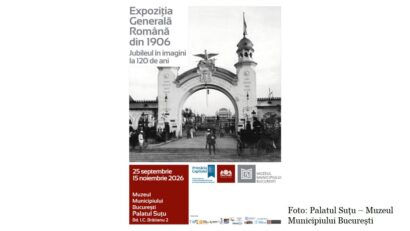
  120 years ago, on June 6, 1906, a major exhibition opened in the Romanian capital city to mark a triple celebration: the 40-year reign of King …

The Romanian General Exhibition of 1906
Photo: eteatru.ro
RRI Encyclopaedia Sunday, 08 November 2026

Theatre at the Microphone

The National Radio Theatre (TNR) also referred to as the National Radio Drama Department is the institution that produces drama for Radio Romania; its…

Theatre at the Microphone
RRI Encyclopedia
RRI Encyclopaedia Sunday, 01 November 2026

The Ciotori Collection: A Remarkable Legacy of European Cartography

Born in 1885, Ciotori was an English speaker and the author of texts about Romania through which he sought to introduce his country to the English-spe…

The Ciotori Collection: A Remarkable Legacy of European Cartography
RRI Encyclopaedia Sunday, 25 October 2026

The Coțofenești Helmet

The Coțofenești helmet is one of the most valuable gold artifacts ever discovered on the territory of Romania, belonging to the Thraco-Getic civilizat…

The Coțofenești Helmet
RRI Encyclopaedia Sunday, 18 October 2026

The Institute of Forensic Medicine, or Bucharest’s lost heritage

  On the left bank of the Dâmbovița, after the river leaves the central area around Unirii Square, stood until 1985 the building of the Institute…

The Institute of Forensic Medicine, or Bucharest’s lost heritage
RRI Encyclopaedia Sunday, 11 October 2026

Alburnus Maior, Roșia Montană

Alburnus Maior is the ancient Roman name for the town of Roșia Montană, located in central Romania, in the historical region of Transylvania, in the A…

Alburnus Maior, Roșia Montană
RRI Encyclopaedia Saturday, 03 October 2026

Forensic Medicine in Romania

Forensic medicine is the branch of medicine that makes it easier to establish the truth and ensures that the law is applied fairly. The institutional …

Forensic Medicine in Romania

Partners

Muzeul Național al Țăranului Român Muzeul Național al Țăranului Român
Liga Studentilor Romani din Strainatate - LSRS Liga Studentilor Romani din Strainatate - LSRS
Modernism | The Leading Romanian Art Magazine Online Modernism | The Leading Romanian Art Magazine Online
Institului European din România Institului European din România
Institutul Francez din România – Bucureşti Institutul Francez din România – Bucureşti
Muzeul Național de Artă al României Muzeul Național de Artă al României
Le petit Journal Le petit Journal
Radio Prague International Radio Prague International
Muzeul Național de Istorie a României Muzeul Național de Istorie a României
ARCUB ARCUB
Radio Canada International Radio Canada International
Muzeul Național al Satului „Dimitrie Gusti” Muzeul Național al Satului „Dimitrie Gusti”
SWI swissinfo.ch SWI swissinfo.ch
UBB Radio ONLINE UBB Radio ONLINE
Strona główna - English Section - polskieradio.pl Strona główna - English Section - polskieradio.pl
creart - Centrul de Creație Artă și Tradiție al Municipiului Bucuresti creart - Centrul de Creație Artă și Tradiție al Municipiului Bucuresti
italradio italradio
Institutul Confucius Institutul Confucius
BUCPRESS - știri din Cernăuți BUCPRESS - știri din Cernăuți

Affiliates

Euranet Plus Euranet Plus
AIB | the trade association for international broadcasters AIB | the trade association for international broadcasters
Digital Radio Mondiale Digital Radio Mondiale
News and current affairs from Germany and around the world News and current affairs from Germany and around the world
Comunità radiotelevisiva italofona Comunità radiotelevisiva italofona

Providers

RADIOCOM RADIOCOM
Zeno Media - The Everything Audio Company Zeno Media - The Everything Audio Company