Neamț County, an authentic experience
Today we travel to the northeast of Romania, to one of the most complex tourist destinations: Neamț County
Daniel Onea, 03.09.2026, 14:15
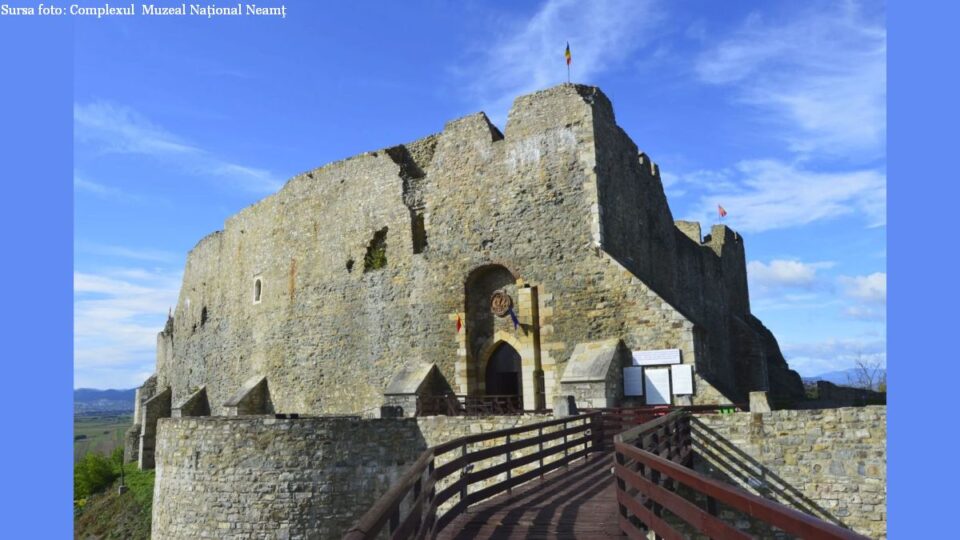
Today we travel to the northeast of Romania, to one of the most complex tourist destinations: Neamț County. The area boasts a harmonious mix of nature, history and spirituality, as well as emblematic landmarks such as the imposing Mount Ceahlău and the Neamț Fortress. Beyond the established attractions, ambitious projects are planned for the coming years, such as the development of a themed holiday village, dedicated to the characters in Ion Creangă’s literature.
At the same time, the tourist experience is completed by the local gastronomy and the authenticity of traditional villages. The chairman of the Neamț County Council, Daniel-Vasilică Harpa, gives us an overview of this region:
Daniel-Vasilică Harpa: “Neamt County has a long documented history, dating back to the Cucuteni culture as showcased at the Cucuteni Eneolithic Art Museum in Piatra Neamț, a European landmark. Neamț is also a pillar of medieval Moldavia, with the Neamț Fortress, the Princely Court in Piatra Neamț and a vast heritage from the era of the ruler Stephen the Great (1457-1504). The county has an extensive network of museums and memorial houses, such as the “Ion Creangă” Memorial House in Humulești, along with the homes of the writers Veronica Micle, Calistrat Hogaș and Mihail Sadoveanu. All this proves that Neamț is a major cultural space. In terms of the spiritual component, the county is regarded as the “Mount Athos” of Romania, boasting the largest number of places of worship in the country. Included here are the monasteries of Neamț, Agapia and Văratec, the latter two among the largest nunneries in Europe. Adding to these are the Sihăstria, Secu, Sihla and other places with a strong monastic tradition, which attract pilgrims and tourists from all over the world.”
Beyond the historical and spiritual elements, the county attracts tourists with the uniqueness of its natural heritage. For example, the Land of the Bison is an internationally recognised eco-destination, one of the few certified ecotourism destinations in Romania. It is also the only place in Europe where bison can be observed simultaneously in the wild and in captivity. Here is the chairman of the Neamț County Council, Daniel-Vasilică Harpa, with details about the nature and the experiences offered to travellers:
Daniel-Vasilică Harpa “There are three important protected areas: the Ceahlău National Park, the Vânători-Neamț Natural Park and the Cheile Bicazului-Hășmaș National Park, complemented by spectacular lakes, such as Izvorul Muntelui, nicknamed the “sea between the mountains”, Lake Bicaz and Lake Cuejdel. Beyond the landscapes, visitors are welcomed by friendly local communities and authentic cuisine. Neamț is, therefore, a complete destination, with a strong identity. Neamț County can be visited at any time of the year, as it constantly offers varied experiences: nature exploration, adventure, culture, spirituality and relaxation. An important landmark is Mount Ceahlău, also known as the “Olympus of Moldavia”, with well-known attractions such as the Toaca Peak, the Dochia Chalet and the Duruitoarea Waterfall.”
Travellers, especially foreigners, seek to interact with the local atmosphere and discover authentic traditional art. We learned from Daniel-Vasilică Harpa that there is a rich programme of events dedicated to those who want to get to know the work of traditional craftsmen:
Daniel-Vasilică Harpa “Both at a county level and at local level we have a well-structured annual calendar. The ‘Carmen Saeculare’ Centre for Culture and Arts organises many international festivals, including the ‘Musical Holidays’, the ‘Ceahlăul’ Festival, the ‘Neamț Fortress Days’, Christmas fairs and the ‘Creangă Days’. These are complemented by festivals and events specific to each village or town. Traditional craftsmen are promoted, in particular, through these festivals and events focused on traditions. A relevant example is the annual ‘Neamț County Dowry Chest’. While visiting old wooden churches, memorial house routes or religious trails, visitors can also meet locals practicing various crafts, from pottery and weaving to wood carving. We take pride in internationally recognised craftsmen, such as the Lungu family. Also, the Humulești area and the rural communities around the Agapia and Văratec monasteries offer an authentic combination of tradition and spirituality.”
To bring these attractions even closer to guests, the authorities are working on a county digital platform, which will enable users to quickly put together customised itineraries. Moreover, in addition to road infrastructure, the administration is preparing completely new attractions, as explained by Daniel-Vasilica Harpa, the head of the Neamț County Council:
Daniel-Vasilica Harpa “The county tourism development strategy focuses on investments with long-term impact. We have two major projects planned. The first one is a theme holiday village in the Humulești area, inspired by the stories of Ion Creangă and the traditional Moldavian village. The project will be primarily financed from EU funds and the County Council budget, and we hope to start work soon. The second project concerns the ‘Bicaz Lake Riviera’, an investment in the leisure infrastructure around the lake, which will include the purchase of boats and modern leisure facilities. I therefore invite you to discover Neamț County, a place where every day can look different. Whether you hike in the mountains, paddle on Bicaz Lake, visit medieval fortresses and monasteries or explore villages where traditions are still alive, you will find tranquillity, authenticity and welcoming hosts. The experiences you will have here will certainly make you want to come back. We look forward to welcoming you!”
The themed holiday village is estimated to welcome its first guests no later than 2029. Until then, however, the region is open and ready for tourists from the world over. (AMP)