Medieval stories and traditions from Bukovina
Today we take a look the cultural and historical heritage of north-eastern Romania, exploring two of the most important and fascinating tourist attractions in the historic region of Bukovina
Daniel Onea, 30.04.2026, 11:00
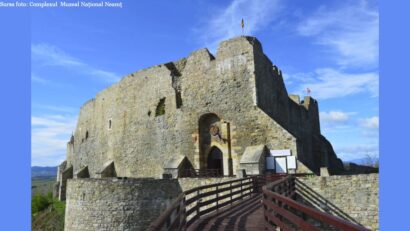
Today we take a look the cultural and historical heritage of north-eastern Romania, exploring two of the most important and fascinating tourist attractions in the historic region of Bukovina. The first stop on our journey will take us back in time, all the way to the end of the 14th century, to the Suceava Fortress. This imposing fortress hides a historical curiosity and a true record: it went down in history as never having been conquered in battle. For example, in 1476, it heroically withstood a siege led by the feared Sultan Mehmed II, the Conqueror of Constantinople.
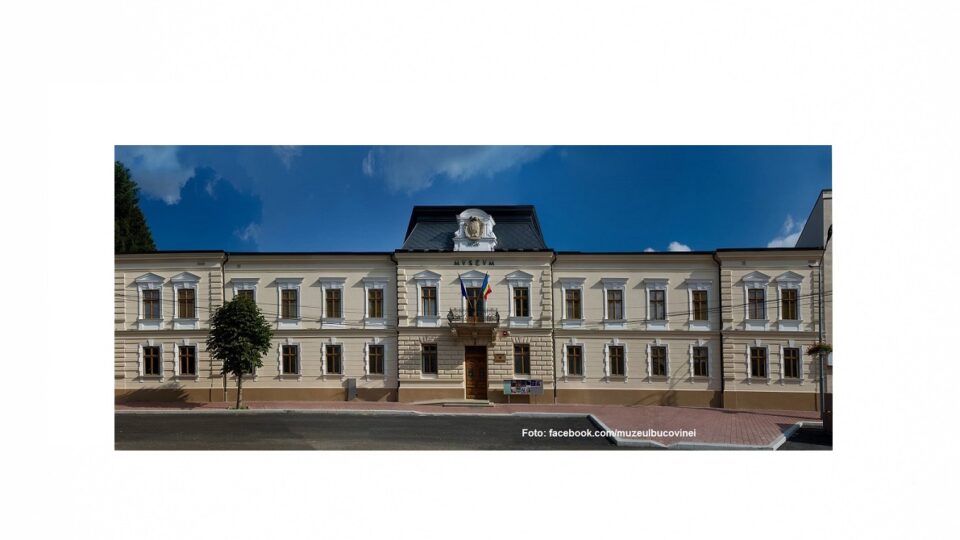
Within the walls of this veritable fortress of medieval Moldavia, we are guided by Constantin Emil Ursu, director general of the National Museum of Bukovina.
“The eastern part of Romania functioned as an independent state until 1859, being a principality whose origins date back to the 14th century, in the northeast of the country, more precisely in the Suceava area. The Suceava Fortress was the emblematic fortification of the Moldavian rulers. In addition to its defensive role, the citadel housed the mint and the state treasury, playing a major role in Moldova’s defensive and economic systems. The monument was built at the end of the 14th century and is first documented in 1388, during the reign of Prince Petru I Mușat. The fortress underwent several phases of expansion, the most significant of which took place in the 15th century, during the reign of Stephen the Great. He expanded the fortification by constructing a double outer wall, a counterscarp, and a defensive moat approximately 10 meters wide.
Though it remained undefeated by enemy armies, Suceava Fortress ultimately fell victim to political manoeuvring. It was Alexandru Lăpușneanu who moved the capital to Iași, a city lacking fortifications, precisely to meet the strict requirements of the Ottoman Porte. Thus, the glorious bastion entered a long period of decline and was eventually demolished. After more than two centuries of neglect, the ruins caught the attention of architects. Constantin Emil Ursu continues the story of the fortress’s revival.
“After its heyday, the fortress remained the region’s main landmark as long as Suceava served as the capital of Moldavia. When Prince Alexandru Lăpușneanu moved the capital to Iași, Suceava fell into obscurity, though it remained a strategic geopolitical point until after the reign of Vasile Lupu. At the end of the 17th century, the fortress was destroyed by order of the Ottoman Empire. The ruins were only brought to light at the end of the 19th century, when intellectuals from Suceava, together with the Austrian architect Karl Romstorfer, initiated extensive excavation work at the site. Thanks to the precision with which these initial excavations and architectural measurements were carried out, our museum now holds an extremely valuable collection of original artefacts.”
Today, Suceava Fortress is more than just a silent monument. Extensive restoration work has breathed new life into it, transforming it into a true living showcase of Bukovina. It is a wonderful curiosity in the way that the deep defensive moats, once built to keep enemies at bay, now manage to bring together and unite thousands of visitors through the power of music and art.
“In addition to educational workshops for younger generations, the Citadel hosts two major annual events for the general public. The first is the ‘Ștefan cel Mare’ Medieval Art Festival, held in mid-August. This is the only festival of its kind initiated by a museum in Romania and one of the most important at the national level. The second major event is a rock music festival, which also takes place in the summer right in the fortification’s defensive moat.”
We are now opening the gates to the Bukovina Village Museum. This attraction holds a unique distinction: although it recreates a world that dates back centuries, it is the newest open-air folk-art museum in Romania. Constantin Emil Ursu explains the inextricable link between the rich forest resources of Suceava County and traditional architecture.
“The Bukovina Village Museum is one of the newest open-air folk art museums in Romania. The exhibition focuses on traditional wooden architecture, a fundamental material for this region, given that forests cover 60% of the current area of Suceava County. The village reflects the harmonious coexistence of Romanians with other ethnic groups in the area, including Germans, Poles, Ukrainians, Jews, and Italians. The museum faithfully recreates a traditional settlement, including farmsteads, community buildings, and technical installations that illustrate the occupations, crafts, and way of life of the inhabitants.”
A unique feature of this museum is its high degree of functionality: almost nothing is merely for show. The interiors are authentically arranged, the ovens are operational, and at the church brought from the village of Vama—a monument built in 1783—actual religious services are held on Sundays and holidays. This is the perfect setting in which the very essence of rural life is brought to life.
“Each micro-region of Bukovina has its own distinct way of life, a fact reflected in the museum’s layout. Here, visitors can explore a pottery workshop, a functioning church, a school, a tavern, a threshing floor, and a granary. The space fully captures the essence of a Bukovinian village. A second area features already-built farmsteads. The attraction is popular with both foreign and Romanian tourists. Unfortunately, rural life has lost its prominence in urban areas, and today there are generations who no longer have grandparents in the countryside. On the other hand, for foreign visitors, contact with our rural culture is a true source of fascination. Especially the re-enactment, across three distinct attractions, of traditional rites of passage: baptism, wedding, and funeral.”
So, whether you choose to explore the impregnable walls of Suceava Fortress or rediscover the leisurely pace of life of our ancestors at the Bukovina Village Museum, the past is more alive than ever in this region. (MI)