The European Film Festival
A roundup of the anniversary edition of one of the major cinema events in Romania
Corina Sabău, 23.05.2026, 14:00
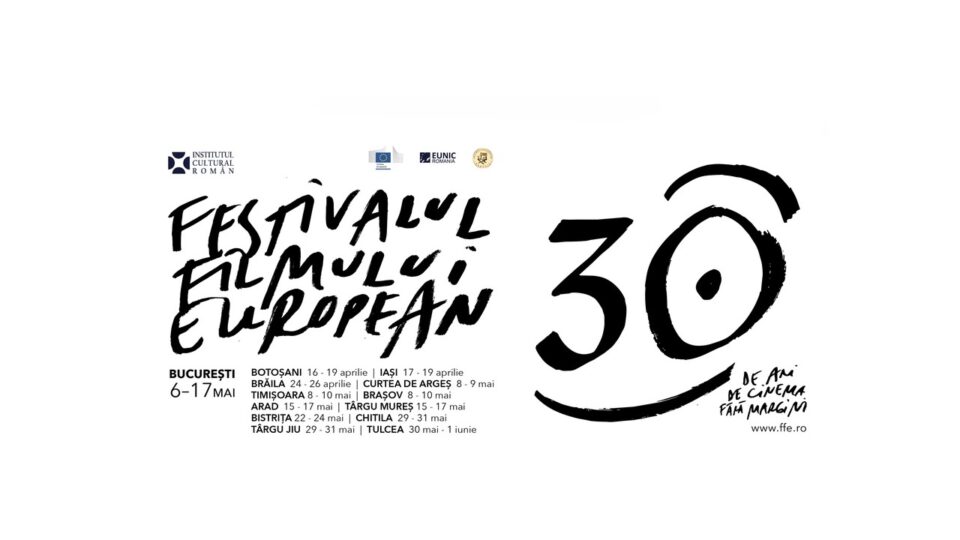
The European Film Festival is currently winding down its landmark 30th anniversary edition in Bucharest, though the momentum continues to pick up as screenings roll out to other cities across the country. This year marks the festival’s most ambitious edition yet, spanning 13 Romanian cities and featuring a massive lineup of 55 films, including 46 national premieres. The program invites audiences to dive into a mix of award-winning productions, experimental shorts and deep-dive documentaries, all while offering the rare chance to meet European filmmakers in person. Under the banner of “Cinema without borders”, organizers have crafted a season that champions artistic freedom and cultural diversity, emphasizing how film can serve as a vital bridge between different places and generations.
The festivities kicked off in Bucharest at the National Museum of Art’s Auditorium with Miro Remo’s “Better Go Mad in the Wild”. This Slovakian production borders both documentary and fiction, following the evolution of two characters who have retreated from civilization to live in a state of radical, raw autonomy. Since that opening night, the cinematic journey has continued through local mainstays like Cinema Elvire Popesco, Apollo 111, Cinema Union and the Garden with Films.
Artistic Director Cătălin Olaru notes that this year’s selection was driven by a desire to find stories that challenge the viewer, shifting their perspective on the European landscape and their own internal world. When curating the lineup, the team looked for a perfect harmony of thematic weight, stylistic edge and geographical variety.
Cătălin Olaru: “All these elements were on our radar. While I’d say we’ve represented the various regions as fairly as possible, that’s really a testament to the fact that Europe, and its cinema, is a space that deserves to be explored in its entirety. My priority wasn’t just about checking boxes for every country. I was looking for artistic voices that felt genuinely relevant to me and, by extension, to the public. We ultimately chose films that refuse to leave the audience indifferent – works that offer a fresh lens through which to view a corner of Europe, our own identities and the communities we call home. We simply went after the most compelling, current films that actually had something to say”.
This anniversary edition also looks back even as it moves forward, featuring a retrospective produced alongside the University of Theatre and Film (UNATC). Titled “30 Years Later”, the program stages a fascinating dialogue between the short films of the ’96 generation and the work of today’s rising stars. The festival also maintains its tradition of appointing honorary ambassadors to champion European film, this year enlisting two heavyweights: Ada Solomon, a powerhouse producer and President of the European Film Academy, and Igor Cobileanski, the acclaimed Moldovan director whose work captures the shared creative spirit found on both sides of the Prut. The visual identity of the festival is provided by the artist Dan Perjovschi, whose exhibitions have traveled the world, being presented in the most important museums, throughout a career of over 40 years in the world of contemporary art. In his creations made especially for the 30th edition of the European Film Festival, the artist explores themes such as the reflection of European values in cinematic creation, the way in which they can coagulate entire segments of society or complete freedom, as an essential element of artistic expression. In the last days of the Bucharest edition, meetings between the public and the filmmakers continued. On May 17, viewers could participate in a question and answer session with the team of the film “De capul nostru” (On our own), directed by Tudor Cristian Jurgiu, a film awarded at the Berlinale by the International Confederation of Art Cinemas.
Many of the films selected for this edition are being screened for the first time in Romania. Cătălin Olaru, the festival’s artistic director has details: “We have films for the general public, we also have comedies, even films that could be considered love stories at best. Overall, however, the selection focused on what is seen less often on cinema screens, in the few halls that still host art films: festival films, films for film lovers, titles that appear rarely and that, I hope, remain in the memory for a long time. And, to end on an optimistic note, if the pandemic period dealt a rather strong blow to this fragile edifice that is cinema and, more broadly, to the consumption of culture, I am happy to note that in recent years the public has started to return to cinemas. People are going to the cinema more and more often and are participating in greater numbers in film festivals. And this can only make us happy.”
After the Bucharest edition, the European Film Festival continues in other cities in the country, including Arad, Târgu Mureș, Bistrița, Chitila, Târgu Jiu and Tulcea. The 30th anniversary edition thus marks almost two months of screenings and meetings dedicated to contemporary European cinema, in a festival that aims to bring the audience closer to films that are rarely shown outside of major international events. (VP, LS)