Security risks in the Black Sea
Black Sea security is drawing the attention of European officials. More details in this report by MP.
Mihai Pelin, 17.11.2026, 14:00
The number of war-related objects from Ukraine found in the Black Sea basin, particularly drones, has risen sharply over recent months. Some of these devices carried unexploded payloads. The vast majority have been discovered in Romanian, Bulgarian and Turkish waters. In recent days, a French military aircraft deployed to Romania’s Mihail Kogălniceanu Air Base in the southeast spotted components of a second drone drifting 45 nautical miles off the Romanian coastline. Pyrotechnic evaluation and clearance missions scheduled by military divers were temporarily postponed due to adverse weather conditions, and are set to resume as soon as meteorologically safe operations can be ensured.
Meanwhile, within Romania’s territorial waters, several commercial vessels have been targeted by drones over the past few days. Romanian authorities confirmed that three merchant ships were struck on Saturday off the Romanian Black Sea coast. Prime Minister Luca Niculescu condemned the attack as “unacceptable” and “a violation of international law.” Just a day prior, another cargo vessel was similarly hit. The strikes occurred near the Sulina Canal, a vital maritime shipping route linking the Danube River to the Black Sea, which is heavily relied upon by Ukraine for its grain exports. Concurrently, Romanian Ministry of Defense radars picked up aerial targets in the vicinity, prompting the Romanian Air Force to scramble fighter jets to monitor the situation.
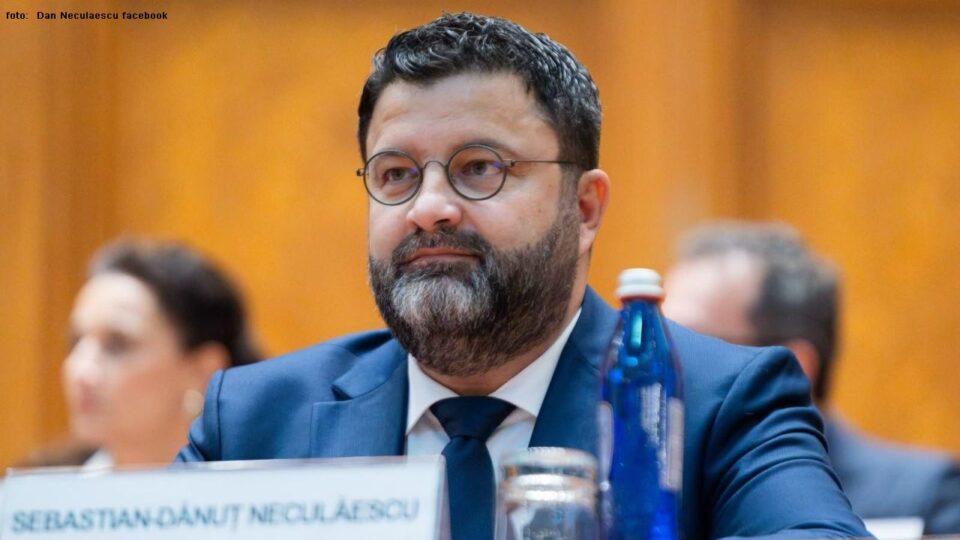
Against this tense backdrop, the Black Sea anti-mine naval combat group, MCN Black Sea, has sortied from the Bulgarian port of Varna toward the Romanian port of Constanța, where it will remain stationed until November 18. Dan Neculăescu, the head of diplomacy, stated that he has received assurances from international partners that Romania will receive supplementary equipment to help manage incidents in the Black Sea. Regional security was high on the agenda on Monday during a meeting of the Foreign Affairs Council in Brussels, as well as a separate gathering involving littoral states and countries from the Caucasus region.
Neculăescu noted that he briefed the European Union and allied nations on the Black Sea incidents, characterizing them as unacceptable both in scale and frequency. EU foreign policy chief Kaja Kallas warned that Russia has turned the Black Sea into the most dangerous maritime zone in the world. She emphasized that Moscow’s targeting of commercial vessels, particularly those transporting grain, poses a direct threat to global food security. Kallas further underscored that the war in Ukraine jeopardizes Black Sea trade corridors and disrupts economic and energy cooperation among regional states. To counter this, she announced that the EU is committing 50 million euros toward enhancing maritime security across the region. (VP)