Fresh Fruit and Vegetables in Schools
At a time when we are swamped by news about how bad for us much of the food on the market is, and how our nutrition habits are anything but nutritious, we definitely need a change. European institutions have been on the issue for years now, coming up with
Christine Leșcu, 01.05.2013, 13:36
At a time when we are swamped by news about how bad for us much of the food on the market is, and how our nutrition habits are anything but nutritious, we definitely need a change. European institutions have been on the issue for years now, coming up with programs like the one of distributing fresh fruit and vegetables in schools.
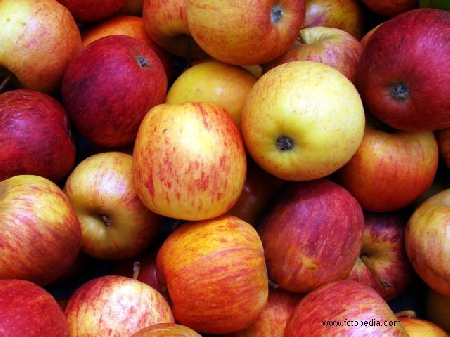
The EC has been underwriting this program for five years now, and the growing number of children getting its benefits shows its effectiveness. In the 2011-2012 school year, more than 8.1 million children in EU member states received regular servings of fresh fruit and vegetables in school. Romanians have not missed out: since 2009, they get one fresh apple on their lunch break every day. Irina Creanga, European business adviser for the ministry of agriculture, explains how this program unfolded and how it was received:
Irina Creanga: “Since the start of this program, we have only distributed apples, and we may continue with just apples, it hasn’t been decided yet. The program is aimed at years first to eighth. This year, as a first, we included the preparatory year. For instance, in 2010-2011, over one million pupils in 6,200 schools reaped the benefits of the program. The program was very well received among students. Around two thirds of them said they ate their apple. 86% of them believe that the program is useful and is worth pursuing. As for preferences, apples are among their favorites. The report also shows that in the countryside, children prefer exotic fruits, such as bananas.”
The program also seems to be a success in other EU member states where it has been applied. MEP Claudiu Tanasescu, sitting on the environment, public health and food safety committee, told us about it:
Claudiu Tanasescu: “In the report to evaluate this program it is shown that it brings a necessary and adequate contribution to ensuring that kids have a more balanced nutrition. Both children and schools are enthusiastic about the program, and want to take part in it in the future. In participating countries one can clearly see a rise in fruit consumption in schools, with consumption exceeding the quantity that was distributed. However, one cannot yet say if the program will lead to better eating habits in the long run.”
The success of this program convinced the European Commission to beef up funding for the 2013-2014 school year, bringing it up to 90 million Euro. The main beneficiaries will be Italy, with 20.5 million Euro, followed by Poland, 13.6 million, Germany, 12 million, Romania, 4.9 million, France, 4.7 million, Hungary, 4.5 million Euro, Spain, 4.4 million Euro, and the Czech Republic, 4.2 million Euro. Of course, these are the figures before adding the co-financing supplied by each country. In Romania, the fruit will be distributed for 100 days, starting in November 2013. It is estimated that 7,500 schools and 1.7 million students will get the benefit of the program.
The fruit distribution for schools program also has an education component: students learn healthy eating and how the fruit they eat grows.
Irina Creanga: “First and foremost, the aim is in terms of health and education, such as promoting a healthy lifestyle based on consumption of fresh fruit and vegetables, learning healthy eating habits, and awareness of the advantages of this type of eating. Besides health and education, one of the aims is to bring children closer to the rural environment. We are talking about organizing visits to orchards and vegetable farms, to fairs and exhibitions, to Harvest Days. Also, schools organize courses and contests for gardening, so called health education classes.”
Even though they are pleased with the initiative, parents believe that these measures adjacent to education are not properly understood and applied. Here is Adrian Topor, vice-president of the National Federation of Parents Association, talking about the distribution of apples in schools:
Adrian Topor: “We have signals that in certain areas things did not go smoothly. The apples got there late, and were of questionable quality. From our point of view, this program has not been applied fully, and was not oriented towards what we want for our children: teaching the kids to have healthy food behavior. If we simply hand them an apple and tell them to eat it, that is not enough. If we, as adults, don’t eat fruits and vegetables, they won’t either. If we tell them to eat one piece of fruit and one vegetable, we lose them. What would make sense would be to explain to them why it is good to eat that. Also, we have to make sure the apple is tasty, not dull or sour. There is another problem as well: the lack of spaces where our children can sit down and eat, places that are very clean. They have to eat their fruit, or milk and croissants as schools offer, sitting at their desks.