Social Enterprises in Rural Romania
Social economy is a pillar of European economy, accounting for roughly 10% of the GDP.
România Internațional, 23.07.2014, 12:03
At a first glance the phrase ‘social economy’ seems a contradiction. The economy, as we know it, is profit and consumption oriented. And the social dimension, if any, is not necessarily obvious. Nevertheless, social economy is functional in the European Union and not only. Actually, this sector is a pillar of European economy, accounting for roughly 10% of the GDP. More than 11 million workers, about 4.5% of the EU’s active population, have jobs in the social economy and a European Parliament resolution issued in November 2009 encourages the development of social enterprises both as models for economic growth and as inter-community assistance. Elisabeta Varga, a consultant in the NESst foundation, which provides consultancy to various social enterprises, gives us a detailed description of social economy.
“It has developed in response to the concrete needs of communities, and has come up with solutions to social issues, which are not covered by the public and private sectors. The objectives of social economy are the creation of new jobs and getting citizens more involved in community affairs. We can define it more clearly in opposition with the market economy, whose main aim is to make profit. As opposed to it, the social economy is designed to improve standards of living and foster new opportunities for the disadvantaged.”
The concept of social economy is not strange to the Romanians either. It was operational back in the time of the communist dictatorship as manufacture cooperatives. Here is Dumitru Fornea, member of the Economic and Social European Committee.
“Social economy is not a new concept, neither for Europeans in general, or Romanians in particular. Here, though, it took other forms. It started with the concept of ‘cooperation’ through cooperatives. Here, however, cooperatives failed because the communist state took control over this form of voluntary association. In the West, there have been forms that replaced these cooperatives, such as associations of workers in Spain and various types of foundations, which today are very active in Europe, and even in Romania. Social economy wants to capitalize on human resources to a maximum extent, focusing mostly on people, not on profit.”
Marred by the communist period, social economy in Romania had difficulties after 1990. In spite of this, in 2009, the social economy employed 3.3% of all workers in Romania. By 2011 it became an important sector of economic and social life, with mostly NGOs active. In 2009, 69% of active entities in the social economy were created by various associations and foundations, with the rest of 31% being the property of cooperatives. Elisabeta Varga gave us examples of social enterprises in Romania. She said that most of them could be found in the countryside:
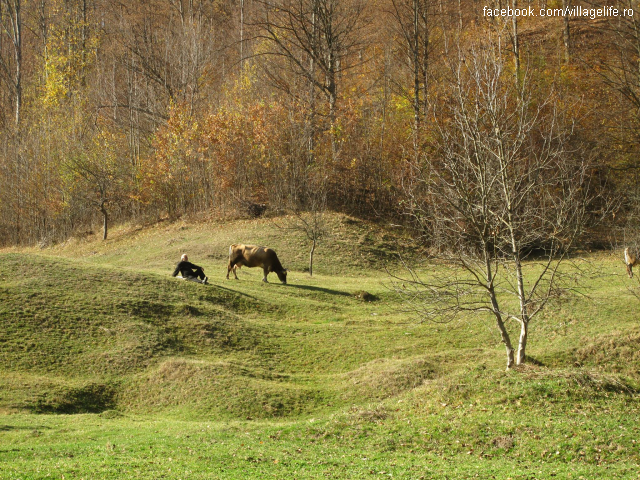
“One of them is an association called ‘Village Life’, set up by a group of young people who used to work in various corporations, but later got back to the values of the village they want to promote. Their social enterprise deals with rural tourism. They want to promote this area, and for this they work with various households in the countryside which host tourists, showing them village life and their daily activities. They show them houses and beautiful places, as well as fast disappearing traditions. Another example is that of a foundation in Salaj county, which, along with the local authorities, have set up a social enterprise that wants to create a tourist brand on Barcau Valley. The foundation supports small honey makers in the area.”
Since this is such an important sector for the EU, its institutions provide member states with several financing possibilities, as we found out from Dumitru Fornea:
“In Romania, the European program POSDRU is meant to develop the social economy. They tried to provide support for the social economy between 2007 and 2013, and we hope for this financial support to continue in the next financial year. They tried to help social enterprises, but accessing these funds supposes a certain amount of experience and knowledge. That is why it is important to be an associate if you want to have success and access European funds.”
However, even though people are willing to get involved in a social enterprise, the access to money is not always easy. Here is Elisabeta Varga:
“For small entrepreneurs, for small social enterprises of the kind we mentioned, accessing these funds is very difficult. In fact, these funds are inaccessible to them. Firstly because of the co-financing requirement, which is an amount that many entrepreneurs simply don’t have. Practically, everything stops here when it comes to accessing European funds of this nature.”
Improving access to financing was included in the 2011 ‘Initiative for Social Entrepreneurship’, which is an ample EU plan included in the EU 2020 Strategy. In spite of this, for social entrepreneurs across the country, European funds are still a rarity.