Anti-fake news education
Societal initiatives designed to combat the spread of disinformation
Christine Leșcu, 23.11.2022, 14:00
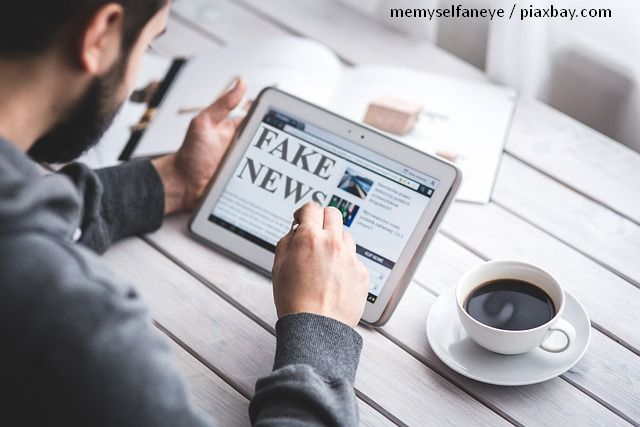
With the growing number of disinformation and fake news, responsible journalists have also become more vigilant. To an equal extent, the need to educate audiences against the threat of fake news has led to the organization of special classes and the publication of disinformation-debunking content. And it all starts with a precise definition of the terms. For instance, “fake news” is a term oversimplifying things, whereas “disinformation” rather seems to be fitted for efforts at rolling out half-baked truths into the public sphere, detracted or taken out of context with a view to manipulating public opinion. Cristina Lupu is project coordinator with the Center for Independent Journalism, an organization that has been organizing media education classes since 2017. The Centers programs first and foremost address high school teachers, who subsequently prepare students how to tackle disinformation. A large number of fake news are promoted on social media, the favorite online means of communication for teenagers. Cristina Lupu.
“In our experience, we believe they are better prepared than adults because they were somehow born into this ready-made environment. If we look more carefully, we will notice they are as confused as everyone else, because this is a difficult period to navigate. The infomedia around us poses challenges for each of us, teenagers or adults alike. Obviously, teenagers are not as interested in the news as we are”.
Still, neither are adults impervious to disinformation, as they lack the experience of fact-checking as well as the critical eye required by any sound analysis. Cristina Lupu told us more:
“In our classes we say we are all media consumers in order to reinforce our points of view and reassert our own view of our ourselves and the world. They basically do the same as adults. And while teenagers focus on films, music and actors as their main topics, they are also interested in other topics, particularly 11th and 12th graders we work with. What happens to education? What happens to possible future jobs? What happens in the broader pandemic context? We believe information should be made more appealing to teenagers before complaining they dont read the news”.
One of the aims of the Centers classes is to develop civic spirit not just through journalism classes per se, but also by inserting relevant information as part of traditional classes such as Romanian language and literature, for instance.
“Were not interested to see teenagers learn to write news articles. But the moment they know how an article is produced, they learn the elements of a well-written news item. So, the next time they read a news article, they might see what its missing or what emotional goals the author is pursuing in order to trigger a strong emotional response. Let me give you an example. Caragiales Lost Letter. Media education is an important instrument the moment this literary work is taught, because it provides teachers with the possibility of discussing editorial independence in class and why it is important the journalists are not influenced by their employers, or what can happen when employers try to use their publication to attain personal goals, which is exactly what happens in this theatre play”.
Another educational project is the Antifake platform, an online publication providing secure information and debunking inaccurate or false information. Both students and young teachers with Journalism and Communication university departments contribute to this publication. Antifake also has a section dedicated to fake news targeting the war in Ukraine, although it tackles many other topics, Florin Zeru, researcher and coordinator of Antifake, has told us.
“We have recently also launched Green Anti-Fake, which synthesizes the most important news articles focusing on climate change, technological innovation to prevent or curb the effects of climate change, solutions adopted by countries and businesses, as well as a fact-checking analysis of disinformation circulated online, including in Romania”.
How does this process work? Florin Zeru has the details.
“Our effort focuses on various types of content. We are talking about social media posts, videos, articles on webpages, blogs and so on and so forth. This content is selected depending on its potential of turning viral and its risk of misleading and confusing audiences, or stirring panic. Our fact-checking process consists of several stages. It starts with reviewing fact-checking analyses published by other organizations, particularly if the false narrative was circulated at international level. Then we conduct a number of searches online and in available databases. We analyze the sources of the disinformation, as well as the way it was promoted online. The next phase consists of consultations of reliable experts in a relevant field in order to make our own assessment. We demand clarifications from authorities if necessary. We also consult certain publications and available research studies. Each assessment is accompanied by links to the sources of statements or evidence. We provide sources for everything we say”.
For the young people taking part in fact-checking programs, there is no better experience of debunking fake news, helping other people move from falsehood to the truth when reading news articles. (VP)