The National History and Archaeology Museum of Constanta
Here you can find an impressive collection, with over 430,000 exhibits that date back to the Paleolithic
Daniel Onea, 09.04.2020, 14:13
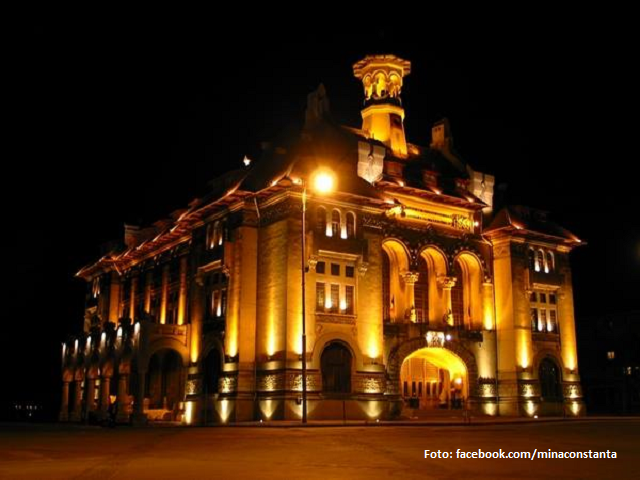
Today we are heading to the seaside, stopping at the National History and Archaeology Museum of Constanta, one of the richest in Romania. Here you can find an impressive heritage, with over 430,000 exhibits that date back to the Paleolithic. Even though the museum is shuttered these days, the institution provides the tourists with a captivating virtual tour.
The museum stands apart from other similar institutions in other counties because, even though it is focused on the history of the region of Dobrogea, it has a national theme too. You can admire artifacts of Greek, Roman, Byzantine, and Medieval origin, ceramics, as well as tools made of stone, bronze, and iron. You also find ancient architectural elements, such as columns, capitals, and frontispieces. You can stroll around ancient sculptures, glass vessels, bronze statuettes, and jewelry. At the same time, the coin collection includes pieces of silver, bronze, and gold, some of them unique.
Cristian Ceagra is a guide with the museum:
“Dobrogea is a miraculous territory, too little known, unfortunately. It is a place of very rich history. Wherever you go, you can find a ruin or an extraordinary story. It is the place between the Danube River and the sea, we have the phenomenal Danube Delta, and fascinating stories. These stories always have a grain of truth to them, because they are supported by all kinds of ancient vestiges, some of them unique in the world, such as the Glykon serpent. All these put together are an extraordinary calling card. No one feels a foreigner here, because Dobrogea is multicultural and multi-ethnic.”
The Glykon serpent is an ancient deity in Roman mythology. It is a statue unique in the world, dating to the 2nd century century BCE, and is on the museum ground floor, alongside other unique pieces. For instance, we have the Fortuna with Pontos statuary group, protector of the city and port of Tomis, dating back to the 2nd or 3rd century. The aedicula with the double representation of the goddess Nemesis, one of the most remarkable of the museums pieces, dates back to the 2nd century BCE, along with gold jewelry collections. On the floor above, you can see the giant tusks of a mammoth, because it is dedicated to a different era. Here is Cristian Ceagra, guide with the museum and publicist:
“Here you can see a bear skull, found in a cave. The fauna was completely different then. During that time, men were no longer hunter-gatherers, they had become sedentary, and all sorts of Neolithic cultures emerge. Culture becomes very important, as well as ceramics. After becoming sedentary, one builds a home and start keeping a homestead. We have a reproduction depicting how people were tending to their homes six or seven thousand years ago, at a time when clothing made of animal skins was replaced by fabrics.”
The museum also has plenty of exhibitions, as Cristian Ceagra told us:
“We have all sorts of exhibitions that attract the public, because we target everyone, Romanians and foreign, experts and laymen. We are trying to surprise everybody, and that is possible, because when you have such a long and beautiful history it is impossible not to bring an element of novelty, even for someone who has done research on the Internet, and thinks they know something about Dobrogeas history. I invite everyone who has read up on Dobrogea to get here and see that what they have read is 1% of what they can find in the field. We generally have periodic exhibitions. The museum is based mostly on ancient artifacts, but we dont forget to emphasize the other elements too. In a newspaper exhibition we present papers that are 100 years old, bilingual ones, from local ethnic communities.”
On an average, it takes two hours to visit the museum. However, if you go on-line, it can take as long as you like. It will definitely take more, because youll probably want to find out about the legends and stories behind each of the artifacts. It will be a tour that everyone can find something interesting in, says Cristian Ceagra:
“Tourists are impressed, they didnt expect something like that. This is what they tell us, both in the museum and in the old part of Constanta. There are many things that people dont know, and they are surprised. They asked why we dont advertise more, since we have such richness. When a city is cosmopolitan, with people from all corners of the ancient empire, the heritage is passed on to consequent generations. This is why this area has been called everyones home. No matter their religion, ethnicity, in this area everyone, Jewish, Christian, or Muslim knew that no one would bother them, and that they can coexist in peace. This is the reason why this city developed the way it did, and no much has change from that point of view over the last 2,500 years.”
The National History and Archaeology Museum of Constanta was set up in 1878. Since then, the Neolithic exhibits from the Hamangia and Gumelnita cultures, farming tools from antiquity, sarcophagi dating to the 1st to the 3rd centuries, Greek and Roman amphora, statuettes of Greek deities, these have been impressing visitors for generations. The virtual tour that I invite you on is called Virtual Incursions in the Ancient History of Tomis. In addition. On the museum web page you have at your disposal a photo gallery, a video gallery, as well as an interactive map. All these can be enjoyed from the comfort of your own home.