Liberal Mihail Farcasanu
Mihail Farcasanu was a leading figure in the Romanian Diaspora, the first director of the Romanian department of Radio Free Europe, and a former Liberal reformer before WWII.
România Internațional, 19.07.2013, 12:09
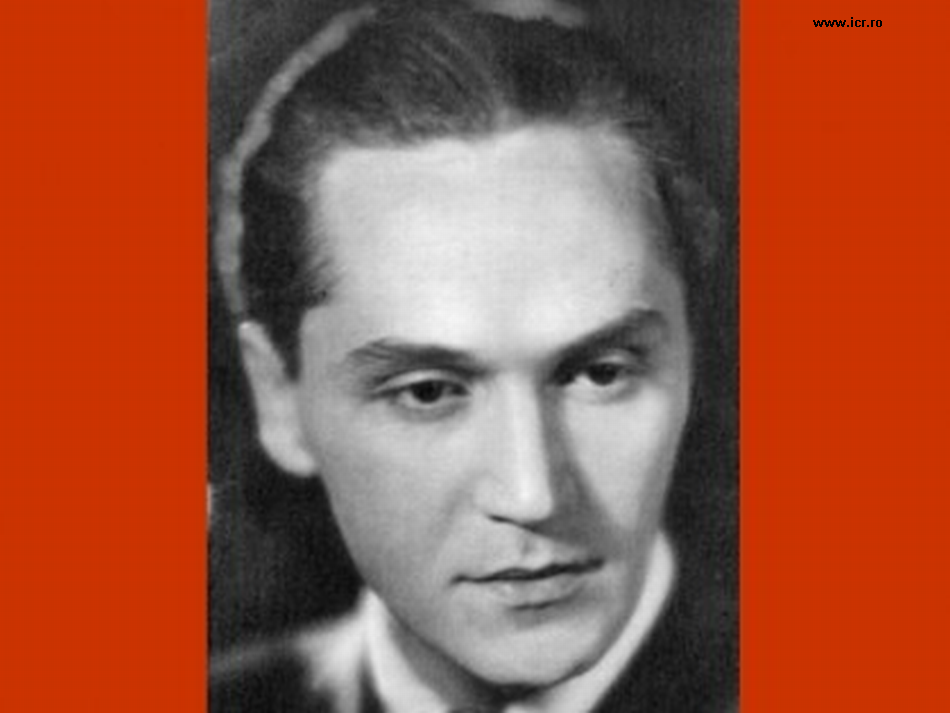
26 years ago, on July 14, 1987, Mihail Farcasanu died in Washington. He was a leading figure in the Romanian Diaspora, the first director of the Romanian department of Radio Free Europe, and a former Liberal reformer before WWII. Born in 1907, he was of the same generation as the philosophers Mircea Eliade, Constantin Noica and Emil Cioran, all of whom were in favour of political authoritarian. Unlike the three thinkers, Farcasanu opted for democracy. He studied at the London School of Economics with Harold Laski, the future head of the British Labour Party, but he did not follow in the latter’s leftist footsteps. He then went to Germany for his PhD studies, supervised by Carl Schmitt, but did not agree with the professor’s totalitarian leanings. In 1939 he was appointed editor-in-chief of Romanian Quarterly, the quarterly of the Anglo-Romanian Society, and in September 1940 was named chairman of the National Liberal Party’s youth organisation. Ioan Stahomir, a professor at the Bucharest School of Political Science, drew for us a portrait of the Liberal leader Mihail Farcasanu:
“After 23rd August 1944, he was among those that restored in Romanian democracy the energy it had lacked during the authoritarian and totalitarian regimes of 1938 and 1944. He was one of the leaders of the Liberal Party youth organisation and one of the active publicists of the democratic opposition during this time. Since Mihail Farcasanu was involved in expressing the hostility that the population felt towards the Soviet occupation and the puppet regime installed by it in November 1945, his options were simple: leave the country or endure repression from the Petru Groza regime. He eventually managed to leave Romania and, after going to several European countries, he settled in the US. It is important to emphasise the fact that he retained his values and remained perfectly in tune with the intellectual ideas circulating in the western countries of his time.”
In fact, Mihail Farcasanu’s thinking was ahead of his time, anticipating the changes underwent by the Liberal doctrine in Western Europe after 1945 in the sense of being more open towards social liberalism and the Christian Democratic doctrine. Ioan Stanomir is back with details on Mihail Farcasanu’s political project:
“His project may be summarised by a few key words: equality before the law, freedom, human dignity, integration into Europe and restoring tradition. From all points of view, he was a huge personality and one that could have made Romania a different country. In fact, this is precisely his tragedy, and that of other political leaders, like Corneliu Coposu, Ion Diaconescu and Ion Ratiu, who could have been the leaders of free Romania, but who instead ended up in prison and or in exile, not being able to pursue their political careers.”
Mihail Farcasanu quickly became the enemy of the communist regime. His wife was Pia Pillat, the daughter of the poet Ion Pillat, a descendant of the founder of the Liberal Party, Ion Bratianu. In October 1946, he and his wife fled Romania in a spectacular and risky move. Had he failed, Farcasanu would have died in a communist prison like many other pre-war politicians. In 1950, after he finally settled in New York, he became the head of the newly created Romanian department of radio Free Europe. As a very active member of the Diaspora, the Romanian political police had him under intense surveillance, through various informers infiltrated in his entourage. Here is Ioan Stanomir again:
“Obviously the political police kept a close eye on him in exile, especially since Farcasanu had not been involved with the legionary or Antonescu regimes. The Romanian Diaspora was not entirely democratic. Many of its members were affiliated to the extreme right and actually worked well with the communist regime, especially during Ceausescu. Farcasanu was no admirer of tyrants and was one of their fiercest critics. He also understood that the time for Romania’s freedom had not come. Life was cruel to him and he did not live to see the changes of 1989, when Romania freed itself of communism.”
Mihail Farcasanu’s articles have been gathered in a single volume called “The Future of Freedom”.