
RRI Live!

Listen to Radio Romania International Live

Rail workers’ districts in Bucharest

In early 20th century the rail worker's standard of living in Romania became the main reason for concern for the authorities
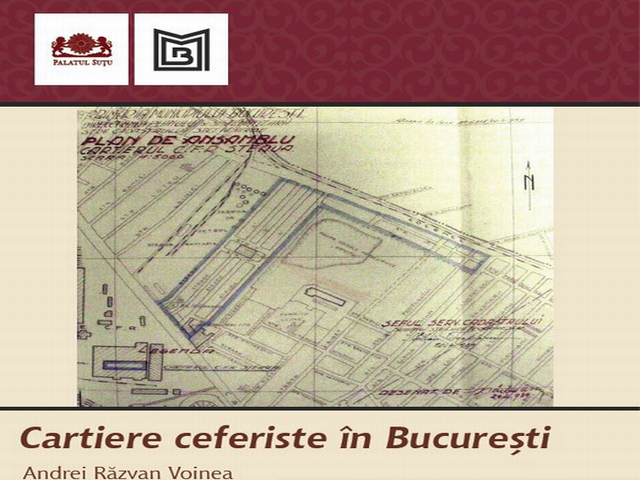
Rail workers’ districts in Bucharest

, 18.10.2014, 15:46

Historian Andrei Razvan Voinea, who studied the emergence of affordable and social housing for workers, says that at the beginning of the 20th century, tuberculosis was wreaking havoc in the poor outskirts of Bucharest.


Andrei Razvan Voinea: “In October 1906, the city’s Chief Physician submitted a report to the city hall explicitly recommending the building of decent homes for these workers. So, the main reason for the construction of these cheap houses had to do with health issues.“


The first mayor of Bucharest to take a step in this direction was Vintila Bratianu. He was mayor of Bucharest between 1906-1907 and created the Community Society for Affordable Housing, following the peasant uprising of 1907.


Andrei-Razvan Voinea: “The uprising flared up in Moldavia in March 1907 and gradually spread to other regions. Army troops were deployed in an attempt to calm down the spirits. The soldiers naturally travelled by train. Railway workers began fraternising with the rebels and started to sabotage the railways. A number of strikes and protests were reported between March and June 1907. In June, Bucharest’s mayor Vintila Bratianu ordered the construction of the first social houses, which were inspired by the garden city movement, which circulated in Europe in the late 19th and the early 20th centuries.


Romania’s early urban engineers adopted the garden city principles and adjusted them to the situation in Bucharest. Their plans followed certain principles, such as the arrangement of buildings within equal distance of each others to allow the ventilation of the homes and prevent dampness, which was the main cause for tuberculosis at the time, and the constant exposure of the houses to the son. Moreover, all building works had to be carried out on the site. Also, stoves were built for heating.”


So, starting in 1912, the Romanian Railways Company began to build houses for its employees, at first jointly with the Community Society for Affordable Housing and later on its own, having created a special fund to this purpose. The site designated for social homes, dating from 1912, was an area known as “Grant”, close to the city’s main train station. 71 houses, comprising 200 apartments, were built here, and the process continued after WWI. Another district called Steaua developed in 1912 between Calea Grivitei and Ion Mihalache Boulevard, with 542 apartments. However, urban planning works on this new site dragged on for many years and it wasn’t until 1937 that pavement and street lighting works were finished.


Nursery school, schools, pharmacies, clinics, a church and a high school were built here after 1912, turning this district into a self-sufficient small town within the city of Bucharest. Houses for rail workers also began being built close to Carol Park in southern Bucharest and again in the main train station area, as well as close to the train depot in the village of Chitila, northwestern Bucharest. A total of 1,235 houses were built for rail workers in Bucharest. Some of them were private property, having been purchased through affordable loan schemes available for rail workers, while others were the property of the Romanian Railways Company and used by its employees.


More social houses were built after WWII in the Steaua district, on the former site of a factory bombed during the war. Six or seven three-storey apartment blocks were built here after 1947. After massive demolitions of older houses during the communist era to make way for the new apartment blocks, these inter-war districts originally built for rail workers are today popular residential areas.



Sergiu Celibidache (1912-1996)
RRI Encyclopaedia Saturday, 24 January 2026

Archaeology in Glina, near Bucharest

Under the visible layer of today’s Bucharest and the capital’s surroundings lie much older traces of human habitation, which predate the...

Archaeology in Glina, near Bucharest
RRI Encyclopedia
RRI Encyclopaedia Sunday, 18 January 2026

Monuments from Soviet-occupied Bucharest

On pedestals, in imposing poses, they have to convey inspiring messages across generations. War heroes and heroines, kings and queens, politicians,...

Monuments from Soviet-occupied Bucharest
RRI Encyclopedia
RRI Encyclopaedia Sunday, 11 January 2026

The Corneşti Iarcuri Citadel

Just a few kilometers from Timișoara (western Romania), in the town of Cornești in the Banat Area, there are traces of one of the most spectacular...

The Corneşti Iarcuri Citadel
RRI Encyclopedia
RRI Encyclopaedia Sunday, 04 January 2026

Ion Monoran

The Romanian Revolution of December 1989 created modern heroes—the heroes of the anti-communist civic movements whose goal was for human beings to...

Ion Monoran
RRI Encyclopaedia Saturday, 27 December 2025

The Museum of Flutes from around the World

Ion Puican The Museum of Flutes from around the World is a cultural project initiated by the ISVOR Cultural Association, dedicated to the...

The Museum of Flutes from around the World
RRI Encyclopaedia Saturday, 20 December 2025

The Bucharest of Yesterday in Postcards

The transformations we see in today’s Bucharest are effects of the communist regime, of the bulldozers and cranes that tried to legitimize an...

The Bucharest of Yesterday in Postcards
RRI Encyclopaedia Sunday, 14 December 2025

The “Prof. Nicolae Minovici” Museum in Bucharest

  The building that houses the “Prof. Nicolae Minovici, Ph.D.” Folk Art Museum, affiliated to the Bucharest City Museum (MMB), is known to...

The “Prof. Nicolae Minovici” Museum in Bucharest
RRI Encyclopaedia Saturday, 29 November 2025

The Last Prince of Moldavia, Grigore Alexandru Ghica

The earthly remains of the last prince of Moldavia before the Union of the Romanian Principalities in 1859, Grigore Alexandru Ghica (1804-1857), have...

The Last Prince of Moldavia, Grigore Alexandru Ghica

Partners

Muzeul Național al Țăranului Român Muzeul Național al Țăranului Român
Liga Studentilor Romani din Strainatate - LSRS Liga Studentilor Romani din Strainatate - LSRS
Modernism | The Leading Romanian Art Magazine Online Modernism | The Leading Romanian Art Magazine Online
Institului European din România Institului European din România
Institutul Francez din România – Bucureşti Institutul Francez din România – Bucureşti
Muzeul Național de Artă al României Muzeul Național de Artă al României
Le petit Journal Le petit Journal
Radio Prague International Radio Prague International
Muzeul Național de Istorie a României Muzeul Național de Istorie a României
ARCUB ARCUB
Radio Canada International Radio Canada International
Muzeul Național al Satului „Dimitrie Gusti” Muzeul Național al Satului „Dimitrie Gusti”
SWI swissinfo.ch SWI swissinfo.ch
UBB Radio ONLINE UBB Radio ONLINE
Strona główna - English Section - polskieradio.pl Strona główna - English Section - polskieradio.pl
creart - Centrul de Creație Artă și Tradiție al Municipiului Bucuresti creart - Centrul de Creație Artă și Tradiție al Municipiului Bucuresti
italradio italradio
Institutul Confucius Institutul Confucius
BUCPRESS - știri din Cernăuți BUCPRESS - știri din Cernăuți

Affiliates

Euranet Plus Euranet Plus
AIB | the trade association for international broadcasters AIB | the trade association for international broadcasters
Digital Radio Mondiale Digital Radio Mondiale
News and current affairs from Germany and around the world News and current affairs from Germany and around the world
Comunità radiotelevisiva italofona Comunità radiotelevisiva italofona

Providers

RADIOCOM RADIOCOM
Zeno Media - The Everything Audio Company Zeno Media - The Everything Audio Company























