The Neolithic shrine in Parța
Ancient monuments are fascinating sites, and the older they are, the more fascinating they get
Steliu Lambru, 05.09.2020, 14:00
Ancient monuments are fascinating sites, and the older they are, the more fascinating they get. This is true for the shrine in the village of Parța, Timiş County, which has recently become better known to the public thanks to an initiative of local authorities, which turned it into a museum.
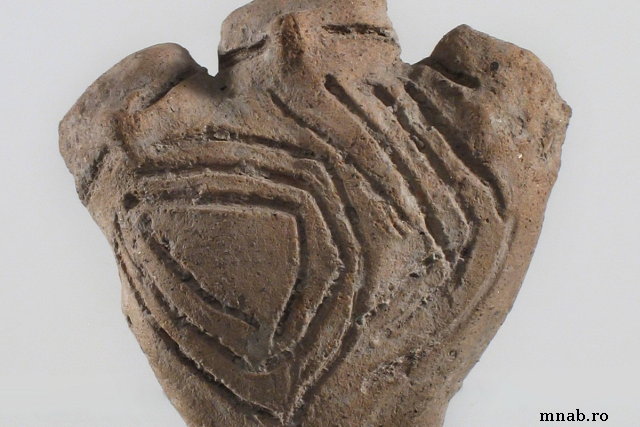
This is a shrine dating back to the Neolithic, located in a system of archaeological sites discovered back in the 19th Century. The shrine was partly restored in the ’80s, and a scale model of it, which included original items found on the site, was hosted by the Huniade Museum in the city of Timișoara.
But experts decided that, over 40 years since that moment, the time has come for the entire site to be introduced in the tourist circuit. Here is archaeologist Leopold Ciobotaru, with the Banat Museum in Timişoara, with more details about the project:
“It is basically a 10-11-m long, 6-m wide building. This building, which was quite impressive in size, divided into two rooms. There are ritual elements included in the structure, and the shrine is spectacular in that it is not only very old, but also it was in quite a good state when discovered, and we were able to reconstruct it properly. We would like the site in Parța to also include the original items discovered here.
The western Romanian region of Banat is an area where a lot of Neolithic sites have been discovered. As archaeologists will tell you, this is the home place of the Turdaș – Vinča culture, which had spread to todays Serbia and small parts of Bulgaria and Romania. This culture dates back to 5,700 – 4,500 B.C., and it was first found by the Serb archaeologist Miloje Vasić in 1908. Leopold Ciobotaru told us what makes Banat such an archaeologically rich region in terms of Neolithic cultures:
“There are several archaeological sites in the Parța area. This one is probably the best known because it is located on the banks of the river Timiş, which winds here and every year eats into the settlements on the banks. So over centuries, some islets have formed on the Timiş, out of debris and remains from the archaeological site. People found small statues and pieces of pottery from Parţa in the 19th century, and brought them to Timișoara—this is how our museum came to own them. In the inter-war years, there was some digging here, but it was only after WW2, thanks to the efforts of professor Gheorghe Lazarovici, that a large-scale archaeological project began here in the ‘80. There are lots of items from this shrine in our museum, a lot of research documents have been written on the topic and quite many young archaeologists wrote papers on the items found in Parța.
By analysing the artifacts found by archaeologists and historians, we can understand how people used to live in those times.
“We actually needed a museum able to better showcase this shrine, and to display many of the items found here and which are still kept in warehouses. And it is better for this to be done right here in Parța, where people can connect the site area to the present-day village. It is also better for people to be able to go out of Timișoara and visit a new cultural site. It has a correspondent in Serbia, our partners are setting up another museum there, a medieval one this time, so people can visit both of them and understand the connections between them.
Thousands of years ago, people used to do the same things they are doing today: work, pray, socialise. Leopold Ciobotaru told us more about the daily lives of the people in Neolithic Parța.
“We are talking about the Banat culture in the middle Neolithic age. There were large settlements, surrounded by defensive moats, and consisting in several houses, up to several tens of them. Some of these houses had an upper floor and a ground floor, so we are talking about strong buildings, arranged along small streets. This is essentially a proto-urban settlement, it is the dawn of the large community organisation system in the Banat Plains. The geography of the place was favourable, the river was close by, people used to hunt and work the land, they raised animals, so settlements developed and evolved in this area. Life carried on here until the end of the Middle Ages, and the present-day village of Parţa is nearby. In Neolithic times, people would manufacture tools, using the resources they knew at that time, namely stone, bone, leather and other organic materials. They had not discovered metal yet, but they made do with what they could and they managed to use the resources they had available, so the community developed quite dynamically and they even managed to build temples. And this is not something trivial, given that this was happening thousands of years ago.
The shrine in Parța has a three-fold mission today: it is a site of scientific research, museum education and a tourist site. From a distance of millennia, thanks to the items preserved here, the Neolithic people tell us, the people of today, about their lives, their struggles and their souls.
(translated by: Ana-Maria Popescu)