Flamanda and St. Catherine slums
The fascinating story of two historical districts of Bucharest.
Christine Leșcu, 15.06.2024, 13:59
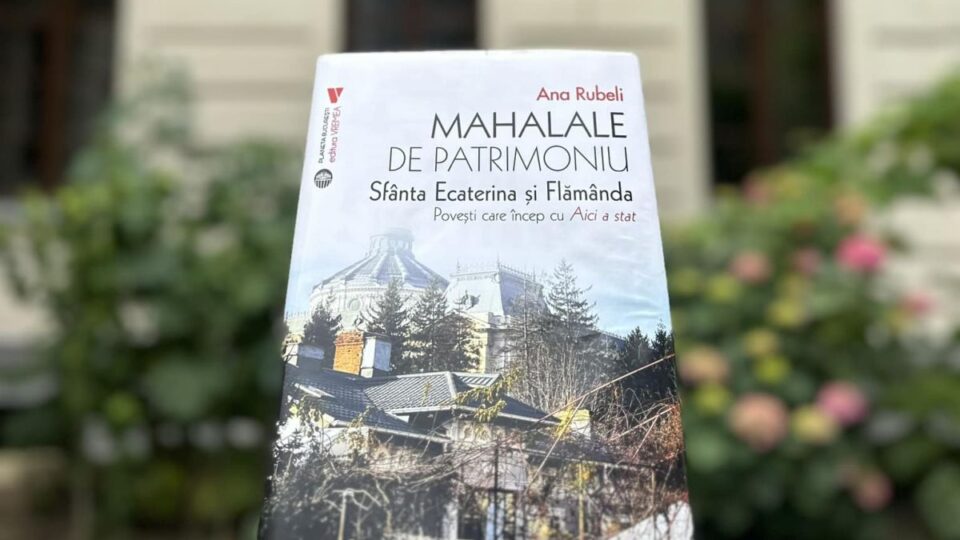
Although close to the Union Square, an area that underwent demolitions and a radical transformation during the communist years, the area behind the Mitropoliei Hill in Bucharest has preserved its historical appearance. The origin of two of the neighborhoods there is linked to the past of today’s the metropolitan cathedral. Ana Rubeli, a researcher and author of the book “Heritage Slums. St. Catherine and Flamanda”, tells us more about the history of the place: ”If we position ourselves geographically in the metropolitan area, at the base of this hill there is a church called St. Ecaterina, which was once a monastery, and about which we have historical data from 1650. It is this monastery that gave the name of the St. Ecaterina slum, because, historically speaking, the slums took either the name of the church or the monastery around which they were formed, or that of a noble family in the area. However, if we look at the origin of the St. Ecaterina slum, it was practically formed due to long-term contracts between the church and the people. Basically, the church decided to give plots of land to people in its vicinity. Thus, the monastery made some money, and the people had a settlement.”
The human texture of the slum has changed over time, a social and economic evolution from one generation to another, taking place. If initially the inhabitants were small merchants, their families, in time, came to be made up of architects, musicians, lawyers or doctors. The architecture of the buildings also mirrors the social condition of the inhabitants. Ana Rubeli tells us what was typical of the houses in the St. Ecaterina slum, which has been preserved for the most part until today: ” Speaking in general, it is the type of house-wagon, the house which is narrower on the side of the street, but which is larger in the depth of the plot. With the increase and financial evolution of the family, new buildings were added to the main one. These were mainly houses with a slightly raised ground floor, whose ornaments testify to the financial status of the person who decided to build them. Some of the houses were made according to the plans of famous architects. They had distinctive elements believed to protect the privacy of the home. Some of the houses were surrounded by vines, an element of vegetation typical of the slum and typical of the soil, because we are near Mitropoliei Hill, which was once Dealul Viilor (the Vine Hill), but also near Dâmbovița River, in an area easily flooded, but very fertile.”
In this green and picturesque region, you can still find heritage buildings designed by architects such as Paul Smărandescu, Ștefan Ciocârlan, Gheorghe Simotta, Arghir Culina. And, in the immediate vicinity of the St. Ecaterina slum is Flămanda, one of the poorest areas of the capital until 1900, mostly inhabited by tailors, shoemakers and soap makers. This slum also appeared around a church, as Ana Rubeli tells us: ”It was, in fact, a plan of the metropolitan church, because we are on the border between the perimeter of the metropolitan church and St. Ecaterina monastery, further east. The project referred to the fact that the poor who came to beg at the metropolitan church were redirected to a wooden hermitage to stay and beg there. The hermitage came to be known as “Flamanda” which means “The Poor” and this is how it appears in the documents of the time. It practically took over this emotional charge of the metropolitan church, and although over time the settlement around it developed, not being at all poor and hungry, this name was kept.
Today, a small part of the owners of the houses in St. Ecaterina and Flămanda know the history of their neighborhoods because few of the descendants of the original families still live there. The demographic change occurred during communism, when houses were nationalized and crowded with tenants. In spite of the fact that, after 1990, they became private property again, not all of them are inhabited today by the original families. But today’s owners can learn the history of the place from the book “Heritage Slums. St. Ecaterina and Flamanda”, released by the Vremea publishing house.