Access to contraceptive methods in post-communist Romania: 35 years on
Reproductive health and teenage sexual education in Romania
Radio România Internațional, 23.10.2024, 14:00
Romanian society has a troublesome past regarding reproductive health. The country’s troubled past began in 1966. We recall that back then a decree was issued, targeting the Romanian population’s accelerated increase. For the previous generations of the communist regime, access to contraceptive methods was on the brink of illegality, while pregnancy termination was described as a crime.
But what is Romanians’ relationship with the contraceptive methods, today?
Andrada Cilibiu is a feminist activist for the FILIA Centre and an expert in sexual and reproductive rights. Here she is, with details on that.
” Given there is no free-of-charge contraceptive method especially for the most vulnerable of us women, there is no info or comprehensive sexual education in schools, therefore, it is all clear the use of contraceptive methods use is bound to be low. Which is worrying, considering two aspects: 1) an increasingly growing rate of sexually transmitted infections about which we do not speak that much as, unfortunately, in Romania, this topic related to reproductive health and sexual rights still is a taboo topic, while another aspect is related to teenage pregnancy, to the unwanted pregnancies and to a society that, unfortunately, describes contraception as being similar to abortion, and that is something we do not want.
We want all women to have access, first of all, to contraception, to information, to sexual education and to safe pregnancy termination procedures. Yet we noticed that in the last 10 years, unfortunately, we have seen a throwback as compared to how Romanian society looked like a decade ago. “
Andrada Cilibiu has told us how, in the years 2000, in Romania, a family planning network was established, offering access to individual discussions, with specialised physicians, about contraceptive methods, about fears and emotional deadlocks on sexual relations, pregnancy or other aspects of reproductive health.
Furthermore, expert Andrada Cilibiu added, the network offered free contraceptive methods, while the discussion on sexual education was carried in rather more positive terms. According to the expert, what happened was that those medical doctors retired without training other specialists and without the network receiving other resources.
Moreover, the years 2000 were marked by massive progress made in the preparation for gaining accession into the EU, which called for complying with certain standards. In another move, Republic of Moldova is mentioned as a positive example, with specialized clinics for youngsters aged between 10 and 24 who benefit from free-of-charge reproductive health services. When asked where we can borrow the good practices from, Andrada Cilibiu answered:
“By all means from the comprehensive sexual education models we find in the Northern countries or in the United Kingdom or in the Netherlands where sexual education is made, in some of the countries, from the very early years, with info which is accessible to children, mainly laying emphasis on consent and on bodily autonomy, and then, taking one step after the next, as children grow, coming up with other pieces of info on healthy emotional and sexual relationships.
We have examples of good practice regarding pregnancy termination also provided by the Netherlands, by France, a country which has fairly recently introduced, in its Constitution, the access to abortion rights. We also have Spain, for instance, with a very good programme of contraceptives distribution. But, in fact, most of EU member states have national contraception plans and offer free-of-charge contraception, especially among adolescents and young people, mostly, but also among vulnerable groups. Romania, in fact, is in this minority cluster of countries that do not have, do not offer free contraception at all.”
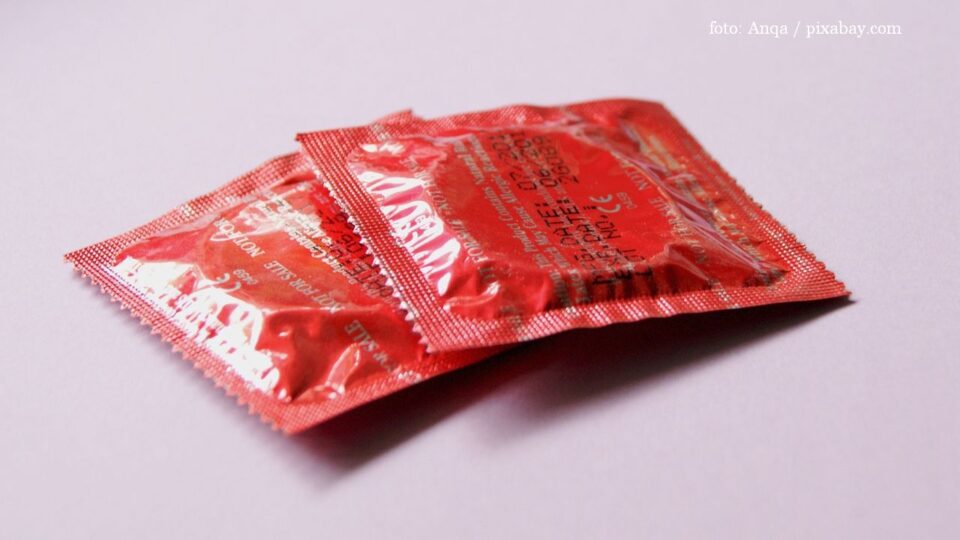
In the spring of this year, the Filia Center launched the study “Care for democracy. The political interests of women in 2024”, with a chapter dedicated to the use of contraception by women in Romania today. According to it, 37% of respondents reported using contraceptive methods in the past 10 years, 62% said they had not, and 1% refused to answer. Of the group of women participating in the study who used a method of contraception, 63% used the condom, 55% the contraceptive pill, 42% the withdrawal method, 38% the calendar method, 24% the morning-after pill (considered more of an emergency measure) and in much smaller percentages more invasive methods, such as the IUD, tubal ligation, or contraceptive implants.
At the European level, the World Health Organization is sounding the alarm regarding the worrying decrease in condom use by teenagers. The WHO study was conducted between 2014 and 2022, included more than 240 thousand adolescents from 42 European countries, and showed that condom use by 15-year-old boys decreased by 9% between 2014 and 2022 (from 70% to 61).
For girls, the percentage dropped from 63% to 57% over the same time frame. The same study showed that 30% of girls and 22% of sexually active boys in Romania did not use a condom or any other form of contraception during their last sexual intercourse. Andrada Cilibiu says:
“Unfortunately, I see many young people rather using pornography as a frame of reference on how to have safe sex. There’s a lot of confusion among them, and they end up believing a lot of myths and stereotypes and having a lot of anxieties about their body image, about the romantic or emotional relationships they get into, about sexual relationships, and so on.
Having neither in the family nor, more importantly, at school, an authority figure to give them information validated by science, and that enters this area of comprehensive information about sex education, unfortunately we leave our young people to their own devices. As a result, they end up having sexual relationships, or enter into relationships where they do not recognize the violence, they do not recognize that what is happening to them is not ok. In this regard, we especially need compulsory and comprehensive sex education for everyone, without parental consent, youth-friendly sexual health services.”
At the regional level, another study published in 2022 by the British medical journal The Lancet showed that, while the average choice of a condom as a contraceptive method in Eastern Europe (by those who choose to use one) is 37 .8%, in Romania, the percentage does not reach 31%. The calendar method, on the other hand, is used by 19.9% of Romanians who choose a contraceptive method, compared to 5.9% in Eastern Europe. The withdrawal method is preferred by 12.8% of Romanians, and by 10% of respondents from the region.