The Royal Train
"The Story of the Royal Train", by Tudor Vișan-Miu and Andrei Berinde
Ion Puican, 16.11.2024, 13:23
In October of this year, the volume “The Story of the Royal Train” by Tudor Vișan-Miu and Andrei Berinde was released. A literary foray into the past and present of this symbol of Romanian royalty.
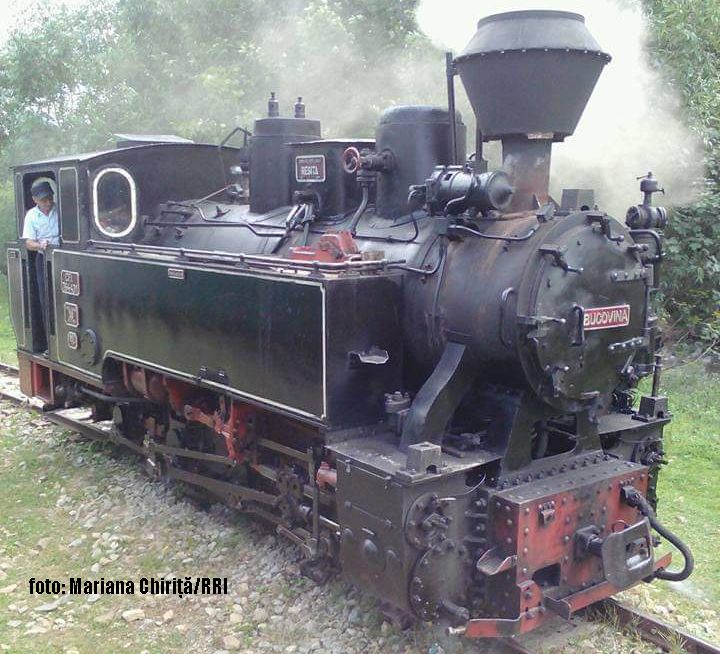
The Royal Train is intended for the travel of the Royal Family of Romania and domestic and foreign guests. The train currently consists of a steam locomotive (under restoration) and five carriages: the dining car, the King’s car, the Queen’s car, the guest car, and the King’s Household (staff) car. About the significance of this train and how the Romanian Railways (CFR) came into being, we spoke with one of the authors of the volume dedicated to the Royal Train, the historian Tudor Vișan-Miu, passionate about the history of the royal family in Romania:
“From the beginning I feel the need to state that there were several royal trains. The one we are referring to, because it still exists today, is the one that was put into operation in Romania in 1928, which was manufactured at the Ernesto Breda factories in Milan. The importance of these trains is certainly obvious. The members of the royal family must travel on a train that provides them with the conditions for traveling long distances. Hence the need to use special trains. Of course, these, let’s say, journeys that the members of the royal family make on the railway, become possible at the moment when the railway is developed, and this is during the reign of the Prince and then King Carol I. When Carol I came to Romania there was not a kilometer of railway. The projects had already been discussed for several years, even in a concrete way, but Carol I accelerated and established this as a priority.”
Tudor Vișan-Miu tells us about the age of the Royal Train and how it was used during the years of the communist regime:
“The Royal Train for sure, I mean the current one, is, as we can tell, 95 years old. It survived communism thanks to the travel conditions it certainly offered to those who used it during that period, during Gheorghiu-Dej’s regime. Nicolae Ceaușescu later used another train made in Romania, in Arad. But, the train was preserved, refurbished in the 90s, used for some, let’s say, special runs, because it has cars and uses locomotives different from those that currently run on the Romanian railways, and it also needs a special staff , which ensures, its movement on the railways.”
The Royal Train is also an attraction for history buffs or the curious. He undertook journeys in which it could be admired by those interested throughout the country. There were projects where it was made available. And, most importantly, this train is closely related to the abdication of King Mihai on December 30, 1947 and his departure from the country on the night of January 3, 1948:
“The train is certainly also of interest as a heritage object, and this can be seen in the fact that when, on several occasions, it was brought to the North Station, people went to visit it. Just as they did when the Royal Train crossed various localities on the occasion of the trips of the members of the royal family to those localities. It’s about those that began in 2012 and that followed various routes around the country. There have certainly been, up to this point, up to the use of it by the royal family, several ideas, several projects, one that even entered the royal family was a trip, let’s say, of the members of the Writers’ Union in 2009, with the occasion of an anniversary tour. This train certainly cannot be overused. It also has a special meaning after all. It is the train with which King Carol II left the country, the train with which King Mihai left the country, the first in 1940, the other in 1947. It is therefore a train that crossed moments of Romania’s history in it. Of course, those leaders also traveled during the communist period. Apparently certain meetings with foreign personalities also took place there. … The royal train has recently been associated with the funerals of King Mihai. It was used to take the royal cortege from Bucharest to Curtea de Argeș, where the funeral took place.”
Myths and legends circulated about the riches of the Royal Train, the riches with which the royal family would have left the country after the establishment of the communist regime and after the new authorities, supported by the Soviet army, forced King Mihai to abdicate. Tudor Vișan-Miu tells about the departure of King Mihai from the country:
“The train was associated with a certain mythology related to the departure of King Michael from the country, with fortunes that were alleged to have been put in the Royal Train. The research that could be done in the Security documents after the fall of communism completely disproved this, certainly confirming the accounts of King Michael’s traveling companions that they were closely watched, so that they could only take very strictly certain personal belongings and not high value objects, because some of them could also be confiscated if it was jewelry, say, or more valuable crockery.”