A utilitarian perspective on labor migration
An outlook on foreign labor and related challenges
Iulia Hau, 19.03.2025, 14:00
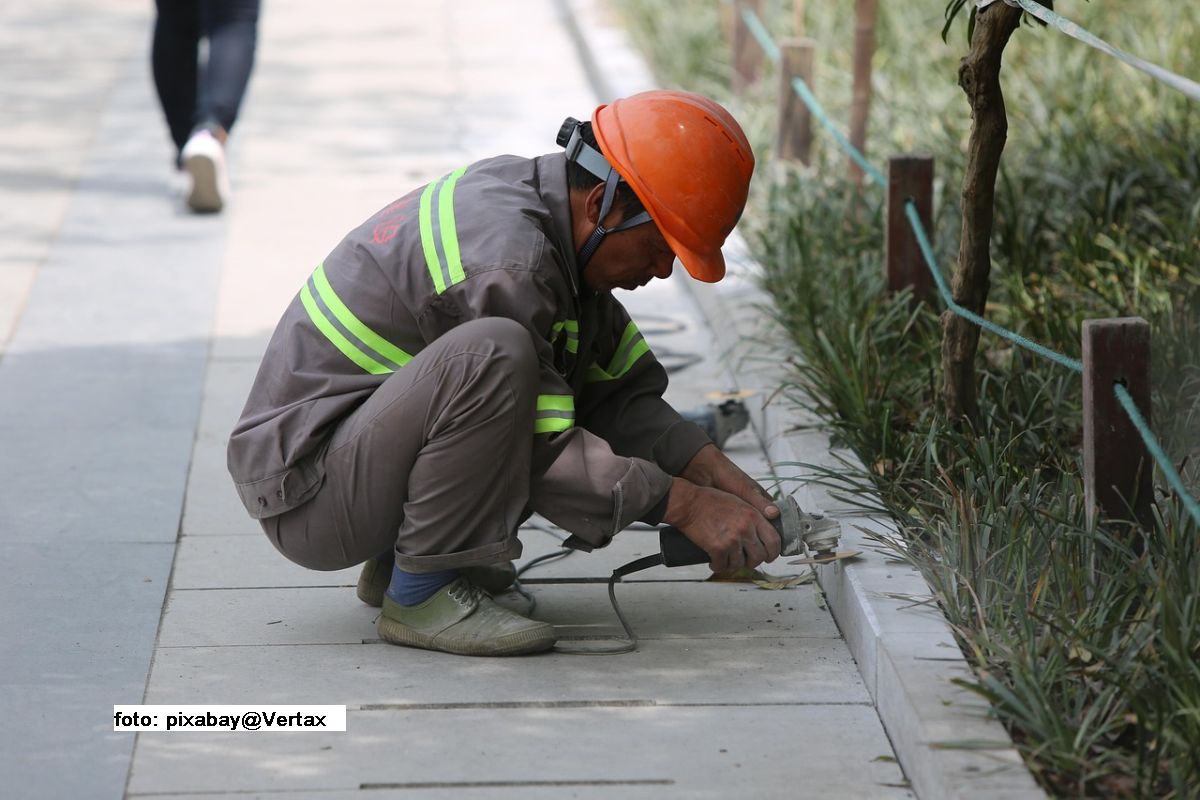
Starting 2022, the Romanian Government has established a quota of 100,000 foreign workers per year. According to data provided by the General Inspectorate for Immigration, the largest communities for which work visas have been issued are Nepalese, Sri Lankan, Pakistani and Bengali. The main areas that employ foreign labor are construction and infrastructure, agriculture, cleaning, warehouses and logistics, the automotive industry, the hospitality and food sectors.
However, we rarely talk about these newcomers in terms other than economic ones. Luis Escobedo, a Peruvian researcher who lives in Romania investigates in detail issues of racism and interculturality. Having worked and lived in Poland and South Africa, Escobedo is currently an associate researcher with the Society for Intercultural and Migration Studies in Bucharest and of the “Unit for Institutional Change and Social Justice”, an associate of Free State University in South Africa. He talks about the utilitarian perspective on the latest migration developments at society level.
“We can talk about three main elements, which build into this kind of perspective. First, the fact that Romania has a tendency of looking West-wards. The West already has this utilitarian outlook. To them, migration is a tool that can be used to solve demographic and economic problems. At the same time, we have other elements, we have a neoliberal element, closely connected to the first. We have a very clear perspective on the West, we talk about it as a monolith deprived of diversity. We tend to believe that everything is more developed there, that they are better than us, we don’t have a sophisticated discourse in that regard, and that fits with the neoliberal element. Then, for them, there is only one way to think about development, one that only takes market economy or globalization as the only available option”.
The third element, the expert explains, is the ideological makeup of the middle class, embraced especially by residents of urban areas. According to this specific ideological rhetoric, hard work is tantamount to human value. “Hard work will get you anywhere and make you successful”, Escobedo explains. The flaw in this discourse, the researcher argues, is that it does not take into account differences pertaining to environment, gender, sexual orientation, social class and others. Asked how this utilitarian perspective affects migrants in Romania, Luis Escobedo answers:
“We consider a migrant or migration in general to be something that we can use, and not something that refers to people. People like us, normal people, people with different lives and experiences, who, from our perspective, belong to a single group of workers who are here only to develop our economy and solve our demographic problems. We no longer have dreams, we no longer have families, we no longer have plans, projects, and so on. We are not considered complex people (when) we are considered an abstract category of migrants. We believe they’re here just to work for us and pay taxes”.
Luis Escobado says that this false dilemma-type of attitude cannot take into account the different circumstances of each person, which makes migrants even more exposed to personal problems, health issues or abusive work conditions. When it comes to the type of strategies migrants can use to cope with the difficult situations they encounter, Luis Escobedo provides several options:
“First of all, it’s difficult for them to realize that something is happening to them. Yes, I’m tired. It’s normal, because I work hard, because that’s how life treats us, migrants. This is our reality. I’m very happy that I was able to come here and others have it a lot worse than me and I was very lucky. Then, first of all, they create a kind of defense system to be able to live here peacefully. At the same time, however, they are affected and you can see the physical effects in their daily lives, when they get home and there’s nothing left in the fridge or they don’t have electricity for the fridge or they have to share the fridge with other people. And there are also conflicts and hierarchies: who eats first, who has to wait to use the kitchen – if there is a kitchen to begin with. At this point, they start to develop tensions, conflicts, they start to develop internal problems and, at the same time, they start to develop solutions. What else should we do? There are five or six of us at home and they crowd around the kitchen. Okay, I know someone who works and eats at work. Then I start to eat there, I start to develop social relations by means of which I can do better”.
On a deeper level, Escobedo explains, other strategies rely on the leaders who are shaped by such communities — leaders who start to develop institutions, to advocate for rights, to build communities of emotional support or spaces where they can enjoy cultural recognition from the host country. Another equally valid strategy is to marry a citizen of the host country “and not just for citizenship”, the researcher says, “but maybe because they want to be part of the community, they want to be Romanian”. (VP)