Artificial Intelligence and employee skills
A report by the World Economic Forum shows that almost 39% of current employee skills will change by 2030.
Ion Puican, 19.11.2025, 14:00
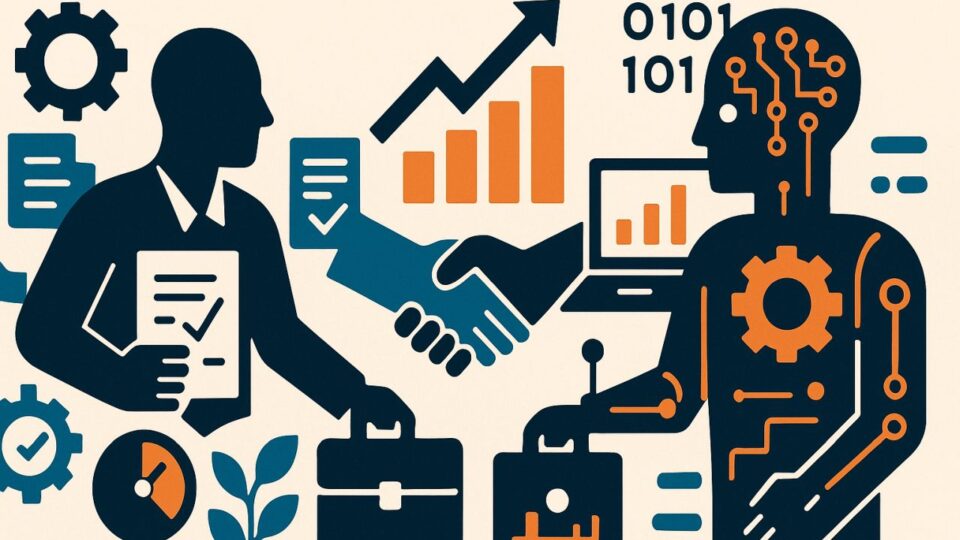
A report by the World Economic Forum shows that almost 39% of current employee skills will change by 2030. Artificial intelligence will not replace people, but will transform the way we work. The most important skills of the future are working with AI and Big Data tools, resilience, creative thinking and digital literacy. At the same time, networks and cybersecurity are becoming essential skills on the labour market. Experts believe AI and automation will lead to the loss of 92 million jobs worldwide, but also to the creation of 170 million new jobs, which means a net increase of 78 million. In total, 22% of existing jobs will change radically. Large companies expect that by 2030 almost a third of working hours will be automated, and organisations that invest in the development of human skills can generate three times more revenue per employee than the market average.
Human resources experts emphasise that repetitive jobs will gradually disappear, while new roles will emerge. The most dynamic areas will be green energy, sales, finance, robotics and cybersecurity, while sectors such as agriculture remain vulnerable. Companies are interested in efficiency and productivity, and employees who know how to use technology will have a secure job on the labour market in the future.
We talked about the transformations of employee skills expected by 2030 with human resources specialist and founder of HumAInity, Mădălina Uceanu:
“The change is quite big. There is a huge demand for skills like AI and Big Data Networks and Cybersecurity, technological literacy, creative thinking, resilience and lifelong learning. I also believe that critical thinking and storytelling will make a difference in the near future, if we can call the next 5-10 years the near future. There are certainly some areas that will need to be developed given the fast pace at which artificial intelligence systems are being implemented in almost all aspects of our lives.”
How will AI change the way people work? Mădălina Uceanu explains:
“In the same way that the internet or electronic mail has changed the way we work, in the sense that they’re a tool, automated cognition that allows us to process a very large amount of data in a very short time. The question is what decisions will we make based on that data? And I believe that this is where we’ll need an ability to think strategically, to understand contexts, to understand teams and to have clear objectives, so that we can make the right decisions with the data available, which are much more easily accessible to us and that in many cases need to be verified, because artificial intelligence cannot always provide us with the exact information we need.”
What skills will employees need in the near future?
“I believe critical thinking is becoming a very important element and a very important skill, as are creativity, technological literacy and last but not least, storytelling, our ability to tell and create stories. Because we function largely based on scripts and stories. And the quality of stories always influences the quality of our lives, be it professional or personal.”
What are the fields in which new jobs will emerge with the development of AI, we asked Mădălina Uceanu. And which fields face the greatest risk of automation?
“I think the new jobs will emerge in the sectors related to AI, Big Data, network and cyber security, requiring the relevant skills. On the other hand, I believe we will require everything connected to the ability to create interactions and human relationships of a different quality and type of connection, to create frameworks in which this happens with empathy, understanding people, understanding the dynamics between people. There will be a lot of jobs in these areas. And I think the risk of automation is the greatest in the areas connected to data processing, because this is where artificial intelligence is already being used with very good results.”
How does a human resources specialist see the development of AI in Romania, we asked Mădălina Uceanu.
“I wouldn’t say that there is a clear trend in the AI field in Romania yet. In my experience with clients, partners and applicants for management jobs, I can say that a better understanding of the phenomenon leads to less fear and fewer threats and more openness to implementing artificial intelligence in a way that makes sense for business and for people.”
We also talked about the need for digital literacy in the new technological landscape influenced by the presence of AI:
“Digital literacy is necessary today in order to be able to adapt, as is lifelong learning. I believe we are no longer at the point where we can choose not to learn. Because choosing not to learn at this time means that we knowingly take the risk of becoming irrelevant to the market in the next 3-5 years.”
At the end of our discussion, we also spoke to Mădălina Uceanu about the limits of AI:
“Like any system, like any automation, it has advantages and flaws, as well as limitations, and it’s up to us to decide with our own brains how we can use each tool individually and what we have to learn differently in order to be able to cope with the new context.”
The future of work is not about being replaced by AI, but about collaborating with technology. Those who understand it, use it, and adapt will be the professionals who will make a difference in the future economy.