Romania and the newcomers – cultural bridges in a changing society
2025 was the third consecutive year when Romania recorded more emigrants than immigrants.
Iulia Hau, 10.12.2025, 14:00
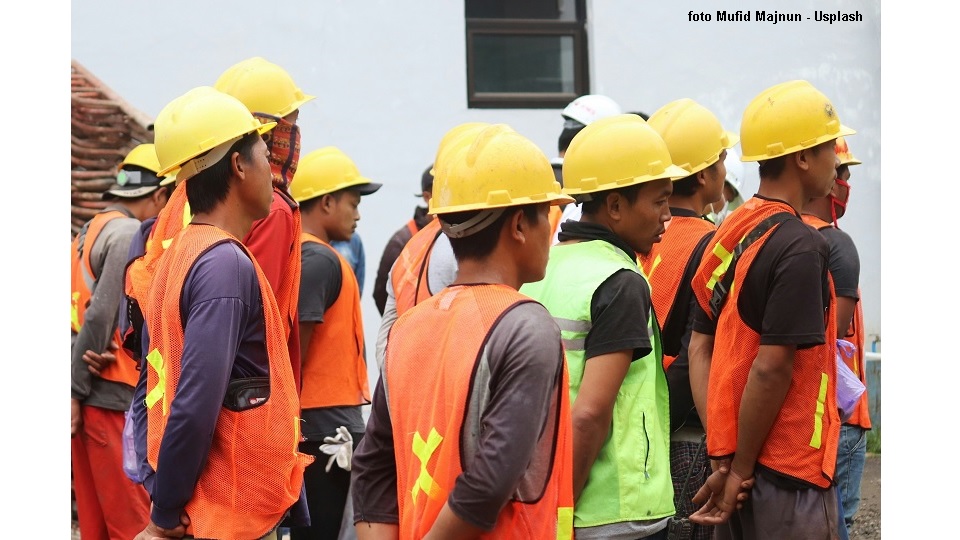
The year 2025 was the third consecutive year in which Romania registered more emigrants than immigrants. Researcher Anatolie Coșciug believes that this change is due to a combination of factors, including labor market needs, social perceptions and attitudes towards migrants, and national and European migration policies. At the same time, according to a recent study published by the Economic and Social Council, recruiters say that most companies that hired foreign workers recorded an increase in turnover, higher productivity and superior financial performance.
These changes are also reflected in the social plan. In the capital Bucharest, for example, more and more entrepreneurs are diversifying the streets with new flavors and colors through restaurants and fast-foods with African and Asian specialties, through grocery stores with exotic products, bars, and barbershops. However, the distance between them and us remains considerable.
This year, cultural workers, organizations and NGOs supported by the National Cultural Fund Administration launched the first cultural and community projects aimed at bringing together foreigners and the host society. The Legal Resources Center (CRJ), active since 1999, is one of the initiators. In recent months, through research, working groups and theater performances, the stories of newcomers have been presented, contributing to building a social environment that understands and respects their complex life and migration experiences.
Georgiana Bădescu, the project coordinator, has dedicated her last year to understanding the needs and difficulties facing migrants in Romania and to identifying innovative ways in which they can tell their stories: “I felt a lack of representation of life stories in the public space, in the sense that the average Romanian citizen knew this kind of otherness, of foreigners, through the news, through the media, so indirectly. And I didn’t feel that there were necessarily authentic stories or their authentic voice in the public space. It seemed to me that they were susceptible to discrimination, both from the state and from the population, which is perhaps scared of something new. And I think I felt the need to have some outlines, at least in the initial phase, to see what they feel, where they are located and to have something included on the public agenda. And that’s where the idea of research came from, from which a show, a children’s book and a documentary would emerge.”
Through the study “A Day in the Life of a Migrant Worker”, the authors analyzed migrants’ perceptions of the Romanian legal system, as well as how they experience their relationship with Romanian citizens and their families back home. The research highlighted a stark contrast between the Romanian legal framework, which is clear and robust, with elaborate provisions, and the reality migrants face. Based on the issues identified in the interviews, director and actress Crista Bilciu created an immersive cultural performance, held right inside the organization: “We had 10 performances in 3 days. Each performance had around 15-20 participants. What we tried with the show was to have each citizen go through the stages of life that the non-EU workers had outlined during the research interviews. There were 10 active points, starting with the visa interview, where I asked them questions that the migrants told me during the research. One of them, which I remember, was of a migrant worker who was getting a work permit for construction and whom the interviewer asked to show his hands to see if his hands were worked. And then the Romanian spectator would go through these stages: the visa interview, the boss, then we would give them delivery bags and a map with which they had to navigate the entire house, where it was dark and they only had a UV flashlight, with which they could discover hidden messages on the walls that were the migrants’ testimonies. More then to the doctor, where we tried to somehow portray a situation that we encountered with a migrant, namely that of visiting the doctor and finding out that, in fact, the employer never paid his taxes and he was not insured. A room of solitude, where they could listen to a voice message in Bengali and Romanian, sent by one of the workers to his mother”.
Georgiana Bădescu says that, after each performance, the participants remained outside the premises, to discuss, debate, surprised by a reality they had not imagined. After the performance, CRJ produced a children’s book, inspired by the story of a food delivery man who constantly carries a video camera with him in order to be able to see his two-year-old child at home.
The CRJ representative believes that cultural bridges created with migrant communities should continue to be a priority for the National Cultural Fund Administration and other funders. In her opinion, culture is the best way to reduce discrimination, increase awareness and build relationships between communities. Culture and art, the specialist argues, are an extraordinary way to bring people together. (EE)