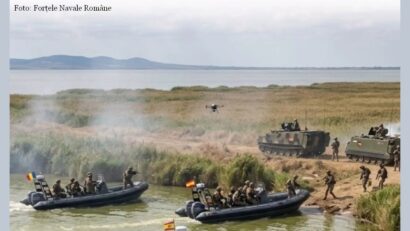
Noble Blueprint 2026
Noble Blueprint 2026 brought allied command structures and military planners to Romania to update defense plans for the North Atlantic Alliance’s eastern flank
România Internațional, 10.06.2026, 11:44
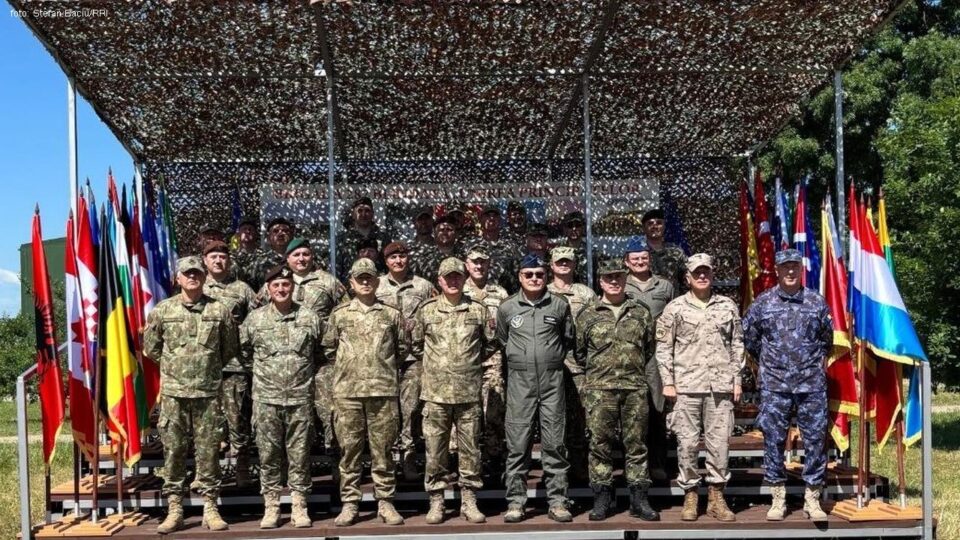
The NATO exercise Noble Blueprint 2026 brought allied command structures and military planners to Romania to update defense plans for the North Atlantic Alliance’s eastern flank. The activities took place in the Focșani Gate area, considered one of the key regions for mobility and defense in southeastern Europe. Spanish Rear Admiral Isidro Carrara Navas, head of the Planning Division at NATO’s Joint Command in Naples, says that the war in Ukraine has demonstrated how important the Alliance’s constant readiness is: “The entire eastern flank is very important, and the war in Ukraine demonstrates how important it is for defense plans to be ready for immediate implementation, ready for combat as early as tonight, to defend every inch of allied territory.”
NATO officials say the exercise aimed both to assess the terrain and to adapt defense plans to new technologies and new types of threats. A key element remains interoperability—the ability of allied military forces to work together using the same procedures and command systems. “Interoperability is crucial because it is the only way you can work together, communicate together, and use the same equipment, the same technology, and the same command and control system. Every activity carried out by NATO has the same goal. We are talking about 32 allied nations committed to protecting our collective freedom, security, and sovereignty. All to ensure we are prepared to defend every inch of allied territory. That is the purpose of this exercise and all other activities,” Rear Admiral Carrara Navas also said.
On behalf of the Romanian Army, Brigadier General Bogdan Tudorache, Deputy Chief of Staff for Planning at the Joint Forces Command, says that this year’s exercise focused on analyzing and understanding the Focșani Gate area: “Noble Blueprint 26 was dedicated this year to reviewing the obstacle plan in our area of responsibility, and its main objective was to reach and observe the Focșani Gate by conducting aerial reconnaissance from a helicopter. This was for our own understanding, as well as for our partners’ understanding, since it is also part of their plan.”
The Romanian general has pointed out that the Focșani Gate is not Romania’s only strategic area, but the terrain and maneuverability options give it special importance in defensive planning: “It is not necessarily the most important. It is one of the important locations. It is given greater attention due to the strength or maneuverability of a potential aggressor in that area and the potential to launch an offensive.”
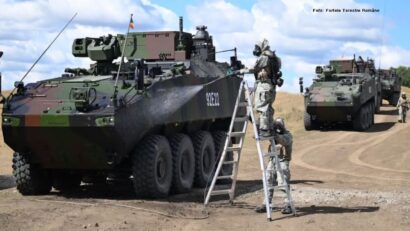
NATO exercises conducted in Romania frequently involve the movement of military equipment and low-altitude flights, and military officials say that all these activities are part of the process of testing and adapting defense plans. General Tudorache also had a message for the public: “What happened—the fact that people saw helicopters flying over their homes at a lower altitude than usual—should not cause them anxiety. They should be aware that what we are doing is to verify whether our plans remain effective, because we are the ones who must guarantee their security.”
The Noble Blueprint 2026 exercise is part of a series of activities through which NATO is adapting its defense plans to the current security environment on the Alliance’s eastern flank, at a time when the war in Ukraine continues to shape the region’s security architecture. (MI)