The fulling mill
The fulling mill is an old method of washing cloth and one such mill is still in operation in a Romanian village.
Ana-Maria Cononovici, 14.01.2020, 12:53
In today’s programme we will make a
foray into the history of washing machines. Our first stop is the Village Museum
in Bucharest to see how people used to wash their clothes before washing
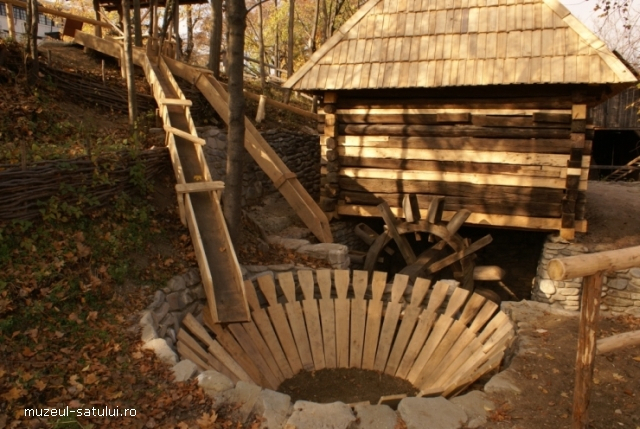
machines were invented. The museum exhibits a fulling mill from Borlova, in
Caras Severin county, south-western Romania. These fulling mills are made
entirely of wood and are water-powered. Used as far back as ancient times,
fulling mills were more widespread in areas with lots of sources of water and
where the flow of water was relatively constant, so as to prevent the machine
from freezing in winter, given that it was made of oak, beech and alder. The
piece on display in the museum was made in the first quarter of the 20th
century. Surprisingly, a similar mill is still very much operational today in
the village of Dobra de Jos, in Alba county, western Romania. Ioana and Mircea
Avram, the couple who own it, say the mill is 101 years old and still running.
Ioana Avram explains how the fulling mill works, without using any detergent or
electricity:
The clothes are laid down here,
wheeled around and left here for the water to fall on them for two days. We use
the fulling mills to wash blankets, carpets, rugs and bed covers. Mountain
water is the best. My mother-in-law used to say that the water from the snow yields
the best results. In spring you would get what we called ‘white water’, that is
water resulting from melting snow. This water is very good for washing.
The fulling mill is a machine
characteristic to the sub-Carpathian regions. Its component parts are the
wooden wheel, a horizontal spindle, the axis in fact, and two or more hammers.
The structure is made of beams and a roof made of shingle. The whirlpool forms
part of the mill and is in the shape of a truncated cone, with a small base
sunk into the ground. It is made of planks of wood attached one next to the
other on the interior side of two circular rings: one below, towards the small
base, and the other above, towards the large base. The water enters at a fast
pace through the mill race located above, causing the cloth to spin, just like
in the case of modern washing machines. Mircea Avram inherited the fulling mill
from his family and understands everything about how it works, something he has
also explained to us:
First you have two hammers, as we
call them. We lift them, we let them drop, and then we put the rugs in the pot,
and we put wood in the cauldron to heat up the water, until it reaches 37 to 40
degrees Celsius. Then we activate the wheel and let it run for about two or
three days. The whole machinery is made so that it runs by itself through
inertia, because of how the hammers are made.
Mircea Avram still has the documents
showing how much his family invested in the fulling mill 101 years ago when it
was first built:
This is how much my father spent on
making the mill. He took out a loan from the bank, and this here is the
interest rate he paid for half a year. This is a list of all the people who were
employed to build the mill: Dumitru Panfiloi got 820 lei for the stone, Toma
got 500 to transport the stone, and so on and so forth. Income tax was also
paid on this.
The total investment amounted to
19,608 lei at the time. The mill is now on the heritage list of Alba county and
Mircea Avram is responsible for maintaining it:
When it breaks down, the most
amount of work is involved in the whirlpool. It is best maintained by replacing
the edges that cause it to spin. In 1994 I replaced the spindle and the main
wheel with a diameter of 130 cm and sometime after 2006 I replaced the cauldron
where the cloth is placed. It’s made of oak wood brought from somewhere near
Medias.
After this foray into the history of
washing machines, we can only be thankful that today we have washing machines
that we can even operate from a distance via the Internet.