Atlas of Loneliness
Through photographs and an immersive sound component, the exhibition opens an emotional map of a generation caught between digital noise and the real need for authenticity.
Ion Puican, 06.12.2025, 14:00
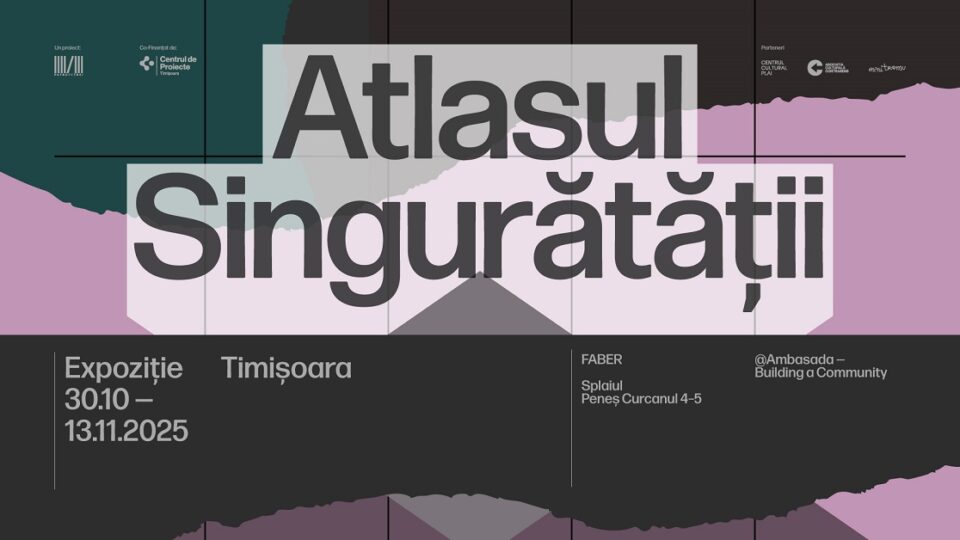
The West Romanian city of Timisoara hosted the exhibition dubbed “Atlas of Loneliness” in October and early November, a traveling project that also reached the capital and which investigates how young people from Generation Z (GenZ) experience loneliness in a permanently connected world. Through photographs taken with a camera obscura and an immersive sound component, the exhibition opens an emotional map of a generation caught between digital noise and the real need for authenticity.
One of the organizers, journalist and documentary filmmaker Ionuț Dulămiță, who filmed of the interviews within the project, tells us more about it: “The exhibition is part of a multimedia approach in which we explored how loneliness manifests itself in Generation Z. We started from the idea that more and more studies and media reports label it as the generation of loneliness, especially due to the contrast between how connected online its members are and how few real and deep connections they feel they have beyond the screens. We wanted to capture both the hard part of loneliness, which can translate into a lack of satisfying human connections or the feeling of being “out of place”, even among people, and its positive side, which is confused with solitude. That is, a time spent with yourself for reflection and inner balance. We did this by visiting young men and women, GenZ, in their intimate space and talking openly with them about loneliness. I filmed little rituals they have when they are alone, like making coffee, doing a “doom scroll” or watching anime. I recorded sounds of solitude and integrated them into musical soundscapes. And I took photos with the camera obscura that projects the exterior space of the homes inside, flipped over the characters and the room, through a hole in the light from a shuttered window. The resulting texts, podcasts, videos and photographs were collected. These materials can also be seen on a microsite hosted by the cultural publication Scena9.ro.”
Why an “atlas” of loneliness?
Ionuț Dulămiță: “We came up with the idea of an atlas because loneliness, although it feels the same for everyone, is a territory with different areas and associations. Anger, shame, distrust, non-belonging, but also peace, reflection or new beginnings. I wanted the exhibition to be a map of these inner places, mapped through the voices and images of those who experience them.”
What did the “Atlas of Loneliness” exhibition offer visitors?
Ionuț Dulămiță: “We combined these visual and sound elements to create a dialogue about loneliness between the exterior and interior spaces. On the one hand, the camera obscura serves as a visual metaphor for loneliness in relation to the city, that is, the exterior. Through the isolating effect it produces, it illustrates the idea that we always feel loneliness in relation to the world around us. On the other hand, the soundscapes created by Mihai Balabaș for the podcasts are inspired by the intimate universe of the protagonists, that is, from the interior. They include the sounds of domestic rituals they have when they are alone with themselves and illustrate the idea that loneliness is a deeply individual and subjective experience.”
How did the young participants from GenZ receive the exhibition proposal?
Ionuț Dulămiță: “I was surprised by how aware and lucid they are about the challenges of their generation and, especially, how open they were to talking to us about intimate issues. Sometimes I had the impression that they were waiting for someone to ask them such things, and this may mean that either they do not normally discuss these topics with those around them or they do not have the necessary time to think about them. Especially since the fear of being judged has constantly come up in our discussions and that the alert pace in which they receive information and perspectives on life, from social media and other media, often does not give them the time to process and assimilate everything they are experiencing. Something they also say.”
Six young people with different stories — from students and artists, to a young woman from a country at war — become guides on a visual and audio journey about vulnerability, isolation and emotional survival. The exhibition promoted a multidisciplinary dialogue between sociology, psychotherapy, journalism and visual arts, bringing together scientific and artistic perspectives to gain a deeper understanding of how young people experience loneliness today.
Journalist and documentary filmmaker Ionuț Dulămiță talks about this cultural dialogue: “Such a space for dialogue emerges when you bring together multiple media – text, photography, soundscape and video, which open up access to the same emotional experience through different but complementary perspectives. The message I would most like visitors to take home is borrowed from Petrișor, one of the protagonists of our documentation. I quote: “You get home and you realize that you are not the only one who feels this. (…) Even if you are alone, you know that somewhere, another person is going through the same experience, and that is ok.” (EE)