InTerConectArt
“InTerConectArt – The Body and the Artwork” is a project by the Entuziart Association that brings together participatory dance, movement and drawing in VR
Ion Puican, 28.11.2026, 13:13
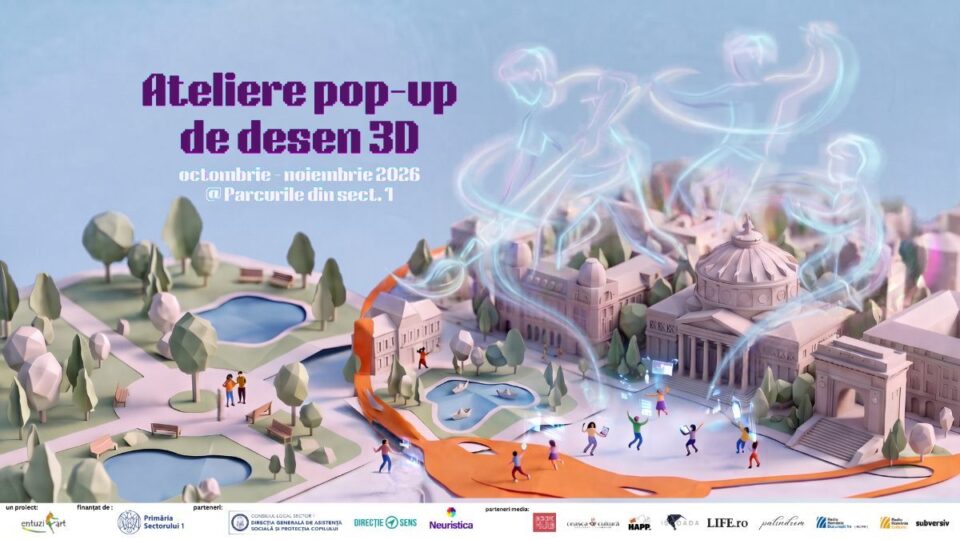
“InTerConectArt – The Body and the Artwork” is a project by the Entuziart Association, funded by Sector 1 City Hall. It brings together participatory dance, movement and drawing in virtual reality, or VR. In the project’s workshops, participants explored places around Bucharest, including Cișmigiu Gardens, Amzei Square and the area around the Romanian Athenaeum. They used the outline of their own bodies and their impressions of the place to create three-dimensional digital self-portraits.
The project also offered adapted workshops for people at Sector 1’s social care centres, including people with reduced mobility. The works are brought together in the Sector 1 Relational Atlas, a digital trail that lets people discover the artworks in the places that inspired them, using the free Bubbles app on their phones.
Loredana Larionescu, from the Entuziart Association, co-initiated InTerConectArt. She told us about the project in the capital.
“What we wanted participants to discover was that VR lets them add layers of their own imagination to places they know. Graffiti is an obvious example. We’re only allowed to do it in certain places. Now we can give ourselves permission to do it without damaging anything or having to work within the limits of conventional tools.”
Konrad Mihat, an artist with CoVR Videos who specialises in extended reality, added this.
“The basic idea was to leave a statue of ourselves somewhere in the place we’d chosen. So each participant picked a spot. Especially at the pop-up events, we marked out areas where we could work and stay close by to help. Everyone chose where they’d put their statue and struck a pose that captured how they pictured themselves there.
Either I or a volunteer would trace the outline of the pose. When people came as a couple, they could do it for each other. Then they got the headset. And what we like is that we can do all this with Open Brush, a free app for VR headsets that’s actually quite easy to use. It’s very intuitive. You just pick a colour and choose from a range of brushes on two panels. You can look all the way round the outline, then draw over it to create your own statue and see how it looks with the place itself in the background.
We then export the drawings, or statues, or self-portraits, whatever you want to call them, and use the Bubbles app to place them where they were created.”
Loredana Larionescu from Entuziart told us what surprised the team about the way participants connected with the city they live in and draw inspiration from, specifically Bucharest’s Sector 1.
“One thing we learnt about how people relate to the city came out of our postcard workshop. We picked five places in Sector 1 in advance and made postcards with images that captured something about each place. We used those images in a movement workshop with every group we worked with. The idea was for each group to agree on a place to visit.
Here’s what surprised us. The places you’d usually think of as tourist spots, like the Athenaeum and Amzei Square, came last. The parks came first. Herăstrău Park was the top choice for practically every group, and that’s where most groups met for their outing in the city. On the one hand, it took us by surprise. On the other, it confirmed the role parks play in the life of a city.”
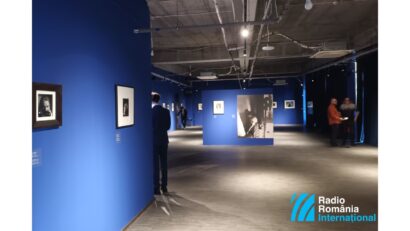
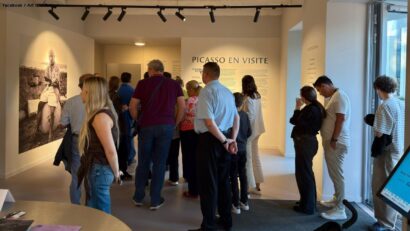
Visitors can discover the participants’ self-portraits at the National Museum of Maps and Old Books, where they can see them through VR headsets. The works are also part of the Sector 1 Relational Atlas, which will still be available after the exhibition closes. The atlas places virtual versions of the works in the spots that inspired them. You can start the trail at the museum and then take your phone with you as you walk around the city. Konrad Mihat, the artist who developed the tour, explains.
“What we’re calling the project’s final exhibition shows the work we’ve made so far and also launches an AI guide that includes these drawings. You can take a tour of the museum and see a selection of the participants’ drawings along the way, almost like graffiti. The rest will be available in the areas where we held the pop-up events.
The AI guide captures the essence of the place. It takes on the personality of the area where it’s created and grows as people explore. The Bubbles guide includes the drawings as well as information about the place itself. It can learn from us, too. If we want, we can leave feedback about the place, how it’s changing and how we relate to it. …
I’d add that the atlas we’re launching on the twenty-first of November is still taking shape. It’s a starting point. People can visit the stops on the trail and use what they find there to share their own feedback, opinions and impressions of different places in the sector and beyond. Together with the people who visit, we can build a true atlas of our relationship with the city.”
Finally, we asked both project initiators which encounter with participants had stayed with them, and what they’d learnt from working together about the way people connect with Bucharest. Loredana Larionescu.
“Several moments have stayed with us, from the older people at the Caraiman Centre and the playful way they took on this technological challenge, to the groups of tourists we met outside the Athenaeum.”
And the artist Konrad Mihat wanted to add this.
“I think everyone who tries it has that moment. It’s the moment they realise they can make something new, something they’ve never come across before, and they let their imagination run free. You see that happen with most people, and I think it’s an interesting experience for those of us watching from the outside, too.” (MI)