What will the EU multiannual budget look like?
European leaders are set to meet in Brussels this week to discuss a proposed 8% cut to the 2028–2034 budget.
Roxana Vasile, 12.10.2026, 13:50
European Union leaders will meet in Brussels at the end of this week to discuss the recent proposal by the six-month Irish presidency to reduce the Community budget for 2028–2034 by 8%. The percentage is viewed as a compromise solution between the so-called frugal states calling for more drastic spending cuts, led by Germany, and those seeking to protect funding for agriculture and regional development, spearheaded by Italy. In numerical terms, the Irish proposal totals €1,622 billion at 2025 prices, compared to roughly €1,763 billion under the European Commission’s original proposal. For agriculture, cohesion, and fisheries, 3% less funding is allocated compared to the Commission’s proposal. Funding for competitiveness, research, and defense would drop by 13%, while funds for cooperation with non-EU states would be cut by 17%.
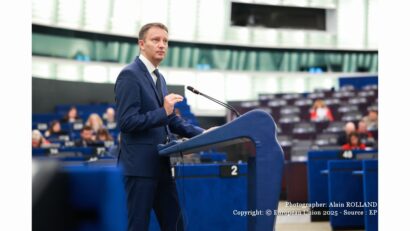
The Irish presidency also proposes new revenue sources, estimated at €55 billion annually, derived from customs duties and carbon emissions trading. The package does not, however, include the three additional financing streams backed by the European Parliament, a digital services tax, a tax on online gambling, and one on crypto-assets. The European Parliament’s chief budget negotiator, Romanian politician Siegfried Mureșan of the Liberals, rejects the Irish compromise and is demanding a budget 10% larger than the Commission’s proposal. He warns that otherwise, the Union risks having insufficient funds both for traditional policies like agriculture and regions, and for new priorities such as defense and competitiveness.
For Romania, the stakes are huge—it requires the preservation of European funding for agriculture and cohesion, which are essential funds for infrastructure development and bridging regional disparities. Indeed, Bucharest is among the 17 member states opposing cuts to this funding. Vice-President of the European Parliament and coordinator of the European Socialists’ working group on the future budget, Victor Negrescu, explains why the Irish proposal represents a serious alarm bell: “We are discussing,” he says, “funds for roads, schools, hospitals, agriculture, rural development, support for Romanian businesses, and job creation. Six out of ten public investments in Romania have been funded by European money from integration to the present day. It is essential that these risks for Romania are eliminated during European negotiations.” Money will also be lost, Victor Negrescu adds, in education, health, civil protection, disaster response solidarity, as well as in digitalization and artificial intelligence. The budget will require the unanimous agreement of all 27 member states and approval from the European Parliament. (VP)