Romania. The Eastern Flank: Coordination of Allied forces put to the test
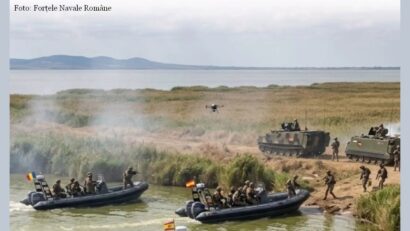
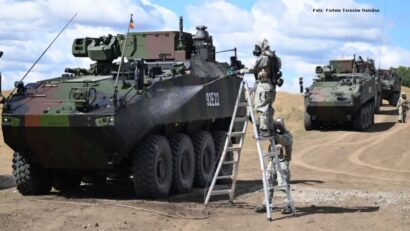
At Cincu (central Romania) and other locations across the country, Romanian and Allied troops have recently taken part in the "Carpathian Arc 2026" exercise.
Agenția Media a Armatei, 28.10.2026, 14:00
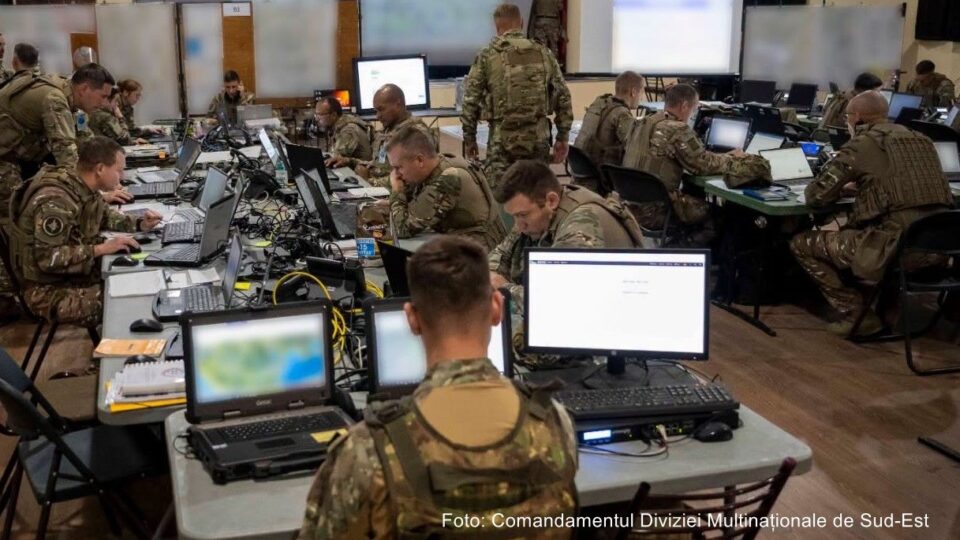
At Cincu (central Romania) and other locations across the country, Romanian and Allied troops have recently taken part in the “Carpathian Arc 2026” exercise. Within a simulated combat scenario, they analyzed intelligence regarding the adversary, planned operations, and coordinated the actions of the participating units. The exercise was led by the Headquarters Multinational Corps South-East in Sibiu (central Romania) and included an evaluation for the recertification of the Headquarters Multinational Division South-East in Bucharest.
French Brigadier General Cyril Mathias, the Deputy Division Commander, spoke about the importance of field-testing the procedures and equipment: “Operational readiness must be sustained through training. We cannot improve our level of preparedness without training regularly and testing our procedures, techniques, and equipment in the field. This was the primary conclusion, and, perhaps, the most important one.”
The procedures were implemented by teams composed of military personnel from several countries. Within the division’s operations center, differences in language and experience necessitated a clear and concise mode of communication. French Major Baudot, who led this center during the exercise, explained: “Because we spoke different languages and had different customs, we needed simple procedures. We had to be able to deliver short, precise briefings. That is what we did within the Alliance: we found a way to work as efficiently as possible.”
For Captain Pablo Carpena of the Spanish Army, the exercise also marked his first experience in such a role within the current operations structure. He worked in a team consisting primarily of Romanian military personnel and appreciated how well he was integrated: “The team was composed mainly of Romanians, nearly 85%. Consequently, I spent most of my time working alongside them. They were very open to welcoming military personnel from other countries into the team. From my perspective, the collaboration was excellent and yielded very good results.”
The scenario also incorporated lessons drawn from the war in Ukraine. Military personnel examined how to adapt the command’s operational approach to the use of drones on the battlefield. The head of the division’s intelligence branch explained the rationale behind introducing these scenarios into the exercise: “Preparations for this exercise began early in the year. What I want to emphasize is that we are taking lessons identified in Ukraine, such as the use of drones, and attempting to integrate them into this exercise. Why? To determine the most effective way for us to respond.”
The experience of the war in Ukraine also served as a benchmark for adapting Allied procedures. Brigadier General Cyril Mathias highlighted that the exercise provided a framework for incorporating these lessons into the division’s training: “This exercise offered a unique opportunity to put into practice all the lessons identified from the ongoing conflict and to integrate into our procedures the innovations necessary to account for these lessons. And the conflict in Ukraine was, of course, our main point of reference.”
The multinational exercise “Carpathian Arc 2026” concluded with the recertification of the Headquarters Multinational Division Southeast in Bucharest. For Romanian and Allied military, it served as a test of their ability to jointly plan and conduct operations for the defense of the North Atlantic Alliance’s eastern flank. (Alexandra Rădescu, tr. LS)