The Vitanesti Archaeology Site
The Eneolithic or Bronze and Stone Age brings great historical riches to the knowledge of human development
Ion Puican, 19.04.2025, 13:01
The Eneolithic or Bronze and Stone Age (defined as a time interval in which metals, such as gold or copper, are processed for the first time by prehistoric communities) brings great historical riches to the knowledge of human development. Such wealth is also represented by the Eneolithic settlement at Vitănești “Măgurice” (in southern Romania, north of the Danube, in Teleorman County). This is a landmark site for the knowledge and understanding of the Gumelnița communities. The “Gumelnița” culture is the name given by archaeologists to a culture from the 5th-4th centuries BC, a culture widespread to the North and South of the Danube. Specific to this period are the tell-type settlements – namely artificial hills well located in naturally protected places. The one at the Vitănești site is also such a tell-type settlement.
Andreea Bîrzu, archaeologist and museographer at the National Museum of History of Romania, talks to us about this archaeological site.
“The archaeological site of Vitănești represents a landmark for the knowledge and understanding of the Gumelnița communities. from southern Romania, in particular, and those north of the Danube, in general. It is known in the specialized literature thanks to the numerous studies and research campaigns carried out over 30 years, being one of the longest archaeological research carried out on a Gumelnița tell.”
Andreea Bîrzu gives us more details about one of the most interesting discoveries from this site.
“Very interesting is the identification in Vitănești of what we called a dwelling / workshop from which over 800 pieces of flint were recovered. So, a workshop for processing this rock. Flint artifacts were highly valued, being used in everyday life within the community, either as tools or as weapons. The raw material was most likely brought from the Dobrudja area, or even from south of the Danube, attesting once again the circulation of goods between different contemporary communities.”
Andreea Bîrzu continues to provide us with some technical data about the site at Vitănești and the research carried out there:
“The Eneolithic settlement of the tell type, or anthropic mound, identified here, is made up of several archaeological deposits, indicating an intense habitation on the same site. It is, if you will, an artificial hill, a former human settlement, abandoned for a long time. It has an approximately circular shape, with diameters of 40 to 45 meters in the upper part, and 90 to 95 meters in the lower part and a height of approximately 6 meters. Archaeological research in the Gumelnițeană settlement at Vitănești began in 1993, through a partnership between the National Museum of History of Romania in Bucharest and the Teleorman County Museum in Alexandria. These were coordinated by Radian Romulus Andreescu. They included several stages, and had as their general objective gaining knowledge of the main characteristics of the habitation Neo-Eneolithic sites in the Teleorman basin. The first campaign was carried out in the form of rescue excavations. And then, in 1999, a secondary settlement called Vitănești II was discovered and subsequently investigated, located near the tell. Research in recent years has resulted in a deepening of knowledge about the Gumelnițean settlement on Măgurice. This settlement has been attributed to the Gumelnița culture, one of the most important archaeological cultures of the 4th millennium BC, in southeastern Europe.”
The following can be said about the Gumelnița culture and the importance of the discoveries at Vitănești:
“Gumelnița is representative of the Eneolithic period developed in southern and southeastern Romania and part of the Gumelnița-Kocadermen-Karanovo VI cultural complex, which covers a vast area from the Carpathians to the Aegean Sea. The material culture of the communities that lived at Vitănești on Măgurice impresses with its richness and diversity.”
At the end of our discussion, archaeologist Andreea Bîrzu also talks about the important artifacts discovered at Vitănești:
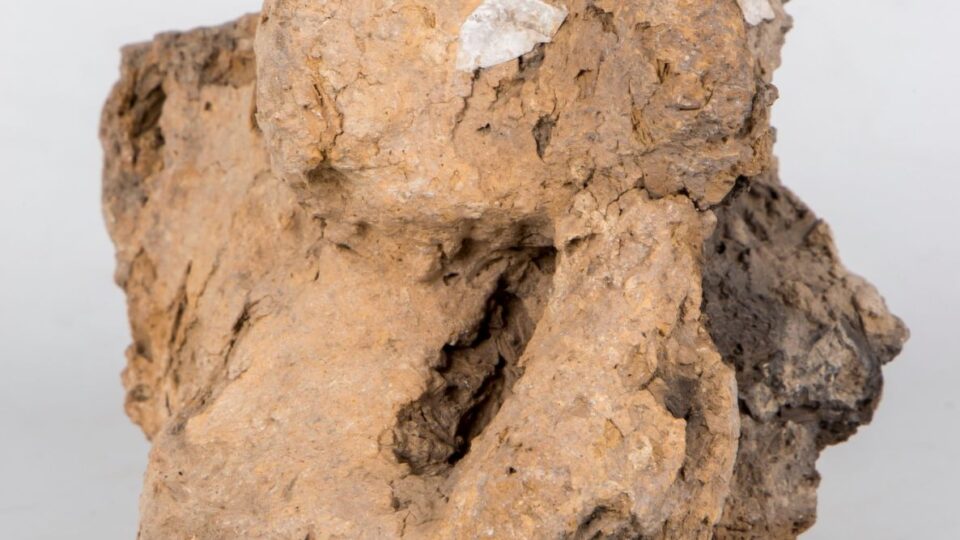
“The artifacts from the settlement here stand out in the context of discoveries from the Gumelnița culture’s spread area, through a large number of items, and a varied typology, some of these pieces being very rare. Whole and integumentary clay vessels, numerous bone and horn tools, flint, and other types of rocks, shell, bone, stone and clay ornaments, anthropomorphic and zoomorphic art representations were identified. Among these, a gold pendant, a series of anthropomorphic vessels and lids, a bone figurine adorned with a copper ring, as well as a thinker-type statuette, with eyes represented by two shell fragments, stand out. Such objects constitute unique or extremely rare discoveries, of a very special nature, not only in terms of morphological and decorative aspects, but also in terms of significance, being proof of the complexity and richness of the material and spiritual culture of the communities that lived here more than 6,000 years ago.”