Buzău, local dishes that tell stories
Today we discover Buzău County through the lens of gastronomy.
Daniel Onea, 22.01.2026, 14:00
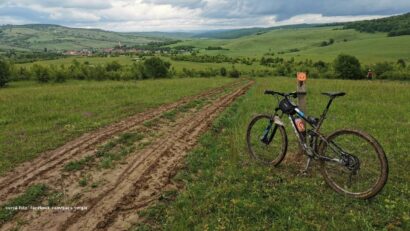
The experiences that the Slow Food Association offers tourists are diverse and for all ages. So, whether you choose a rafting trip on the Buzău River or hiking with stops for tastings, you will learn both the story of the places and the story of the dishes. Buzău County is recognized for its tourist attractions, and also for its wineries. Slow Food Travel is a new tourism model, consisting of meetings with farmers, cheese producers, shepherds, bakers and winegrowers who, together with the chefs, will narrate the history of the local areas and will be unique guides to traditions.
On our journey, we stop on the territory of the “Ţinutul Buzăului” (Buzău Land) Geopark, a UNESCO site since 2022. It includes 18 communes with a population of 40 thousand inhabitants and many unique tourist attractions in this part of the world. And visiting the tourist attractions can be combined with culinary experiences. For example, let’s say tourists come to the commune of Berca and reach the tourist information center. There they find out what can be seen in the Ţinutul Buzăului. They go to the Muddy Volcanoes or the cave settlements in Bozioru, and after that they can stop at a guesthouse, restaurant or producer, where they can have a tasting. And this tasting will by all means include the Babicul de Buzău, a local produce which we learn about from Cristina Partal, a gastronomic ambassador.
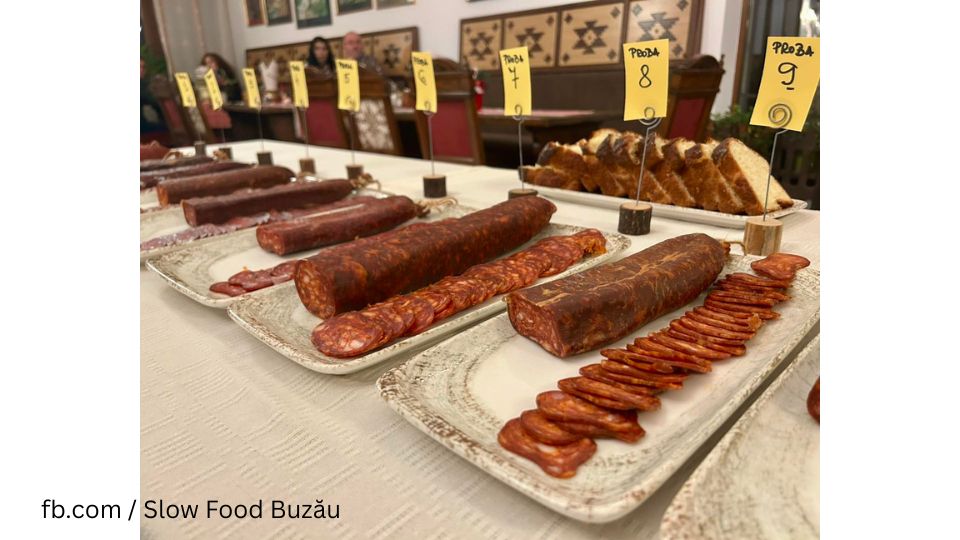
Cristina Partal: “Babicul de Buzău is a raw-dried product made from pork. The recipe was created by the Serbian gardener community, who have Bulgarian origins. We preserve the tradition of this nation and prepare babic in several ways. The product can be consumed raw or cooked in various dishes, such as Tigaia Picantă Buzoiană (Buzău Spicy Fry). Another variant is the “pitușca”, a type of local burger made from babic meat on the stove or on the grill. We also offer the famous babic soup. Although tourists were reluctant at first, now many come specifically for this dish.”
Dairy products are also in high demand, continues Cristina Partal: “Foile cu lapte” is a traditional mountain soup. People often cook it with sour milk and fresh herbs from the garden. In winter, bacon or fat-preserved meat is added to this soup. For centuries, Buzău was a place of passage for shepherds who went to Balta Brăilei (Great Brăila Island). Transhumance, included in the UNESCO heritage, has deeply influenced the local cuisine. The influence of Transylvania is felt in the mountainous areas Nehoiu and Siriu. There are numerous products with milk: pumpkin, potatoes or milk pods. Penteleu cheese is a unique matured product, for which we want to obtain European certification. Before 1989, it was produced for export at the Nehoiu factory. Its quality depends on the mountain flora. Experts have noticed that mountain milk tastes better because the plants are free of dust, unlike those from the plain. Today, this cheese is made by a small producer in the Slow Food network.”
The Muddy Volcanoes of Buzău are a unique place in Romania. They have created a landscape that specialists have likened to the lunar landscape, where an extraordinary natural phenomenon takes place. The volcanoes are actually gas pockets somewhere at an estimated depth of 3,000 meters. Under the pressure of the earth’s crust, they come to the surface, and on their way up they draw several layers of groundwater, different types of clay and rock. They bring them to the surface in the form of volcanoes that may or may not have cones. That is why they are of several types. It is a landscape that extends over several thousand square meters, divided into two areas: Pâclele Mari and Pâclele Mici. Also in Buzău County, you will find a unique museum in Romania. The Amber Museum from Colți is dedicated to this resin that is 40-60 million years old. And, you will certainly notice another unique phenomenon, a salt mountain. It also influences local cuisine, as we learn from Cristina Partal, a gastronomic ambassador.
Cristina Partal: “In Buzău, there is a rare geological phenomenon: the Diapir or Salt Mountain of Lopătari. This is a huge mountain of salt that rises to the surface, probably unique in Europe. In the morning, the dew that settles on the grass forms fine salt crystals. Sheep graze this grass, and the natural process gives the meat a special taste. And that’s how we get to Pleșcoi Sausages. They have a simple and natural recipe. The essential ingredients are mutton or goat meat, thyme and hot pepper. According to legend, the outlaws who crossed the mountains invented this dish. They would kill the sheep and cook them into pastrami and sausages to hide their loot from the authorities. Currently, these sausages have the European IGP certification. They are sold throughout the country and are appreciated in famous restaurants.”
Thorsten Kirschner is a founding member of the Slow Food Community Buzău, an area he calls the land of legends and flavors. He arrived in Romania 16 years ago. After two years in Bucharest, he retired to Buzău, where he bought a mansion and founded an association that promotes traditional, artisanal products: “Slow food is a global movement, present in over 160 countries, for access to healthy food. It is an alternative to fast food, created in Italy in the 1980s. It is currently very active in the Transylvania area, in Brașov, Sibiu, Cluj and Buzău. We are a kind of NGO and we bring together farmers, food producers, agrotourism guesthouses, restaurants and lovers of healthy and sustainable food. Our idea is to create a platform to promote especially artisanal products, quality food from Buzău County. To give you an example, we have a honey producer with innovative technology. He mixes honey with raw fruit and creates a new product, which can be eaten for breakfast. Tourists can also find the product in the souvenir shop and can go home with something new. Moreover, we also have craft beer. We have a young entrepreneur who started with mead. This is a low-alcohol honey-based product.”
Tourists can call on accredited guides for groups of any size. On the official website of Buzău County or on the Geopark website, you can find options for routes and accommodation. Also, the Slow Food Buzău website proposes attractive experiences for visitors. (LS)