The language of bats
Bats are a protected species in Romania and a new Facebook page seeks to improve public knowledge about their usefulness to humans.
Ana-Maria Cononovici, 14.07.2026, 13:30
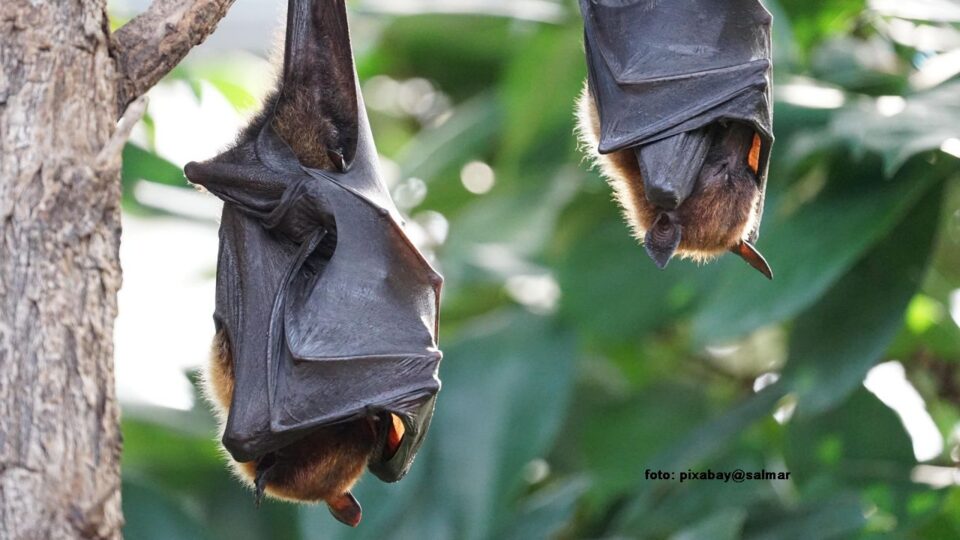
Beyond the beliefs that bats are harmful, that they get caught in people’s hair, that they are vampires, these animals are a protected species, it is forbidden to capture them, they are wild species and cannot be fed just anything. Moreover, bats can even be useful, being in their vast majority herbivorous and reducing the number of insects that could destroy crops or spread diseases. Georgiana Mărginean Crețu, a biologist and researcher originally from Sibiu, has been exploring the unseen world of bats for over 20 years, learning to listen to them. As a result of her research, she writes stories about nature, balance and empathy. With the help of technology, more precisely a sonographer, the sounds of bats become stories, transposed into text on a Facebook page dedicated to bats, called “Despre lilieci”.
Georgiana Mărginean Crețu graduated from the Faculty of Ecology and Environmental Protection, worked in the Făgăraș Mountains, in the forests of the Hârtibaci plateau, where she discovered rare colonies of bats and wants to transform people’s fear into curiosity:
“Bats navigate in the dark with the help of ultrasound, a phenomenon called echolocation. They do this in order to avoid obstacles, to avoid people and their hair, because people think that bats get caught in their hair, but they don’t, they avoid obstacles and catch food with the help of their sense of echolocation. All bats in Europe and in Romania feed only on insects. I wanted to mention this because there are many superstitions about them and I try to bring people closer to bats, to better understand their usefulness.”
How is bat research conducted and what have researchers discovered? Georgiana Mărginean Crețu explains:
“Where we don’t have caves, we have to look for the bats in areas where they might go in order to find food. And because it’s dark and we can’t see them, we use certain spotlights with which we try to detect them, record them, and then through special software, we see what those sounds look like and what the bat wanted to do at the time of the recording and what sounds they were using. Because they use several types of sounds, not only for orientation, but also for communication. For example, if we are in an area where insects are scarce and there is a bat that got there first and another one comes to feed, they start to warn each other. Something like: ‘I came here first, these are my insects, they are on my property, please leave.’ And if the bat doesn’t want to leave, the communication becomes a little more aggressive, but it’s very interesting how it looks on a sonogram.”
Our interlocutor provided more details:
“They are different from the sounds they normally make. I like to say that they chase each other, in fact, the first one to come tries to make the other one move away and what seemed to me at first to be a game between bats was in fact a slightly more aggressive activity. Some even end up biting each other in flight if they are very stubborn. Another interesting thing is that in the autumn, the males of certain species try to attract the females by flying into their path, sitting on a branch and emitting some longer sounds. Sounds that would normally last a few milliseconds in this case last tens of seconds. Or maybe we can only hear these species because they cover a wide range of frequencies. There are species that attract the females to caves or other shelters for reproduction. The sounds they make I this case are like a kind of teasing, or what we might call argument between couples, which is very interesting.”
Georgiana Mărginean Crețu emphasised that bats do not like captivity, but that they understand if someone wants to help them:
“Like any animal, if it is captured, it tries to defend itself. And it bites. But what I found very interesting about these animals is that when they are in the wild, they try to defend themselves with all their might, but we have had cases of injured bats, and it’s as if they knew they were going to be helped and they did not bite at all, despite the pain they felt, they let themselves be helped. And we had a bat for about 3 and a half years in the care of the Association for the Protection of Bats in Sibiu, which got very used to people and we took it with us to educational activities, in schools.”
Being a relatively new science, there are still many things to discover, says Georgiana Mărginean Crețu:
“Bat detectors started to be developed around 1990s so quite recently, and we still have a lot to learn about bat echolocation, we always find out something new. It is quite challenging, but at the same time fascinating for me, because bats do not have a standard way of emitting certain sounds so that we could distinguish between different species. They emit the sounds depending on the habitat in which they fly and modify them depending on the obstacles and then these sounds are in a permanent change and it is quite challenging. We have to pay attention to the frequencies so as not to confuse their voices.”
Our interlocutor specified that we have certain types of fruits thanks to bats, such as mango and avocado and even bananas and cocoa.