The electronic ID card: from project to implementation
The implementation of the electronic identity card in Romania is still a work in progress, and it will be some time before Romanians carry nothing but the new ID.
Roxana Vasile, 01.04.2026, 14:00
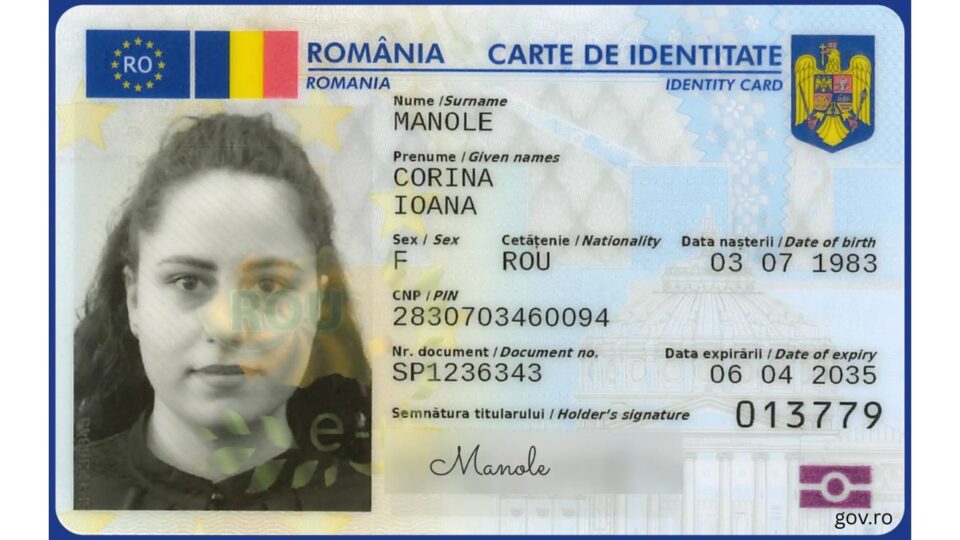
The electronic identity card has made its way to Romania. The first cards were issued in March 2025, initially in Cluj County (north-west). Subsequently, the document’s implementation was gradually extended nationwide. Within a year, over 1.5 million Romanians have applied for an ID card with a chip.
The authorities provide assurances that this chip protects the holder. This high-performance chip, certified at the highest level, keeps data secure and prevents identity theft. At the same time, the holder saves precious time by having remote access at any time to electronic services offered by authorities or private entities. It can generate an electronic signature by connecting to certain applications. It also simplifies travel to all states that recognize the electronic identity card as a travel document. Finally, one can change their residential address without having to request a new identity document. Or, if they have been abroad for a while, upon returning to the country, they keep the same electronic identity card and simply replace (also online) the mention “without residence in Romania” with their new address.
To dispel skepticism, authorities say the card does not limit freedoms in any way and contains no functions that allow for geographical tracking. Police quaestor Cătălin Giulescu, the head of the General Directorate for Personal Records, told Radio Romania more about the information stored on the electronic identity card’s chip:
“The electronic identity card chip stores all categories of data that we find printed on either side of the electronic identity card. Adding to these are the images of two fingerprints, because at EU level, the electronic identity card is also a travel document. This means it must meet travel document standards. In addition to this information, there are two electronic certificates. We use one for authentication in infrastructures that require it to access services (such an authentication service can already be tested; it has been functional since February in the Ministry of Internal Affairs’ service hub) and another electronic certificate is used for signing documents”.
However, the new platform launched by the government (fara-hartie.gov.ro) where citizens can report difficulties encountered in their dealings with state institutions, has already gathered numerous complaints. Many of these specifically target the electronic identity card. People complain, for example, that the residential address is no longer printed on the card, but is stored in the chip itself. Others find the process of changing it to be complicated.
Police quaestor Cătălin Giulescu admits that the implementation project for the new identity card still faces setbacks:
“Putting prototype 2 of the electronic identity card into circulation (a complex prototype) is just one of the project’s stages. The services and access to services attached to the electronic identity card are under continuous development, and we have a primary deadline that we set approximately two years ago, which is July 1, 2026. Therefore, by this deadline, everything established by the current regulatory framework is reasonably expected to be functional. We have already begun, together with the Interior Ministry, to make certain services accessible, but these are being made available gradually. Regarding any change in the residence, we must admit that, compared to our projection, we are slightly delayed because certain tests were unsuccessful. The IT environment is always, shall we say, very interesting. There are situations where you have to test many times before reaching a successful solution”.
Things are not exactly simple for Romanians living abroad either. More specifically, if they want to obtain an electronic identity card, they must currently apply only to the public community services on national territory. Cătălin Giulescu explains:
“We are working intensely with the Foreign Ministry, and I believe that, in a very short time, submitting applications for the electronic identity card will also be possible at Romania’s diplomatic missions and consular offices abroad. Certainly, by July 1, we will also put into circulation another type of identity document: the electronic card for citizens who do not have a residence in Romania. We are still working on developing this electronic identity card prototype”.
In terms of technology and security standards, the electronic identity card is similar to a passport. The only difference is that the chip in a passport is invisible, whereas the chip on the identity card is visible and can be used in both variants—contact or contactless—a principle similar to that of a bank card.
For the time being, neither the health card, the driving license, nor other types of permits are included in the electronic identity card. Will we reach a point where this identity card contains them? At least for now, according to quaestor Cătălin Giulescu, the health card is expected to be contained within the electronic identity card by this summer. Regarding other licenses or certifications, these will be included in a “cascade” fashion, especially since the European wallet is already being intensely discussed at the European level.
In other words, the implementation of the electronic identity card in Romania is a reality, but it remains in the construction phase, and it will be some time before Romanians carry nothing but the new ID card. (VP)