Energy inflation spikes following Iran strikes
Euranet Plus Panorama is a weekly news review that showcases our network’s wide-ranging coverage of EU-related stories.
Adaugă ca sursă preferată în Google
Radio România Internațional, 15.03.2026, 21:57
After a short-lived period of relative stability, European businesses and consumers are once again facing pain at the petrol pump.
The pain is, of course, a direct side effect of the new conflict raging across the Middle East, after the US and Israel launched strikes on Iran on 28 February. And it is not the only one.
Another blow for trade
Our colleagues at esRadio Castilla y León have been investigating the wide-ranging consequences of this latest crisis for a range of Spanish sectors. Let’s start with one consequence that is not directly related to fuel.
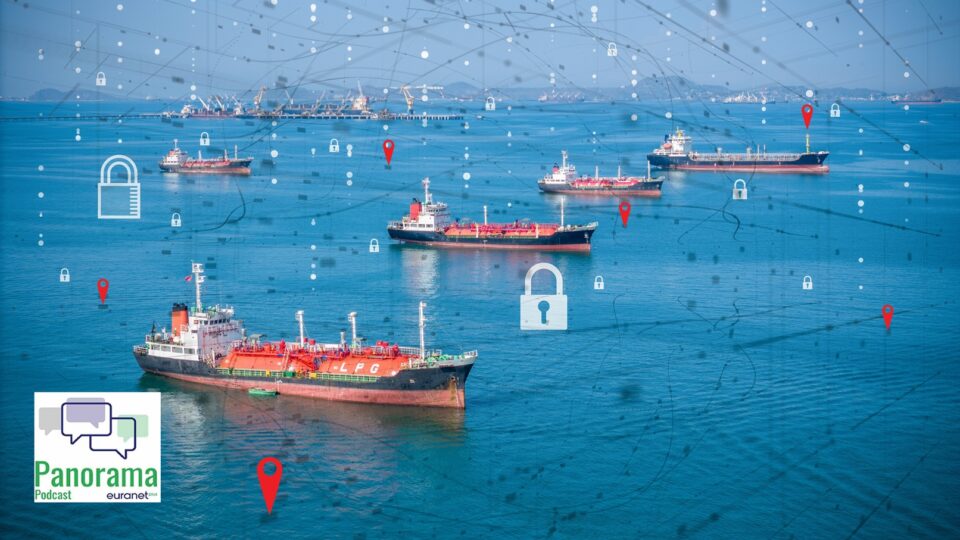
Adrià Martínez, CEO of the largest cosmetics, perfumery and personal care association in the country, the Beauty Cluster, tells esRadio that export sectors such as Spain’s beauty industry are seriously impacted by the blockade in the Strait of Hormuz.
Adrià Martínez, CEO of the Beauty Cluster (in Spanish):
“The truth is that there is quite a lot of concern in the sector, especially due to the uncertainty generated by these types of conflicts, whether it be the tariff conflict we are seeing on the part of the United States, or the conflict that is more military in nature in the Middle East. So, clearly, there is uncertainty on several fronts: on the commercial side, which would be the part we were talking about tariffs, and then on the logistical side, because of the blockade in the Strait of Hormuz and everything related to that. […] The United Arab Emirates, the Gulf, Saudi Arabia… this whole region is very important for fragrance houses and perfume suppliers.”
Energy inflation
But the new Middle East conflict is not only causing a problem getting things out of Europe, it is also having an impact on crucial imports – perhaps the most crucial of which are oil and gas.
Since the start of the war in Iran, energy prices have skyrocketed. Against this backdrop, the EU and its member states are striving to shield their populations and economies from the impact.
There is a real sense of déjà-vu here: many of the medium- and longer-term measures that were discussed, or even agreed but then postponed, in the wake of the Ukraine-related energy crisis are now back on the table.
And, as in 2022, European leaders have once again embarked on a frantic search for quick fixes…
Bulgaria’s caretaker prime minister Andrey Gyurov and his Croatian counterpart Andrej Plenković were discussing potential measures on the sidelines of the Nuclear Energy Summit, which took place in Paris on Tuesday (10 March). Gyurov told BNR that all options were under consideration as they sought a way of protecting the most vulnerable without breaking the budget.
Andrey Gyurov, Acting Prime Minister of Bulgaria (in Bulgarian):
„We are keeping a close eye on the situation. The strength of Europe lies in taking joint action and providing support to different countries. This is precisely why the areas under discussion for financing through European funds and the EU budget are specific projects that would support energy connectivity and ensure that such crises do not have serious short-term repercussions.”
Austria, for its part, has implemented a strict regulation only allowing price increases at the petrol pump three times a week. The goal is to curb so-called ping-pong pricing, where fuel prices might change many times a day, often spiking during morning rush hours.
Germany, as AMS reports, is set to follow suit, but with a slightly watered-down version of what Federal Minister for Economic Affairs and Energy Katherina Reiche terms the “Austrian model”.
Katherina Reiche, Germany’s Federal Minister for Economic Affairs and Energy (in German):
„We know that commuters in particular, but also small and medium-sized enterprises, are burdened by high fuel prices and are justifiably annoyed. We have therefore decided to limit the frequency of price changes and have based our approach on the Austrian model. Petrol stations will only be allowed to increase their fuel prices once a day. Price reductions, on the other hand, will be permitted at any time.”
According to Luxembourg’s economy and energy minister Lex Delles, it is too soon to take new measures to support Luxembourgish citizens.
Speaking to public broadcaster 100,7, Delles underlines that national measures are already in place to make sure that companies cannot take advantage of such situations.
Lex Delles, Luxembourg’s Minister for the Economy and Energy (in Luxembourgish):
“We are protected in Luxembourg since we have a fixed price – a maximum price – for fuel at petrol stations, which means that prices are closely aligned to the real price paid per barrel. This control we have in place makes abuses impossible. On the other hand, we can see that gas prices have increased. But the strategy on the spot markets that our suppliers follow is not to buy today for tomorrow, but to spread purchases out over a period of three years so as to smooth out the fluctuations. The same goes for electricity prices.”
Luxembourg’s energy ministry sets the maximum selling price for fuel at the petrol pump, but there can be a lag when the barrel price on the stock exchange changes rapidly and radically, as it has done over the last couple of weeks.
Back in Spain, esRadio is talking to Javier Sigüenza. Sigüenza is president of alianzAS, a Spanish confederation representing essential service companies, including those in the care sector. He highlights how international shocks of this kind can, in addition to affecting private enterprises, have an enormous impact on the provision of public services.
Javier Sigüenza, President of alianzAS (in Spanish):
“If we talk about raw materials, energy and transport, we must bear in mind that many services are heavily dependent on vehicles. Take, for example, care services. It is clear that they all rely on vehicles that have to be constantly on the move. […] Let us also consider nursing homes, which must have an air-conditioning system that is suitable for their elderly and dependent residents, and which logically see a major increase in energy costs. And think, too, about the maintenance services for the facilities, with all the costs of materials and travel.”
And he follows this argument to its logical conclusion.
Javier Sigüenza, President of alianzAS (in Spanish):
“The company providing the service is forced to bear these costs, with potentially undesirable consequences. In extreme cases, these consequences may include having to abandon the service due to the economic impossibility of providing it and the company folding. This means that the service is left unattended, creating an additional problem for workers who are left in limbo. The company enters into insolvency proceedings, and what happens with these proceedings is that no one wants to bid to provide the service. […] Companies are clearly not going to bid if they are set to lose money.”
European Parliament vice-president Victor Negrescu, from the Socialists and Democrats group, highlights another knock-on effect of this latest geopolitical crisis.
In an interview with Radio România, he explains that this latest increase in fuel prices will likely have a direct impact on agricultural production and food security. He therefore calls on the Brussels executive to waste no time in activating a compensatory mechanism to support affected farmers.
Victor Negrescu, Vice-President of the European Parliament – S&D, Romania (in Romanian):
“It should be noted that the European executive has implemented similar support measures for farmers in other situations, such as during the war in Ukraine and in the context of natural disasters. The European Commission has a reserve fund in its budget that is dedicated specifically to agriculture. We are talking about a fund worth several tens of billions of euros that can be used in such circumstances. In this context, it could also be used for this compensation mechanism.”
Brussels brokering
On Wednesday, the 32 countries in the International Energy Agency (IEA), most of which are EU member states, agreed to release 1.2 billion barrels of oil, including 400 million from their emergency reserves, to offset the disruption to oil markets.
The debate on a potential new reform of the European electricity market is also back on the table. The Commission will present possible options at a European summit on 19 March.
Meanwhile, in a speech to the European Parliament on Tuesday, Commission chief Ursula von der Leyen patted Brussels on the back for reducing Europe’s dependence on gas imports. This said, she acknowledged the job was far from done, and illustrated her point with a few figures.
Ursula von der Leyen, President of the European Commission (in English):
“But no matter what we do, in terms of measures, as long as we import a significant share of fossil fuels from unstable regions, we are vulnerable and we are dependent. And this energy always comes at a cost. I want to give you just one example. Since the beginning of this conflict, gas prices have risen by 50 per cent and oil prices have risen by 27 per cent. If you translate this into euros, the 10 days of war have already cost European taxpayers an additional three billion euros in fossil fuel imports. Additional. That is the price of our dependence.”
She announced that the Commission would be taking a “comprehensive” look at ways of bringing down people’s energy bills, bearing in mind the four key components: the cost of the energy itself, grid charges, taxes and levies, and carbon costs. She also called explicitly for increased investment in locally produced low-carbon energy sources, namely nuclear and renewable energies, whose prices – she points out – have remained stable.
Bruno Soares Gonçalves, who heads up the Institute of Plasmas and Nuclear Fusion at Lisbon’s Instituto Superior Técnico, considers it a strategic error that the EU did not invest in nuclear energy rather sooner. He assures us that the risks are exaggerated and that much progress has been made since the two major accidents at nuclear power plants.
Bruno Soares Gonçalves, Plasma Physicist (in Portuguese):
“The power station that existed in Chernobyl is not representative of today’s power stations. Much has been learned from Fukushima, and it is important to note that new-generation reactors are much safer, including in terms of passive safety systems, which do not require electricity or auxiliary generators in the event of a shutdown to ensure that they operate as safely as possible.”
These arguments are not enough to convince philosopher Viriato Soromenho Marques, though. The University of Lisbon professor says, in a separate Rádio Renascença interview, that there are two major problems with nuclear technology that remain unresolved.
Viriato Soromenho Marques, Philosopher (in Portuguese):
“The first is precisely the issue of accidents at nuclear power stations. This issue has not been resolved. The second is the issue of final waste treatment. I am not just talking about operational waste from the running of nuclear power stations. I am also talking about the nuclear power stations themselves, that is, the skeleton of a nuclear power station that remains after it has been decommissioned.”
But economist João Duque, dean of the Lisbon School of Economics and Management (ISEG), counters that since Europe lacks oil and natural gas, workable alternatives will have to be found. In his view, if the bloc is to safeguard its energy independence, the road ahead must be nuclear.
João Duque, Economist (in Portuguese):
“Renewables are most likely not enough, because the problem with renewables is their cyclical nature – they may vary according to the time of day, or the season of the year… And so, in order to make Europe more resilient, more autonomous, we will probably have to use more nuclear energy – not in the traditional form of large units, which pose a major problem, but as smaller units. We’ll need to opt for small units. Think about those super aircraft carriers, the gigantic aircraft carriers powered by nuclear energy. They have small nuclear energy conversion units and can operate independently for years.”
On the same day President von der Leyen was giving her speech, energy commissioner Dan Jørgensen unveiled a new energy package – one that was already on the agenda before the latest conflict started on Europe’s borders. It consists of a clean-energy investment strategy aimed at meeting energy transition objectives; a citizens’ energy package to boost energy efficiency; and a strategy to help nuclear countries accelerate the production and deployment of small modular reactors and advanced modular reactors, thereby reflecting Professor Duque’s argument.
Against the backdrop of the war raging in the Middle East, it goes without saying that the presentation provoked a heated plenary debate.