Moscow’s muted memorial
Euranet Plus Panorama is a weekly news review that showcases our network’s wide-ranging coverage of EU-related stories.
Adaugă ca sursă preferată în Google
Radio România Internațional, 18.05.2026, 17:01
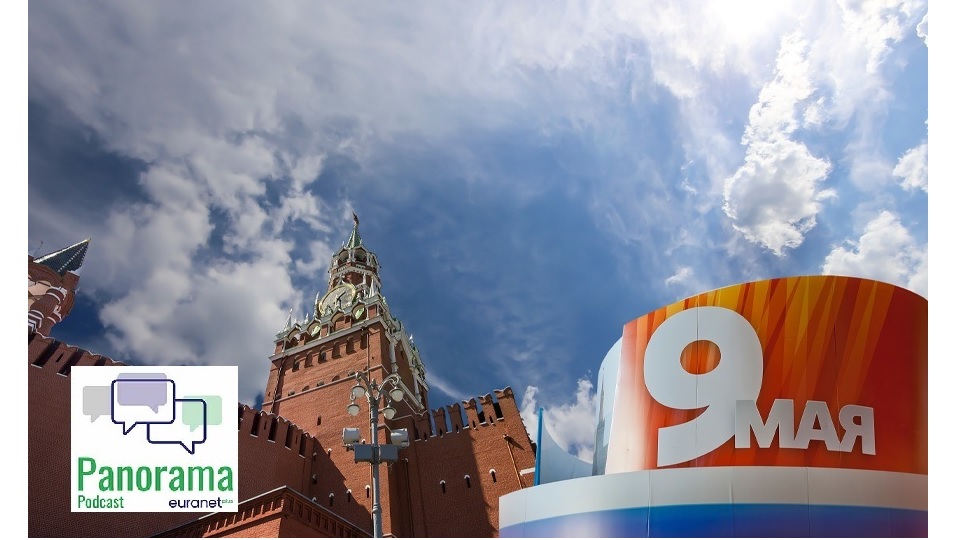
While Europe was celebrating Europe Day last Saturday, Moscow’s annual 9 May parade was radically scaled back. What, if anything, can we read into this?
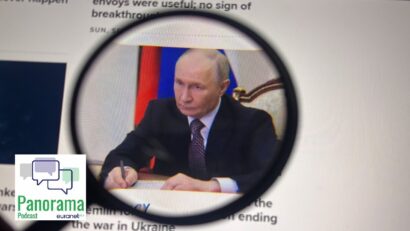
In an unexpected twist, Russia’s usually bombastic Victory Day parade this year contained no major military equipment and lasted just 45 minutes, making it one of the most understated ever. In addition, in the speech he made at the event, Vladimir Putin sent some mixed messages.
Is the tide turning?
In amongst some tough talk of an inevitable Russian victory, President Putin suggested that the war in Ukraine may be nearing its end and even alluded to the possibility of a face-to-face meeting with Ukraine’s president, Volodymyr Zelensky… but only once a lasting peace deal has been agreed.
Putin’s changing tone is a major talking point in Europe. Is he finally on the back foot? And is this an opportunity we should be trying to seize?
Lithuania’s Žinių Radijas puts these questions to conservative MEP Rasa Juknevičienė.
Rasa Juknevičienė, Member of the European Parliament – EPP, Lithuania (in Lithuanian):
“Intelligent people understand that Putin’s Russia is losing. Or, to be more precise, that it has not gained anything in five years. I’m not saying that the war is over, but even in the European Parliament I’m increasingly hearing that Russia is losing, that Russia has won nothing – and not just from politicians in our region, but also from those working in the fields of security and defence policy. So it is time for us to realise that Ukraine needs our help now more than ever.”
Putin seems keen to see his bosom buddy Gerhard Schroeder playing the role of mediator in any forthcoming peace negotiations – something that EU ministers have dismissed out of hand given the former German chancellor’s longstanding close relationship with the Russian president. But the Lithuanian EPP member adds that even talk of such things is a sign of desperation on Putin’s part.
Rasa Juknevičienė, Member of the European Parliament – EPP, Lithuania (in Lithuanian):
“There has been mention of Schroeder, and that the negotiations should supposedly take place in Moscow. This is utter nonsense, intended solely to help him save face. The message for me is very clear: Europe now has a golden opportunity not only to help Ukraine even more, but to unite in such a way that ensures Putin’s Russia actually suffers a defeat.”
Putin’s former speechwriter, political scientist Abbas Gallyamov, who is on Russia’s wanted list for his criticism of Moscow’s actions towards Ukraine, is less confident that the tide is turning.
So what, ask our colleagues at Radio 24 in Milan, does he think lies behind Putin’s somewhat contradictory statements and actions?
Abbas Gallyamov, Russian Political Scientist (in English):
“Putin’s tone might sound conciliatory sometimes, but it’s probably just because he feels that public demand to end the war is getting stronger and stronger, and he is trying to give people what they want. He’s [signalling] that he is not a dangerous extremist, which he is looking like more and more to the Russian public, including the elites. So in order to avoid this perception, he is trying to adjust his tone to public demand. But it’s not enough to [be able to say] that he’s ready to change his actions; to change course; to end the war. So far, this looks more like a PR stunt to me.”
Yet, given the clear loss of momentum in the Russian campaign, the vast numbers of Russian military casualties, Ukraine’s ever-increasing technological capabilities, and waning support from the US president, surely things are not looking good for the Kremlin? In the light of all of this, does Gallyamov really not believe peace could be on the horizon?
Abbas Gallyamov, Russian Political Scientist (in English):
“Well, it’s not ruled out completely because he is really under stress. The situation is going from bad to worse. Economically and politically, his ratings are falling and the protest moods are growing. So in general, the situation demands an end to the war and Trump is actually suggesting conditions which are not so bad, bearing in mind the awful situation in which Putin finds himself. But I still feel that he has some strength left, and he might actually use it to make the situation even worse. For example, by attacking Europe. It can’t be ruled out. So, before de-escalating, he might want to escalate to have final negotiations, a final settlement, from a much stronger position than now.”
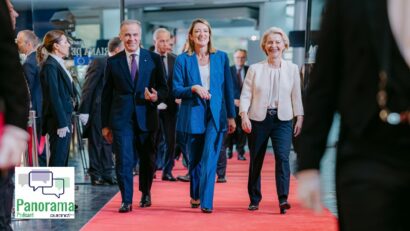
At a press conference on Tuesday (12 May), Kaja Kallas also gave a nod to this possibility.
When asked if the EU was ready to provide Ukraine with all the necessary security guarantees in the event of a ceasefire being negotiated, the EU high representative for foreign affairs and security policy cautioned that we should not put the cart before the horse. First and foremost, she said, we need to ensure that any ceasefire negotiated is a meaningful one.
Kaja Kallas, EU High Representative for Foreign Affairs and Security Policy (in English):
„We need to see concessions from the Russian side because they are always the ones who are attacking their neighbours. How we can make sure that we don’t only have a ceasefire or truce that would give them the possibility to regroup and get their army in a better shape than it is right now, and then go on attacking, but [instead that] it would be a sustainable and lasting peace [and] that they would refrain from attacking other countries? That is why we have the discussion with foreign ministers coming up on what kind of concessions we need to see from the Russian side.”
The discussion Kallas is referring to will likely take place at an informal meeting of foreign affairs ministers scheduled for 27 and 28 May in Limassol, Cyprus. They will also be looking to identify a suitable figure to represent Europe’s interests in any upcoming talks – and in fact another former German chancellor, Angela Merkel, is one of the names in contention.